Perfect imitations of real materials
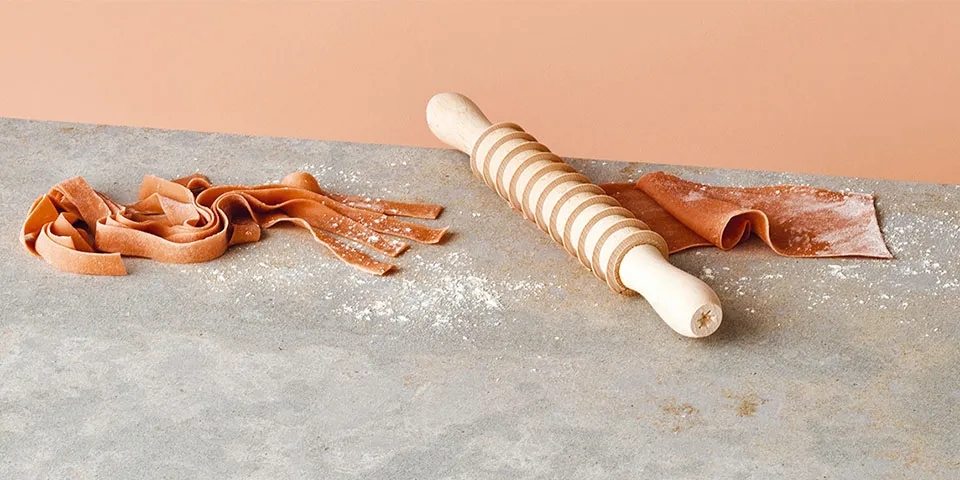
An unrivalled eye for current worktop trends and the ability to respond quickly to changing trends. The Trends Top 3, according to Dutch company Jetstone, a versatile manufacturer of stone-based worktops.
Jetstone was founded in 1993, so it has been in business for just over 25 years. During that time, the company has steadily grown into an international partner for granite, composite and ceramic worktops. It has also built up a wealth of expertise and insight, which it has distilled for us into a Trends Top 3 for worktops.
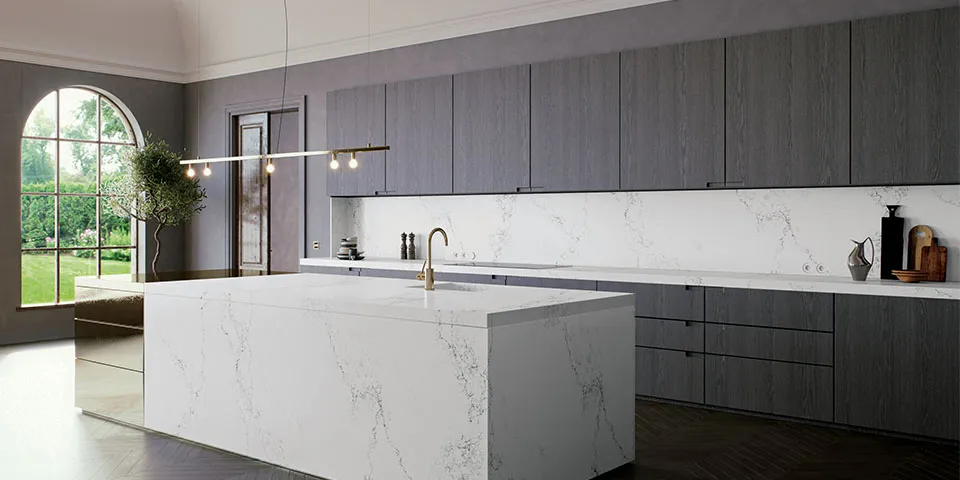
Marble? No, composite, and something new: Empira White.
Luxury with appeal
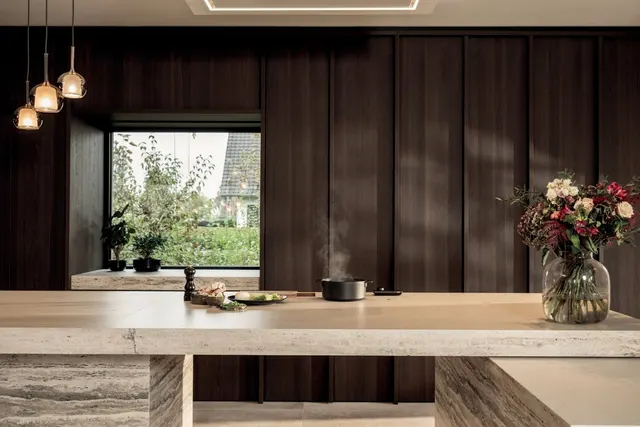
Marble continues to capture the imagination. Thanks to its rich, natural appearance, it brings an elegant, timeless character to contemporary interiors. “Unfortunately, real marble is not the most suitable material for kitchen worktops,” says Jetstone. “It is not particularly resistant to scratches and stains, and acids in products such as fruit and soft drinks can cause irreparable damage.” Jetstone’s answer: stone-based worktops that combine the look of luxurious marble with the practical qualities required of kitchen worktops. Jetstone: “We see three trends. First, there is the classic, elegant white marble look, found in composite in colours such as London Grey and in ceramic in Cinquale. Distinctive white marble looks such as the new Empira White (composite) and Borghini (ceramic) are gaining popularity. Then there are dark, mysterious marble looks, such as Noblesse Black in composite and Noir Desir in ceramic, which are a perfect fit for the hotel-chic style.”
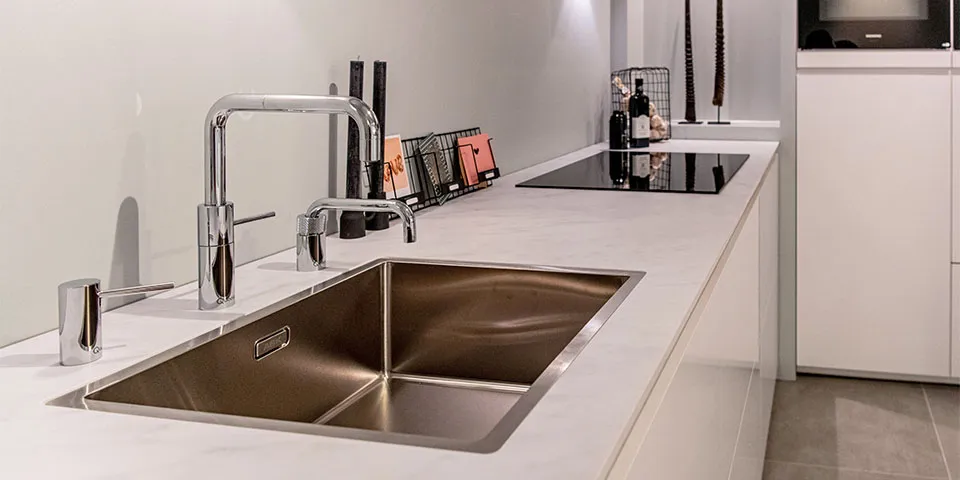
Cinquale combines the properties of ceramic with the classic, elegant look of marble.
Versatile concrete
Concrete’s versatility lies in the many accessories that complement the material perfectly. Pair it with matt black accessories such as a sink and tap for a bold, striking result. Softer tones, meanwhile, accentuate the material’s natural appearance. “Concrete works in a huge range of interior styles,” says Jetstone. “But it also has the drawback that its practical qualities are not ideal for kitchen use. The main issues are its poor resistance to stains and acids, because concrete is porous.” Today, there are countless materials that combine concrete’s natural appearance with practical qualities. Jetstone: “Broadly speaking, they can be divided into two groups. On the one hand, there are materials with a subtle concrete look, such as Jet Grey in composite and Volcano Grigio in ceramic. On the other, there are materials with a pronounced unfinished-concrete texture. Examples include Primordia and Rugged Concrete (composite).
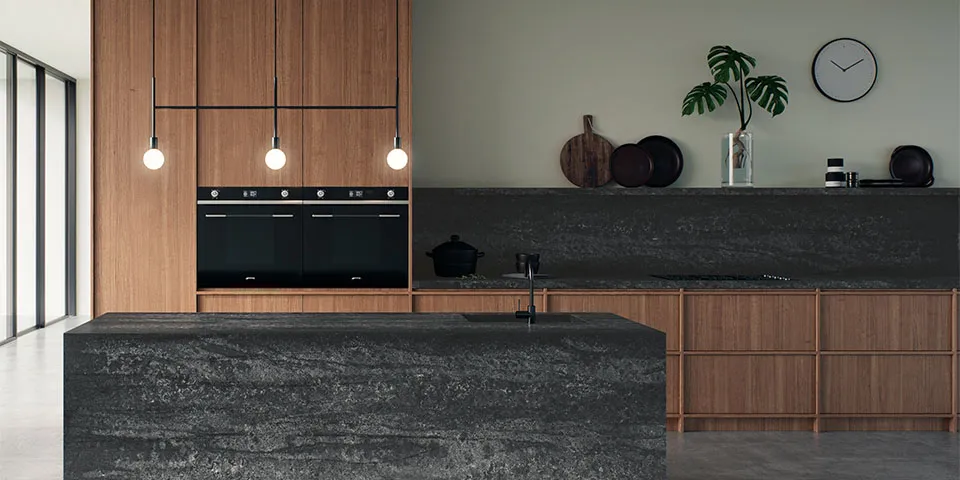
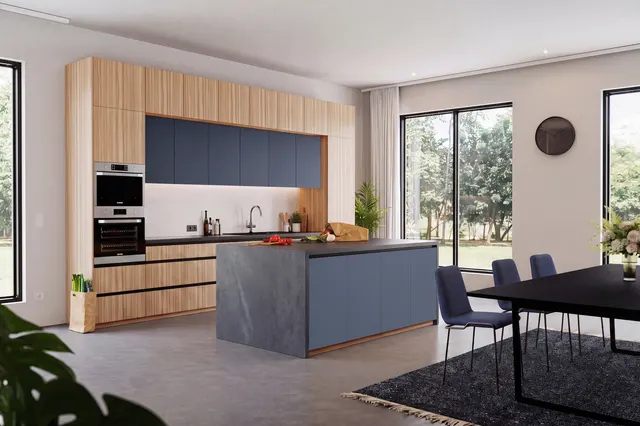
Pronounced grey accents on a solid black base. Black Tempal ties in with the trend for black in the kitchen.
Back to nature
Other materials with a natural appearance are also gaining ground. “In recent years, composite manufacturer Caesarstone has developed a number of materials with an attractive natural-stone look,” says Jetstone. “These include colours with a pronounced texture, such as Turbine Grey, as well as materials with a slate-like appearance, such as Black Tempal, which have been very well received.”
Question about this story? Ask your question
Companies in this story
Keep following this
Get an email when a new story is published. No account needed.
- ThemeMaterials and finishes in balance
- SubjectGeneral
- CompanyJetstone BVBA