Cooling and freezing in 2026: choose wisely, keep food fresher for longer
Text Tom Rampelbergh Beeld Liebherr, BORA, Beko
A fridge and a freezer are essential. It’s as simple as that. But deciding which fridge and freezer to install in the kitchen or utility room is another matter. How big is the kitchen, and is there room for both appliances? Built-in or freestanding? How big is the household, and therefore how large do the appliances need to be? Fortunately, there are answers to these important questions.
The fridge is one of the stars of the kitchen. Fortunately, plenty of manufacturers are working to make it a real star. In the film industry, there are directors and actors who seem born to shine in a particular genre. Fridges, too, come in a wide variety: built-in or freestanding, from compact models to very large ones. One thing is certain: all fridges come with a range of standard technologies designed to help them do what they are meant to do, namely keep food fresh, ideally for as long as possible.
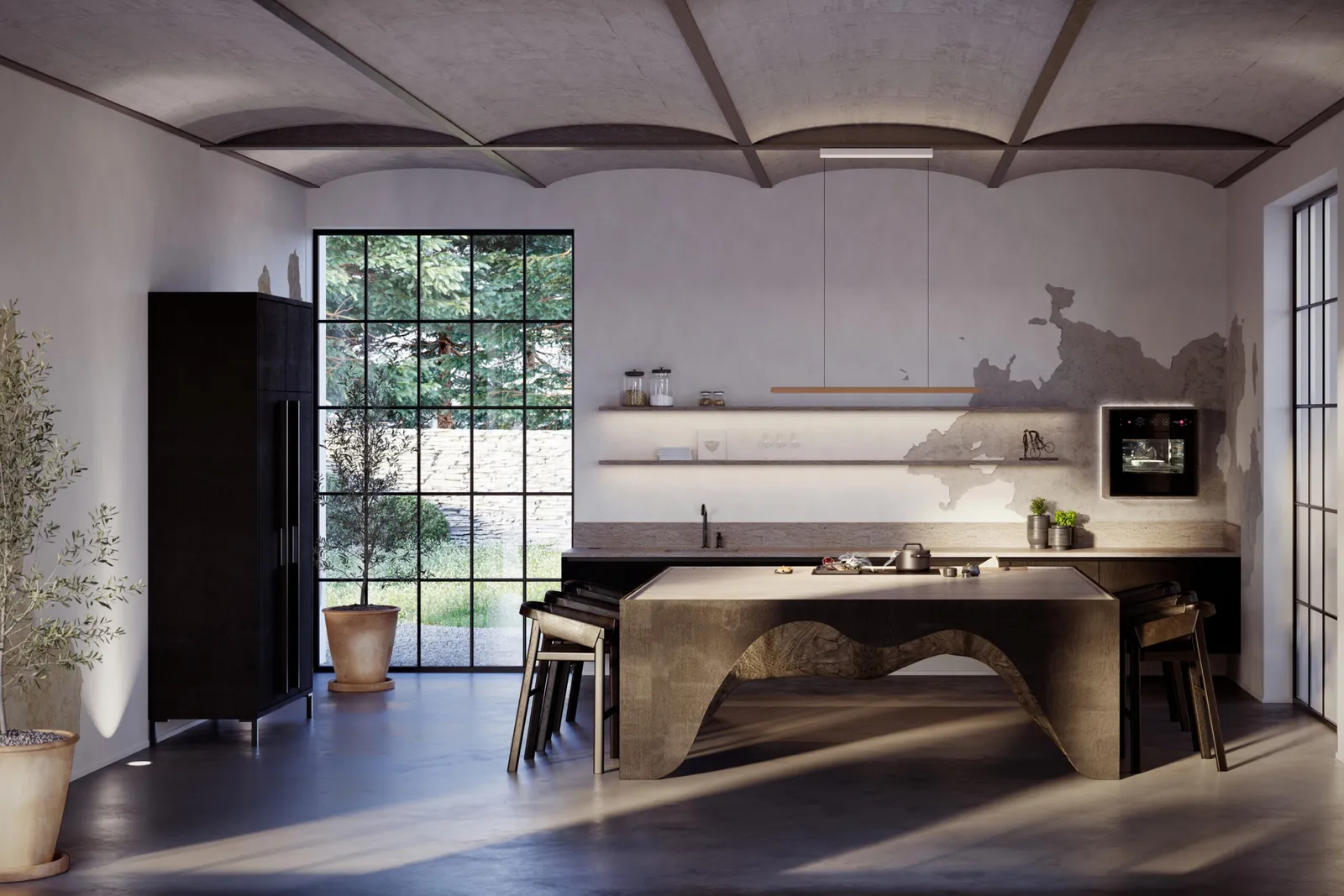
Small temperature differences determine where food belongs
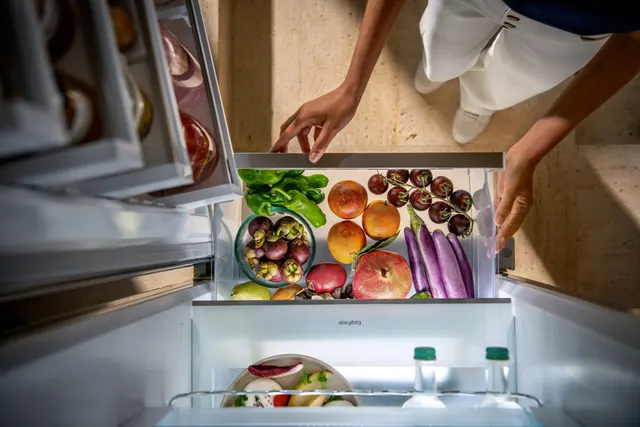
As mentioned above, a fridge’s core purpose is to keep food fresh for as long as possible while preserving its minerals, vitamins and flavour. The various innovative technologies help a great deal, but how you organise the fridge also has a direct impact. The temperature inside the fridge is a useful guide. The top is usually slightly warmer than the bottom, as warm air rises. Salads, spreadable cheese and eggs in their carton do not like it too cold, so place them near the top, alongside opened jars of jam or apple sauce. Leftovers? It’s best to put them in a sealed container, ideally labelled with the date they went in the fridge, and store them on the middle shelf. The bottom section of the fridge is the coldest of all, making it the ideal place to store raw meat and fish. You can also store some items in the fridge door. Bear in mind that the temperature fluctuates most there. Mayonnaise and soft drinks are best kept in the door.
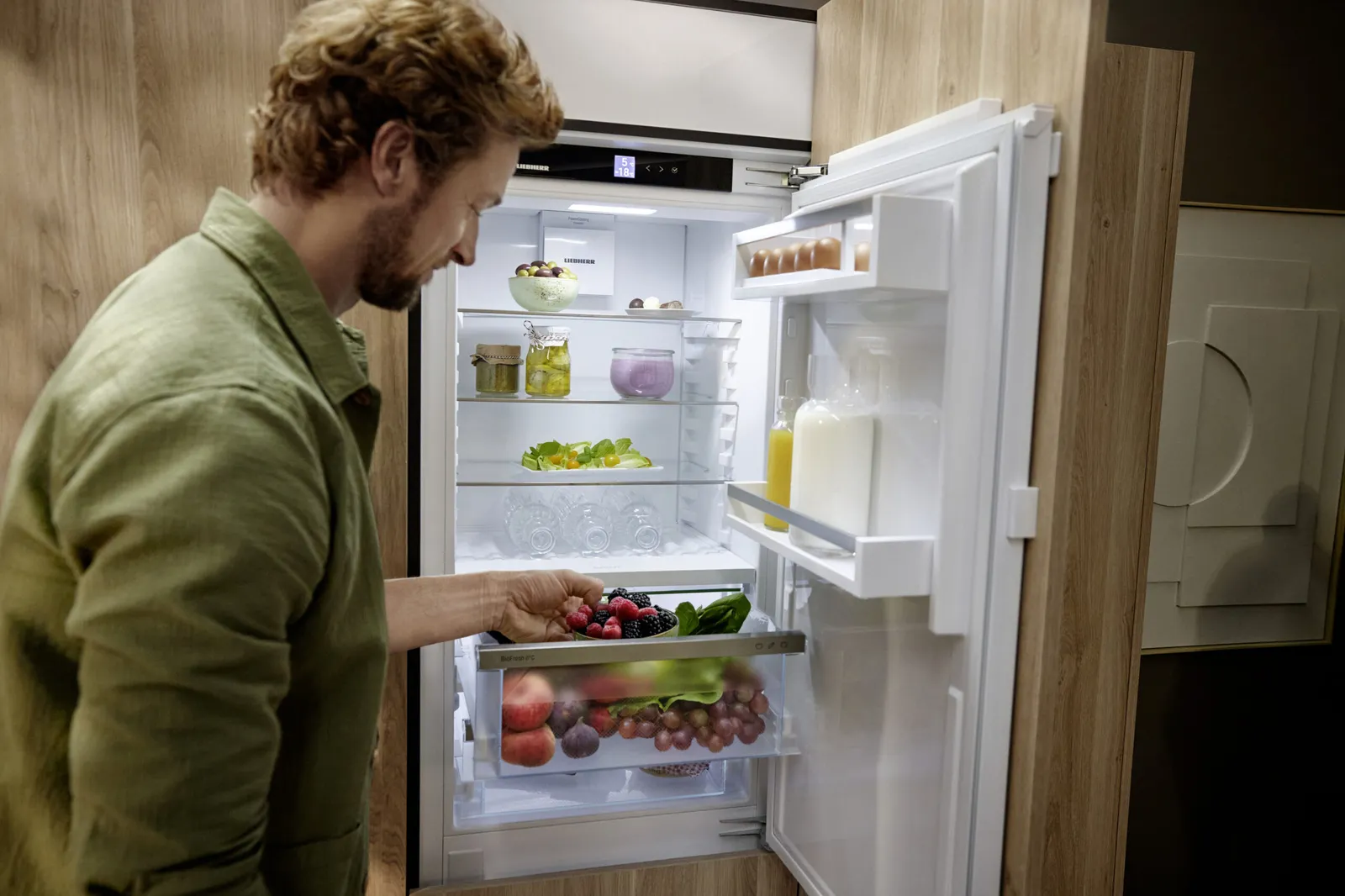
Busting a few myths
A freezer is another essential kitchen appliance for keeping food for longer. Indefinitely? No. Most products can be stored for around three months without losing quality. There are always exceptions, both items with a shorter shelf life and those that retain their quality for much longer. Keep to a sensible routine and take ingredients out of the freezer regularly. It is also worth debunking the claim that ‘the colder the freezer, the longer food stays good’. This is a myth. The ideal freezer temperature is -18° C. A lower temperature offers no benefit in terms of storage or food safety. It only increases your energy consumption.
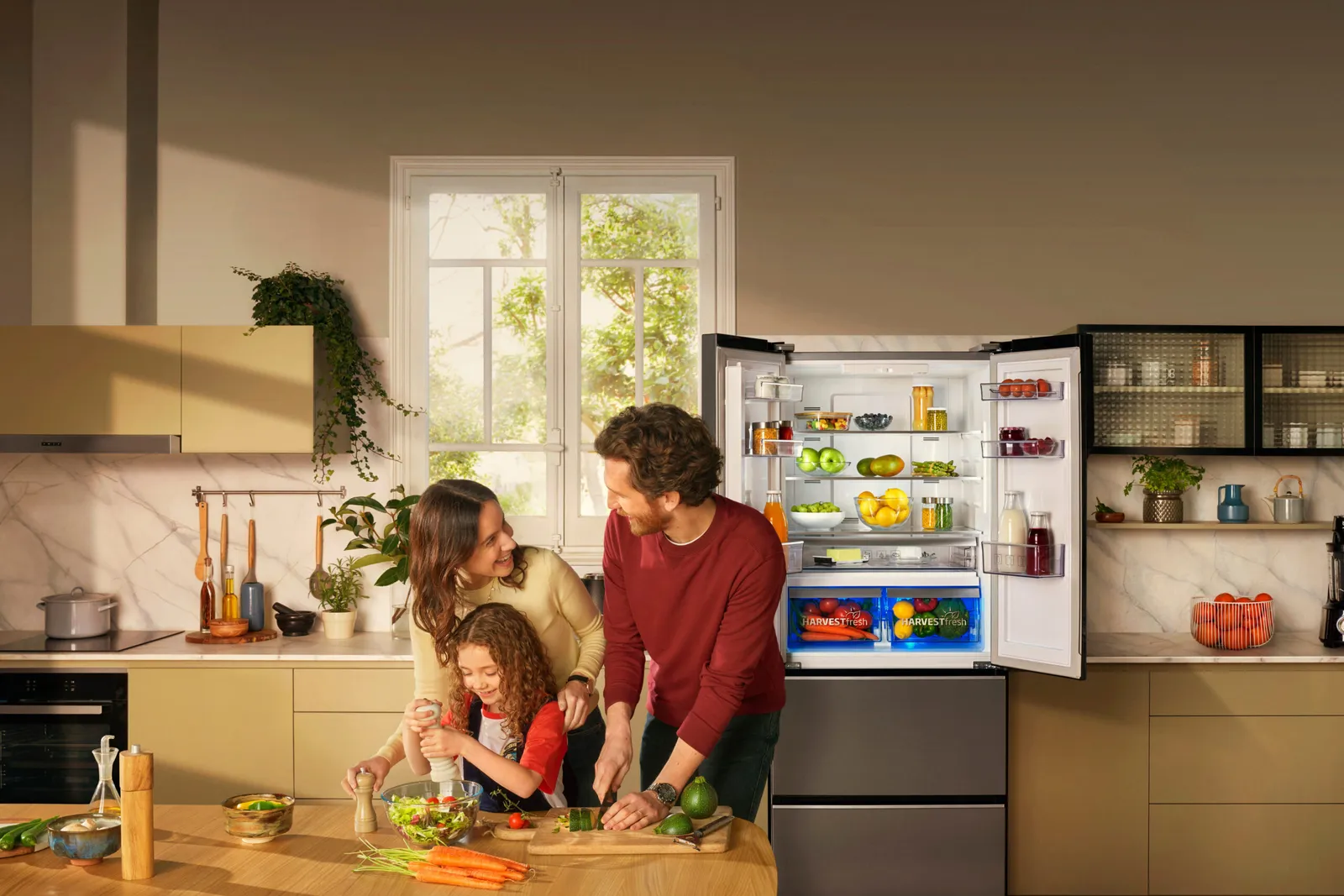
Where should I put a freezer?
Unlike a fridge, which you ‘need’ several times a day, a freezer is used far less often. That is why many freezers are moving to the utility room, a simple storage area or even the garage. Be sure to keep an eye on the ambient temperature. Not every appliance can withstand low temperatures, let alone freezing conditions. Have a large kitchen? Then a side-by-side model is especially handy. Wherever the freezer is located, it is best to place it close to a power socket. For safety reasons, never use an extension lead.
Question about this story? Ask your question
Keep following this
Get an email when a new story is published. No account needed.
- ThemeTailored refrigeration and storage
- SubjectRefrigeration and freezing