Before the food reaches the dining room
Text Guy De Meulenaere Beeld DELABIE
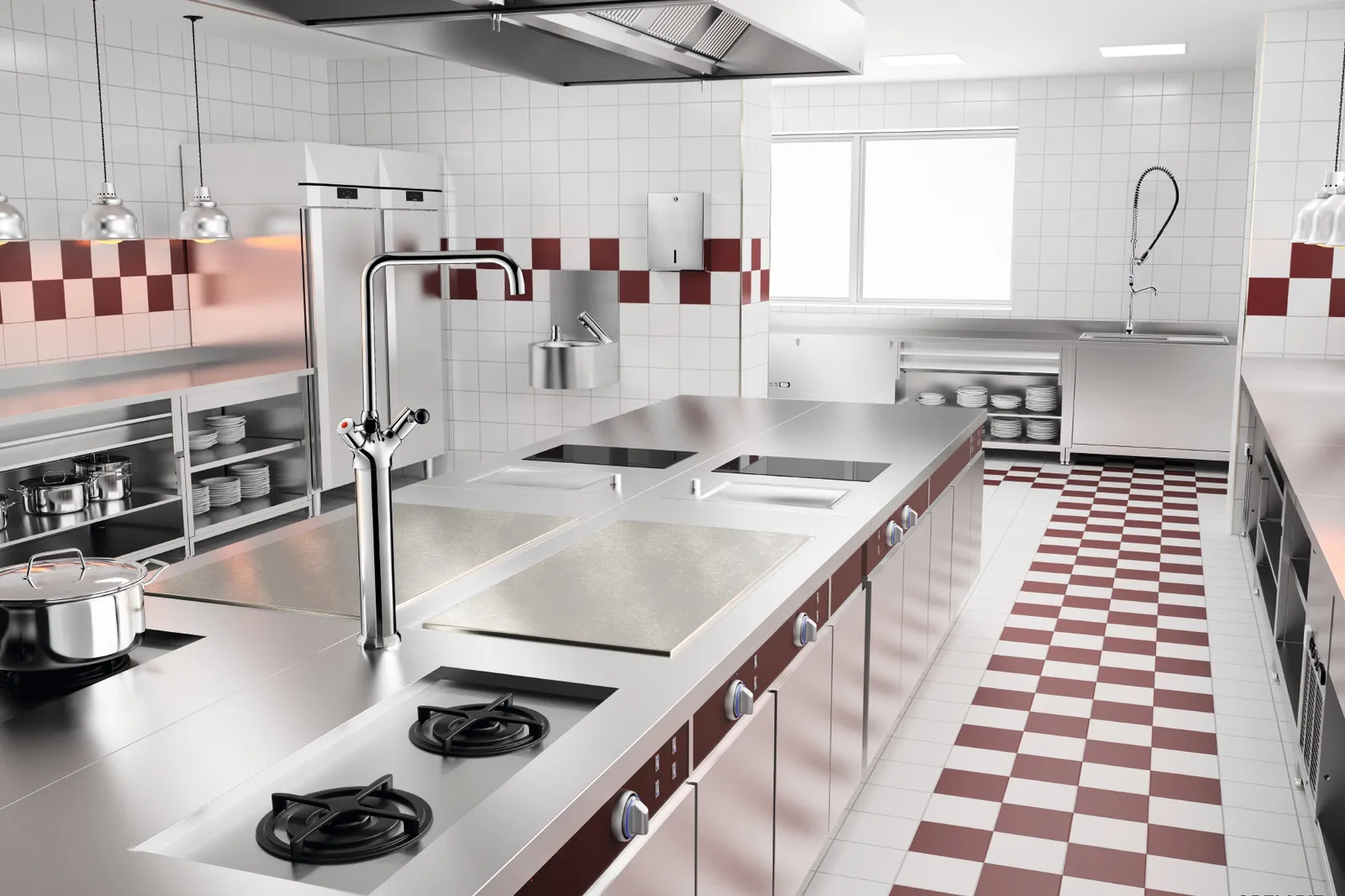
When designing a professional kitchen, much attention is paid to ovens, refrigeration systems, worktops and efficient workflows. Yet a less conspicuous element also plays an important role in day-to-day operations: sanitary facilities. Food safety does not begin only once the kitchen is in use. It starts at the drawing board.
The importance of hand hygiene is also clear from inspections by the Federal Agency for the Safety of the Food Chain (FAVV). Recurring points of concern include too few hand-wash basins, taps operated by hand and insufficient facilities for washing and drying hands hygienically. This gives kitchen builders a clear responsibility and an opportunity. By incorporating sanitary facilities from the design stage, they make hygiene an integral part of the kitchen rather than an afterthought.
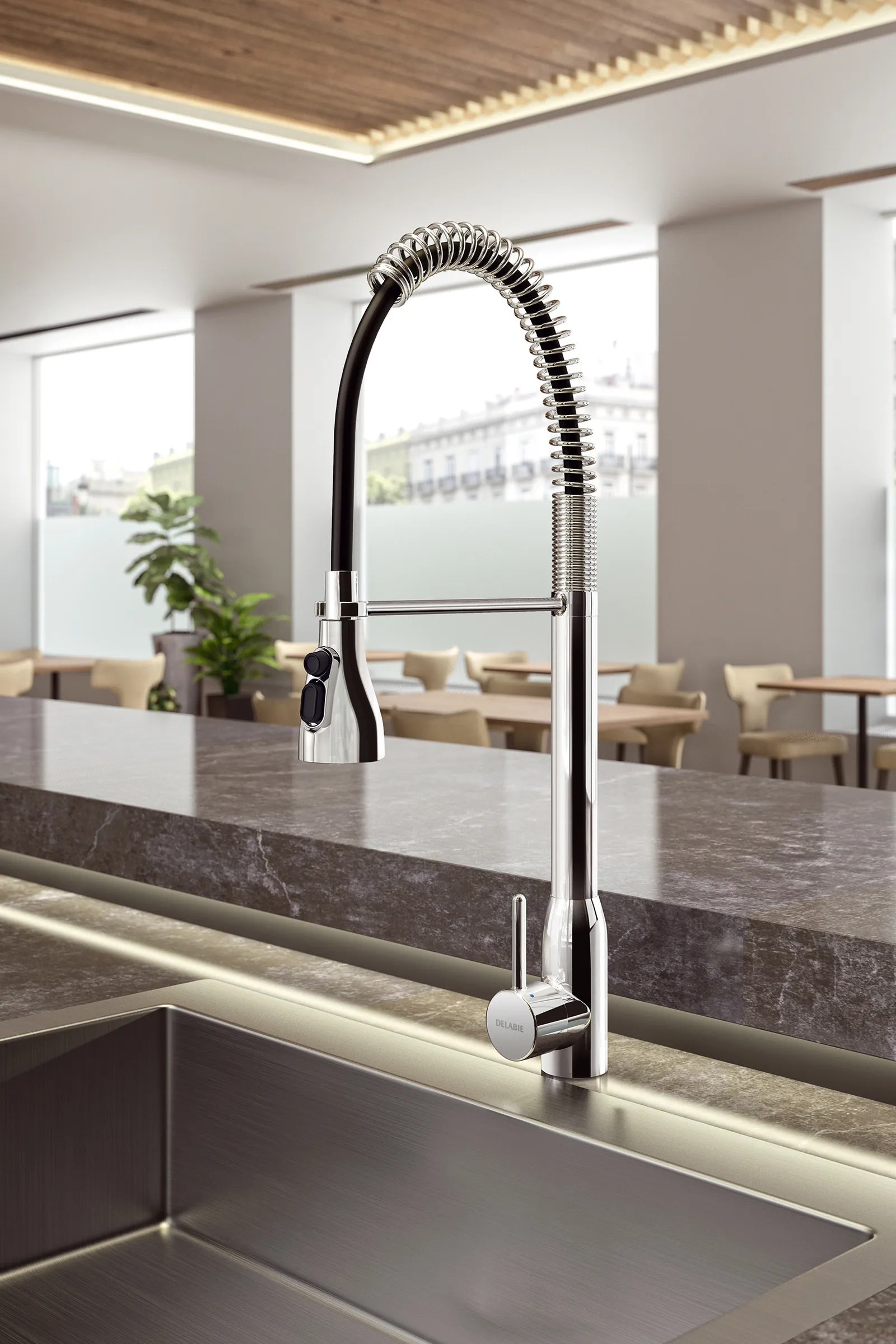
Every task calls for a solution
Every square metre of a professional kitchen is used differently. A busy washing-up area has different requirements from a preparation area or a hand-wash point. Production and processing environments also involve high temperatures, moisture, frequent cleaning and intensive use. In smaller work areas, compactness, accessibility and freedom of movement become more important.
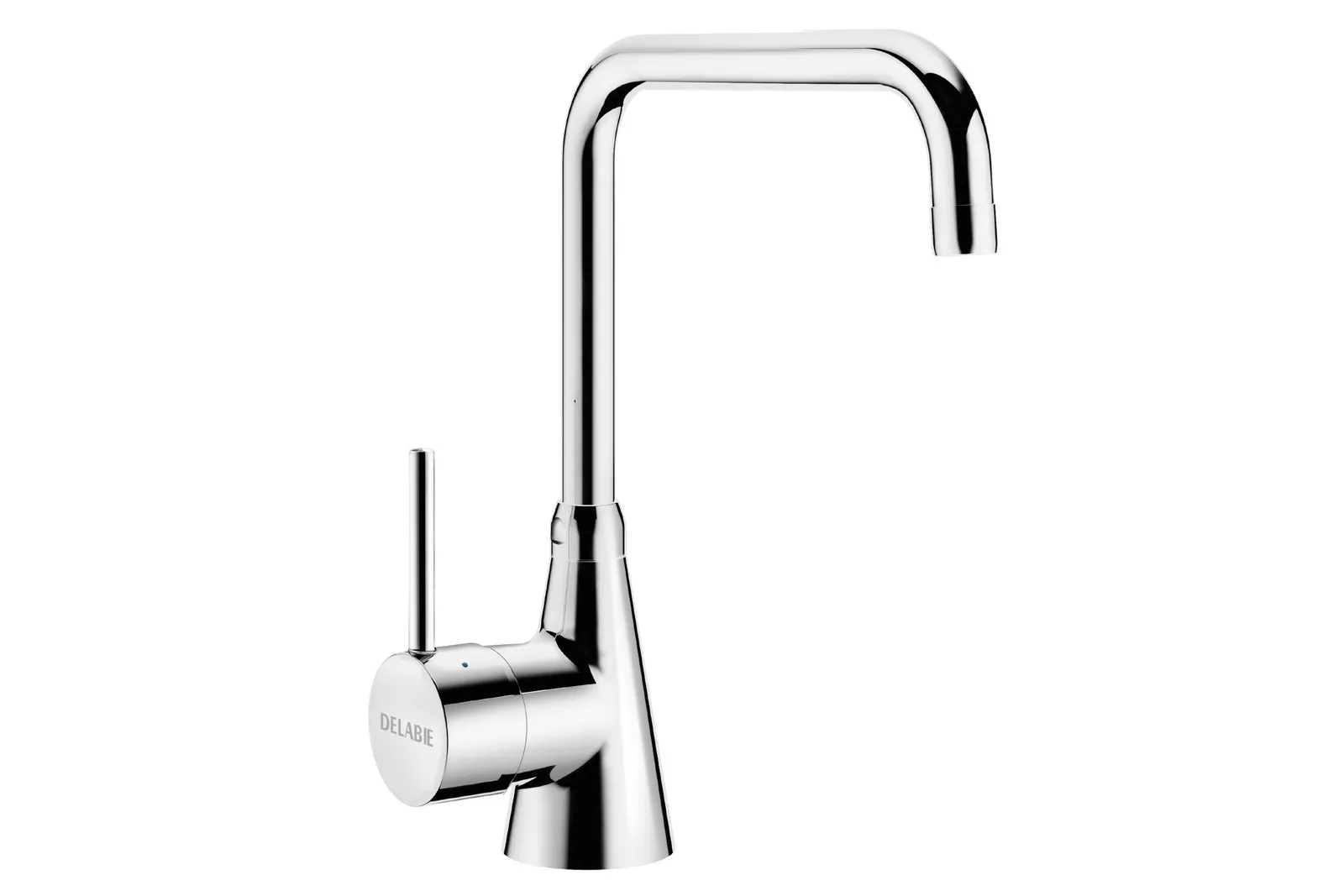
DELABIE translates these different usage scenarios into specific sanitary solutions. For intensive washing-up, for example, robust kitchen taps with a high flow rate are recommended. The 5650T2 catering mixer tap combines a swivel spout with a flow rate of up to around 60 litres per minute at 3 bar. This makes it quick to fill large containers and sinks. Where greater freedom of movement is needed, models with a self-supporting flexible hose offer extra reach.
The logic for the kitchen builder is clear: the task determines the tap, not the other way round.
Handwashing without detours
The same reasoning applies to hand-wash points. A strategically positioned hand-wash point makes it easier to maintain proper hand hygiene and avoids unnecessary movement through the kitchen. The controls also deserve attention. The less contact required, the lower the risk of clean hands touching a potentially contaminated surface again.
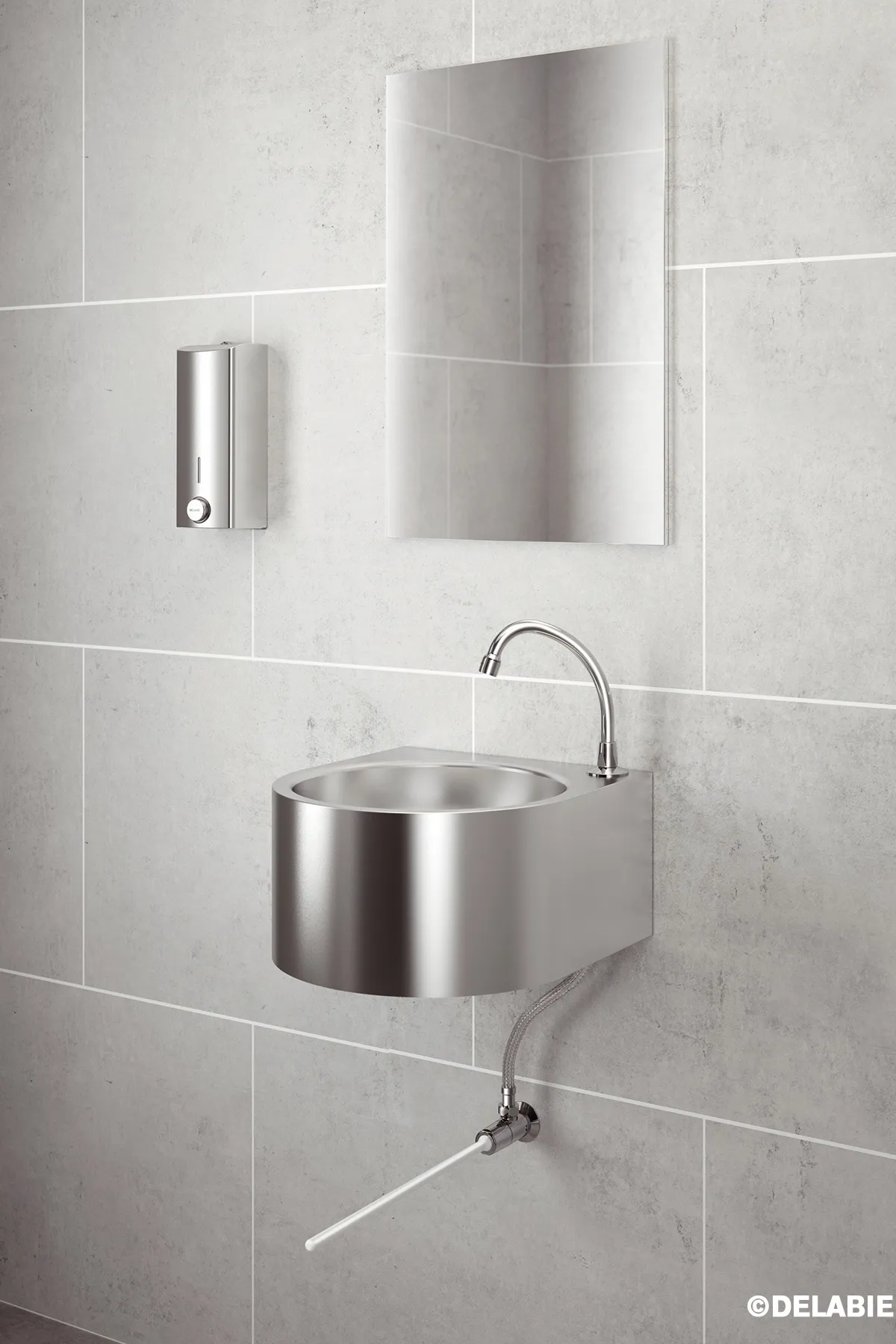
There are several solutions. Self-closing taps shut off automatically after a few seconds, while electronic models operate entirely hands-free using infrared detection. In compact work areas, stainless steel hand-wash basins with knee-operated or electronic controls can be integrated. This allows the kitchen builder to tailor the sanitary solution to the available space, frequency of use and hygiene requirements of the area.
Hygiene goes beneath the surface
Designing for food safety goes beyond what is visible. In an environment that is in constant use and regularly cleaned, the cleanability of the equipment itself also plays an important role. Smooth surfaces and designs that limit the build-up of dirt make maintenance easier. The spout of the DELABIE 5650T2, for example, has a smooth finish on both the inside and outside.
The entire set-up around the hand-wash point matters too. Soap and hand-drying facilities should be provided within easy reach, so users can complete every step of proper hand hygiene without unnecessary movement. Including soap dispensers, paper towel dispensers and other stainless steel accessories in the design from the outset creates a cohesive hygiene zone rather than a collection of elements added later.
Quality design does its part
This also broadens the kitchen builder’s role. A professional kitchen is not a collection of separate appliances, but an integrated working system in which workflow, ergonomics, water management and hygiene work together.
A tap with sufficient reach avoids unnecessary movements. A high flow rate shortens certain tasks. A well-positioned hand-wash point makes people more likely to use it. Hands-free controls help keep clean hands clean.
These may seem like minor design choices, but together they determine how smoothly and hygienically a kitchen functions in practice. By incorporating sanitary facilities into the plan from the very first line, kitchen builders do more than lay out pipes and water points. They help design a kitchen in which efficiency and hygiene are built into the way it works.
A business enquiry for Delabie? Get in touch
Companies in this story

Keep following this
Get an email when a new story is published. No account needed.
- ThemeFrom kitchen to bathroom
- SubjectSinks & taps
- CompanyDelabie