The sink: the beating heart of the kitchen
Text Tom Rampelbergh Beeld BLANCO, Naber, Caressi, Franke, Kvik, DSM Keukens
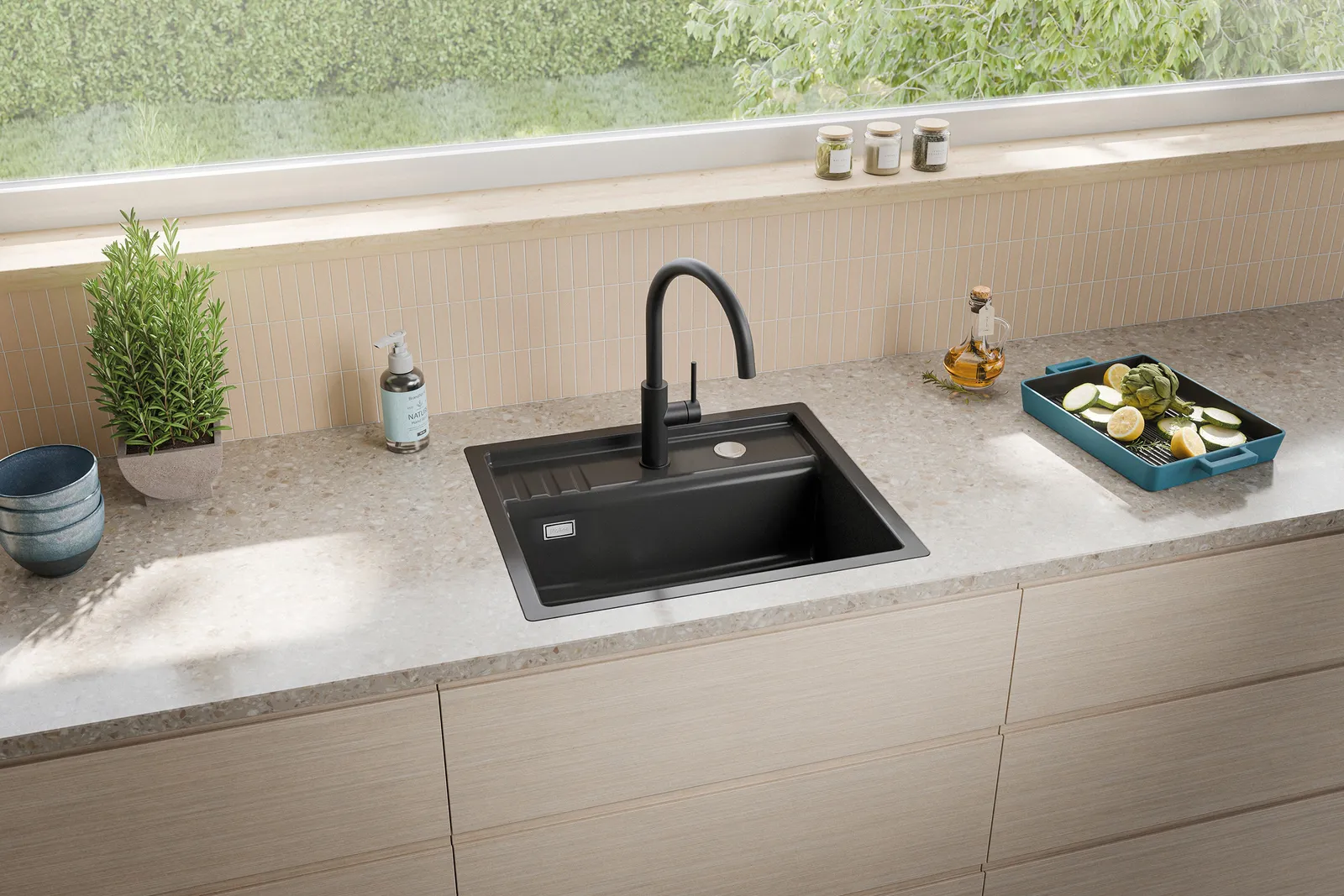
It’s a popular feel-good movie plot of our time: the ugly duckling, treated like a poor relation, gradually grows into an indispensable gem. The star of this story: the sink. What was once a simple washing-up bowl is becoming a multifunctional workstation that is every bit as impressive in its technology and design.
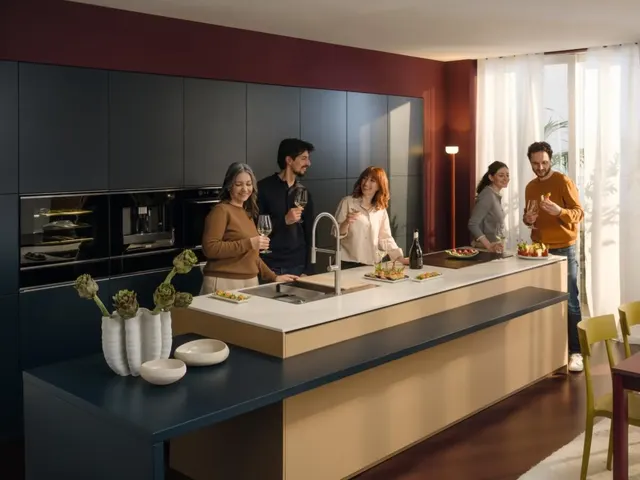
The sink used to be a necessary evil. You had to install one in the kitchen, but preferably tuck it away in a corner. That was because the sink was used exclusively for washing up. What a turnaround. Today, the sink is evolving into a fully fledged water zone, a multifunctional and essential workstation where much more happens than just washing up. In fact, we no longer wash up in the sink. That’s what the dishwasher is for. And yet the sink is more important than ever.
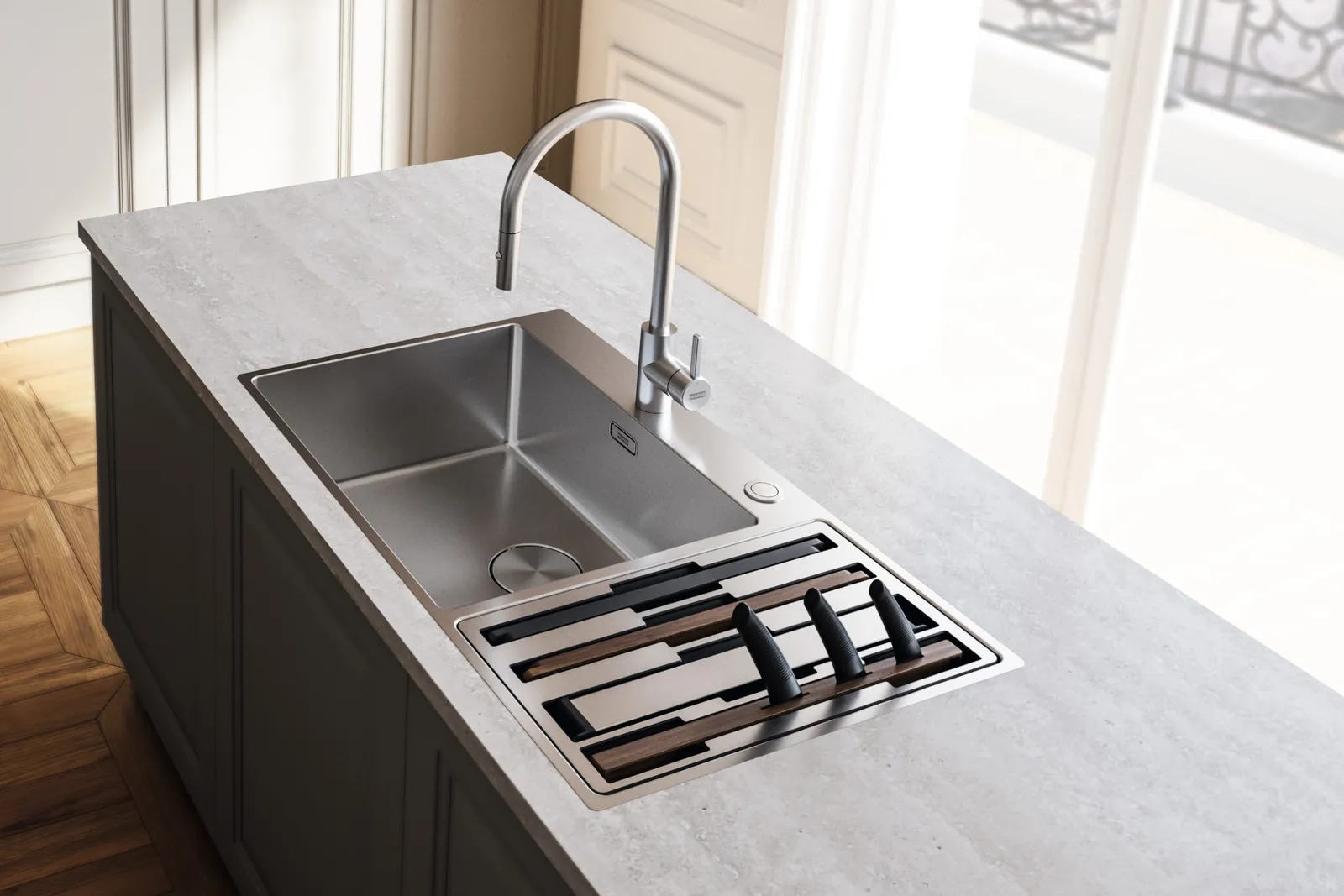
Food preparation
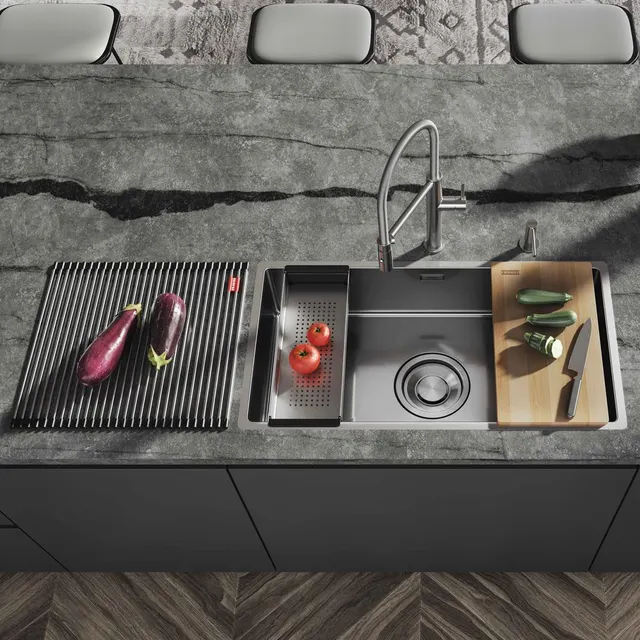
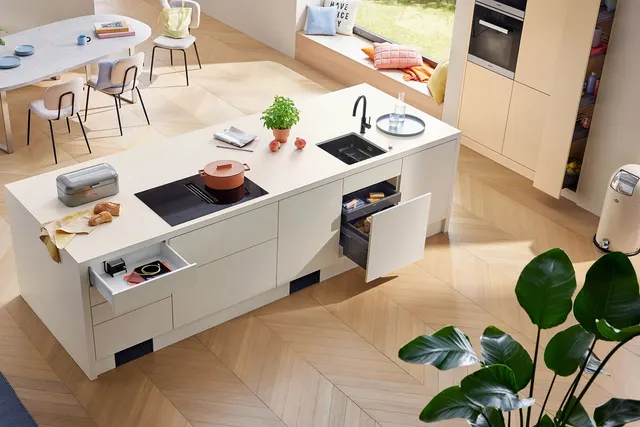
We do less washing up and more food preparation. This phrase neatly sums up how the sink has evolved. The modern sink has become a complete system, to the point that the term ‘sink’ no longer does it justice. Integrated chopping boards, colanders and inset bowls that fit neatly over the edges transform the sink into an extension of the worktop. Since there’s never enough worktop space in the kitchen, this is a welcome bonus. Every square centimetre is put to optimum use. Add to that the proximity of running water and waste bins for effective sorting, and it’s clear that the water zone is the ideal food preparation area.
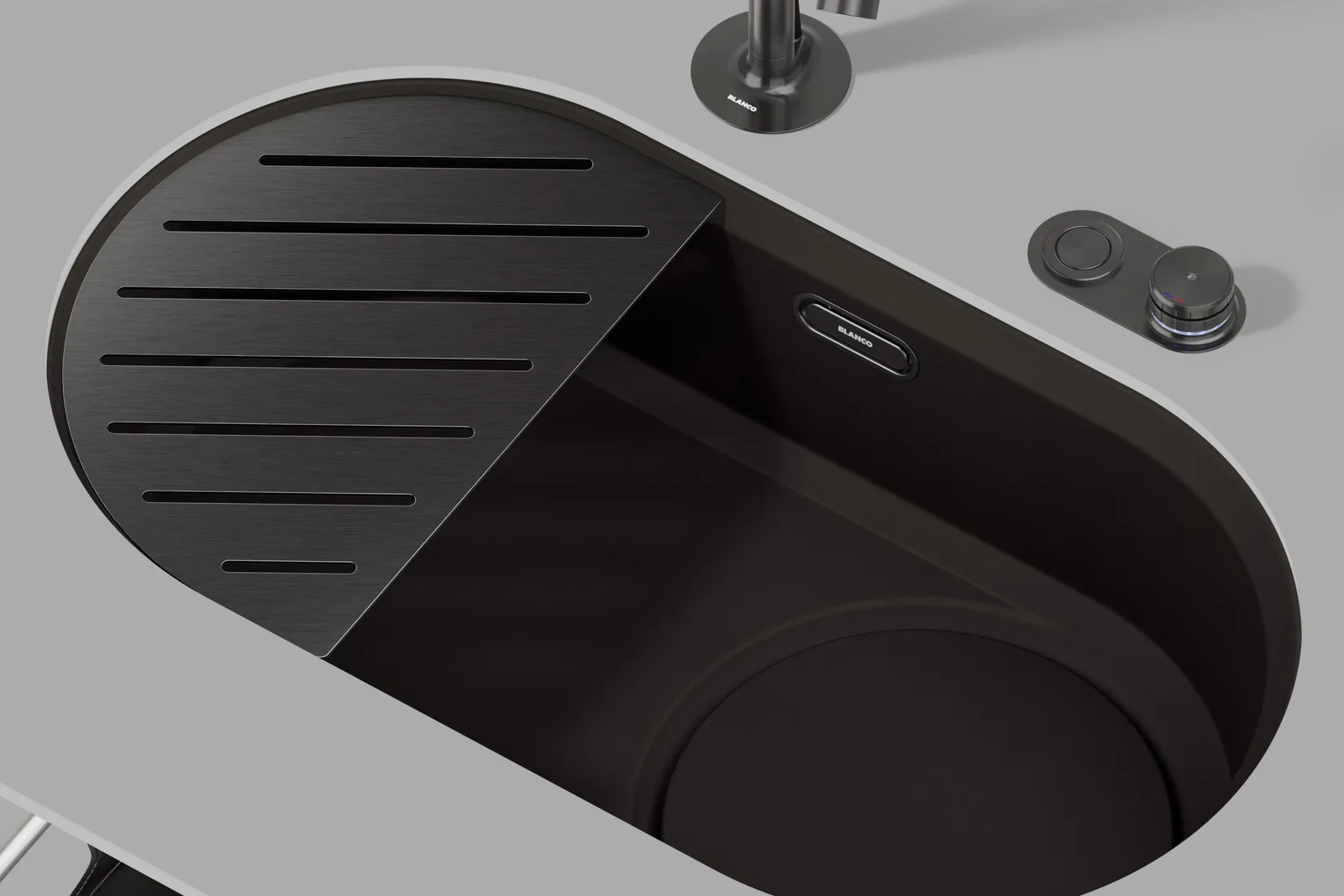
Materials and finishes
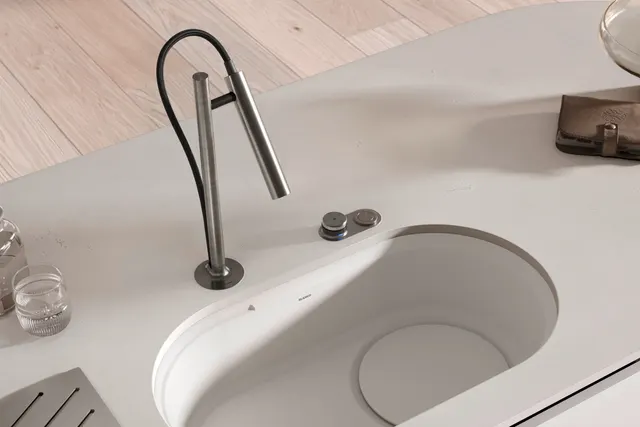
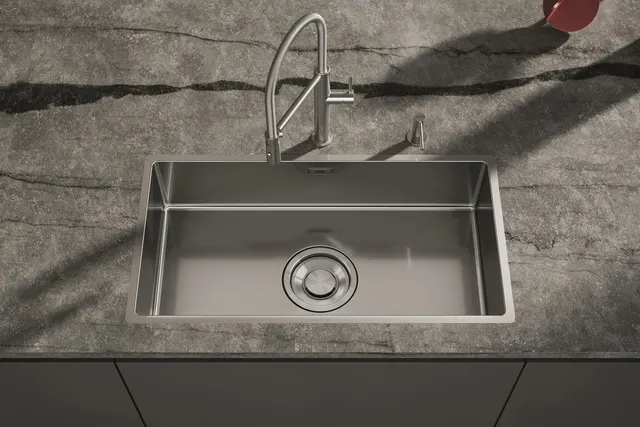
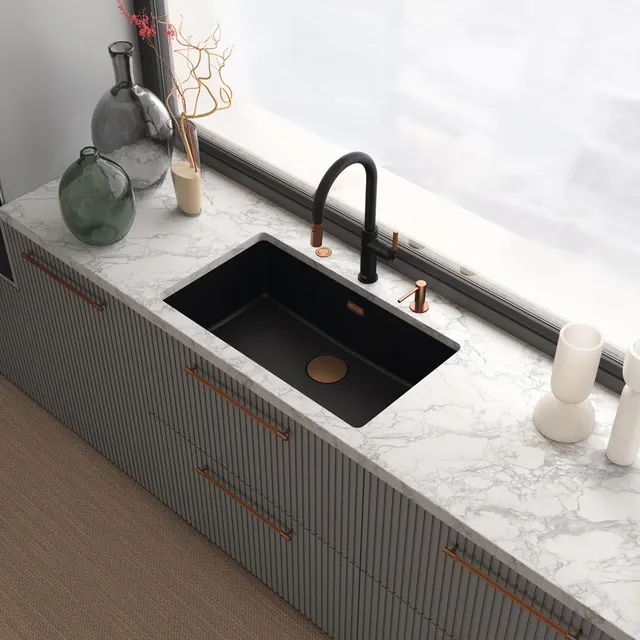
The sink’s ‘role’ may have evolved, but its place in the kitchen is still assured. What’s more, several manufacturers have worked to make the sink itself a real showpiece, even a timeless classic. Stainless steel remains a strong contender, although other materials have made up considerable ground and may even have overtaken it in popularity. Every material has its strengths and weaknesses, of course. Scratch resistance, hygiene and finishes all play a part in the customer’s decision-making process.
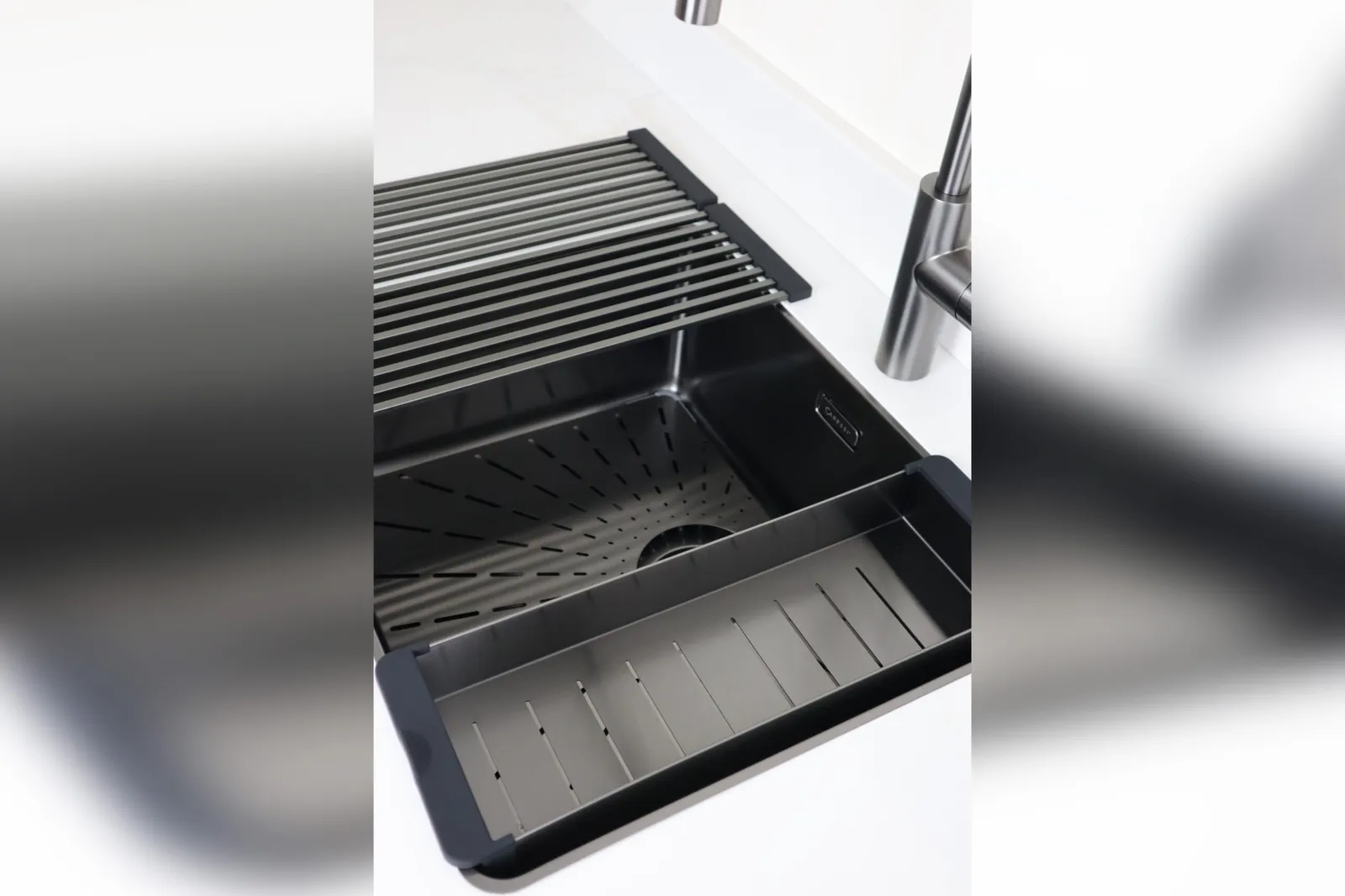
Part of a bigger picture
Today, the sink can no longer be viewed in isolation: it is inextricably linked to both the kitchen tap and the cabinet beneath it. That cabinet provides space for a waste sorting system. Innovation clearly extends beyond the edge of the sink. Multifunctional kitchen taps are extremely popular, sometimes with a filtration system that needs to be installed in the kitchen cabinet. Fortunately, waste systems already cater for this, with options for integrating such a system. The water zone has clearly become the nerve centre of the kitchen.
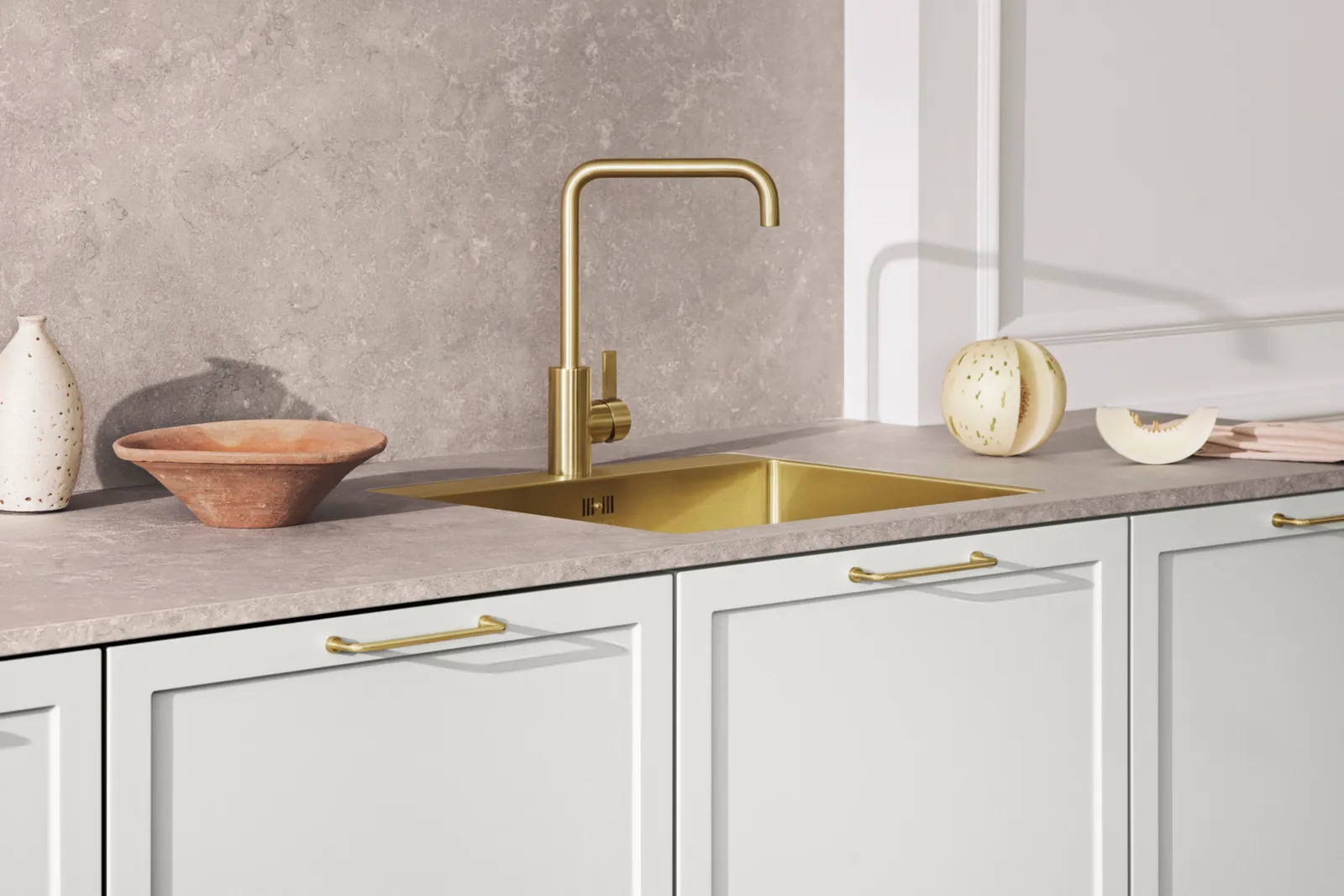
From ugly duckling to indispensable swan
To continue the metaphor, you could say that the sink has come of age. After a few intermediate stages, the ‘ugly’ sink, tucked away in a corner and used only for washing up, has become a versatile workstation where the magic of meal preparation begins. That’s where the challenge lies for kitchen professionals. Show customers that the water zone is more than just the end point of the work. It’s where the culinary experience begins. Only then should you move on to brands, materials and the other decisions that will undoubtedly need to be made.
Question about this story? Ask your question
Keep following this
Get an email when a new story is published. No account needed.
- ThemeThe sink zone as a workspace
- SubjectSinks & taps