How material choice, adhesive technology and machine processes together determine the finish
Text Christobal van Leeuwen Beeld Vecteezy
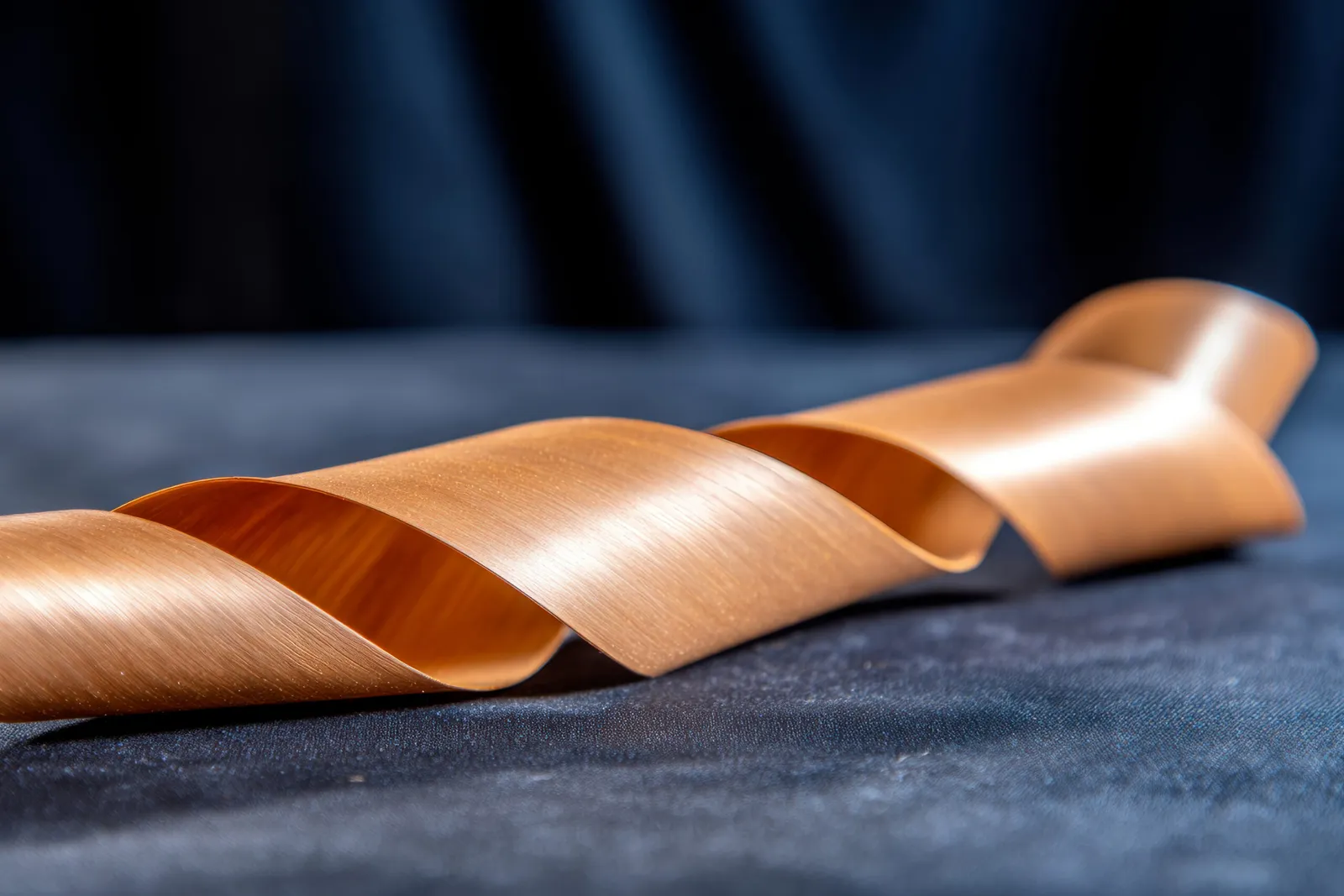
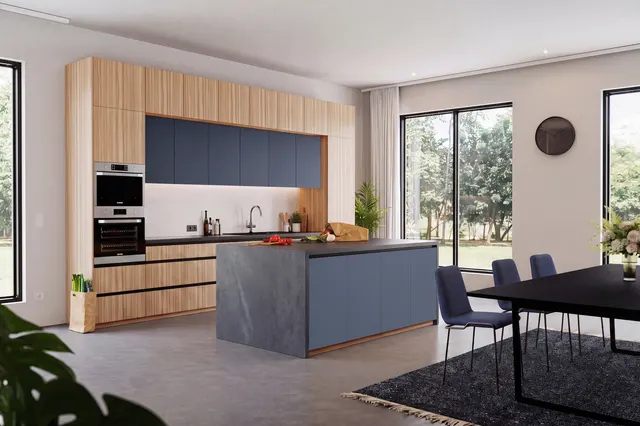
In kitchen manufacturing, much attention is given to front materials, colour, worktops and fittings. Yet a large part of the perceived quality is determined by a much smaller component: the finish on the panel edge. This is where edgebanding comes into play. What may at first seem like a minor detail proves in practice to be a technical and aesthetic link between design, production and use. Especially in kitchens, where moisture, temperature fluctuations, intensive cleaning and daily contact all come into play, edge finishing is no longer a minor consideration.
Protection and visual impact
Edgebanding has two basic functions. It protects the exposed edge of the panel from impacts and wear in use, while also serving as a visible design element that helps determine whether a piece of furniture is perceived as sleek, refined or robust.
This gives the material a role that goes beyond simple protection. In contemporary kitchens, where supermatt surfaces, wood reproductions, deep textures and high gloss coexist, the perfect match between panel, texture, sheen and radius is increasingly important. The edge should not stand out, unless that is the intention.
ABS and alternatives
ABS remains one of the best-known and most widely used material choices. This is due to its processability, mechanical and thermal resistance, and wide range of decorative options. It is available in a variety of finishes, from supermatt to high gloss, and in a range of textures.
PP, acrylic and other variants are also available, depending on the desired appearance and performance. For kitchen manufacturers, this means the choice of edgebanding is less and less a purely logistical decision and increasingly part of the overall concept, tailored to the product’s design, use and market positioning.
The glue line as a critical link
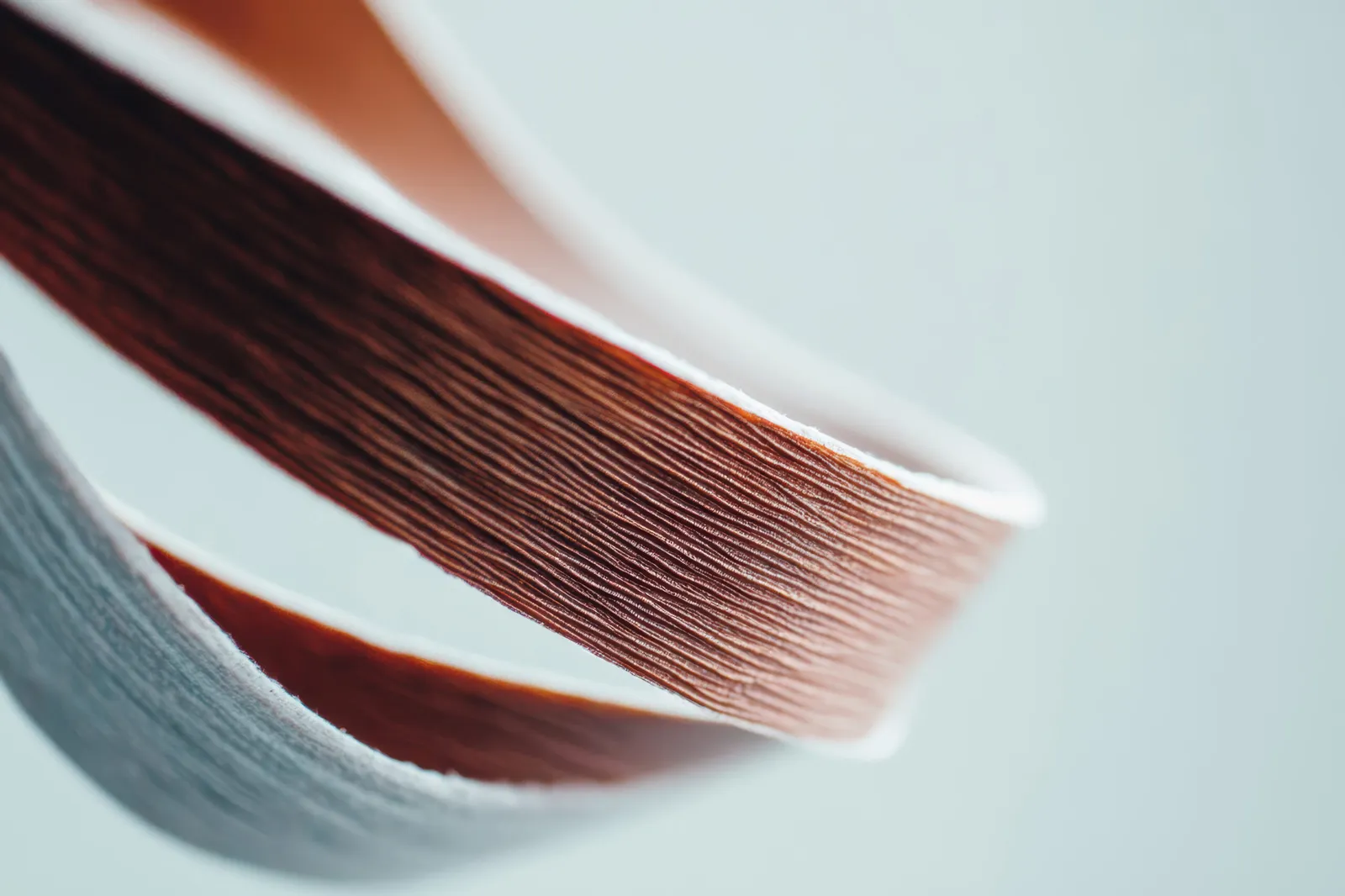
The bonding process itself has also become more technical. In the past, the main concern was whether an edge was ‘securely attached’. Today, the bar is considerably higher. Resistance to moisture and temperature, as well as ease of cleaning, are playing an increasingly important role.
EVA remains widely used in practice, while PUR has become firmly established in applications with more demanding requirements, precisely the conditions found in kitchens and bathrooms. At the same time, PUR is not automatically the best choice for every production profile. Processing it requires greater discipline in process control, maintenance and material handling. The key question is therefore shifting from ‘which adhesive is best?’ to ‘which adhesive technology is right for the intended product level and production process?’
Flexibility and precision on the shop floor
This evolution is also reflected on the shop floor. Modern edgebanders are no longer judged on speed alone, but above all on flexibility, repeatability and finish quality.
Several operations are now combined in a single continuous line: joint trimming, adhesive application, end trimming, profile and radius milling, scraping and polishing. This makes it possible to process a range of materials and small batches efficiently without compromising on quality. For kitchen manufacturers, who often have to balance bespoke work with industrial consistency, that is no luxury.
The rise of the zero-joint edge
Zero-joint technology is also attracting increasing attention. It uses edgebanding finished not with a conventional visible glue line, but with an activated functional layer. Three technologies are commonly used: laser, hot air and NIR. The aim is always the same: to make the transition between panel and edge virtually invisible.
This offers clear benefits in the high-end kitchen segment. Clean lines are preserved and material transitions appear more subtle. At the same time, this approach requires investment in machinery, process expertise and market positioning. Zero-joint edging is therefore not just an aesthetic choice, but a strategic one too.
Sustainability right through to the edge finish
Alongside aesthetics and process quality, sustainability is also becoming more important. This is reflected both in material choice and in energy consumption on the production floor.
Lower processing temperatures with certain hot-melt adhesives, for example, can reduce the energy required for melting. This matters to businesses because energy costs, working conditions and environmental impact are increasingly factored into investment decisions. Edgebanding shows how an apparently small part of the production process can have a direct bearing on wider issues such as efficiency and future-proofing.
The narrow edge with a big impact
Overall, edgebanding has evolved from a finishing detail into a marker of quality. It is where decor and protection, machine and material, speed and precision come together.
Today, kitchen manufacturers, retailers and specifiers can hardly afford to limit themselves to asking which edge ‘roughly matches’. The more relevant question is: which combination of edgebanding, adhesive technology and machine concept best supports the desired product level? It is often this narrow edge that determines how much quality a kitchen ultimately conveys.
PUR or EVA: not a black-and-white choice
In practice, the choice between EVA and PUR bonding depends largely on the application and production context. EVA is widely used, easy to process and well suited to standard applications or flexible production. PUR, by contrast, is chosen when higher levels of resistance to moisture, heat and chemicals are required, typically in kitchens and bathrooms. On the shop floor, it is rarely a case of either one or the other…
Question about this story? Ask your question
Keep following this
Get an email when a new story is published. No account needed.
- ThemeMaterials and finishes in balance
- SubjectGeneral