Entrepreneurship in interior construction: family businesses, growth and future opportunities
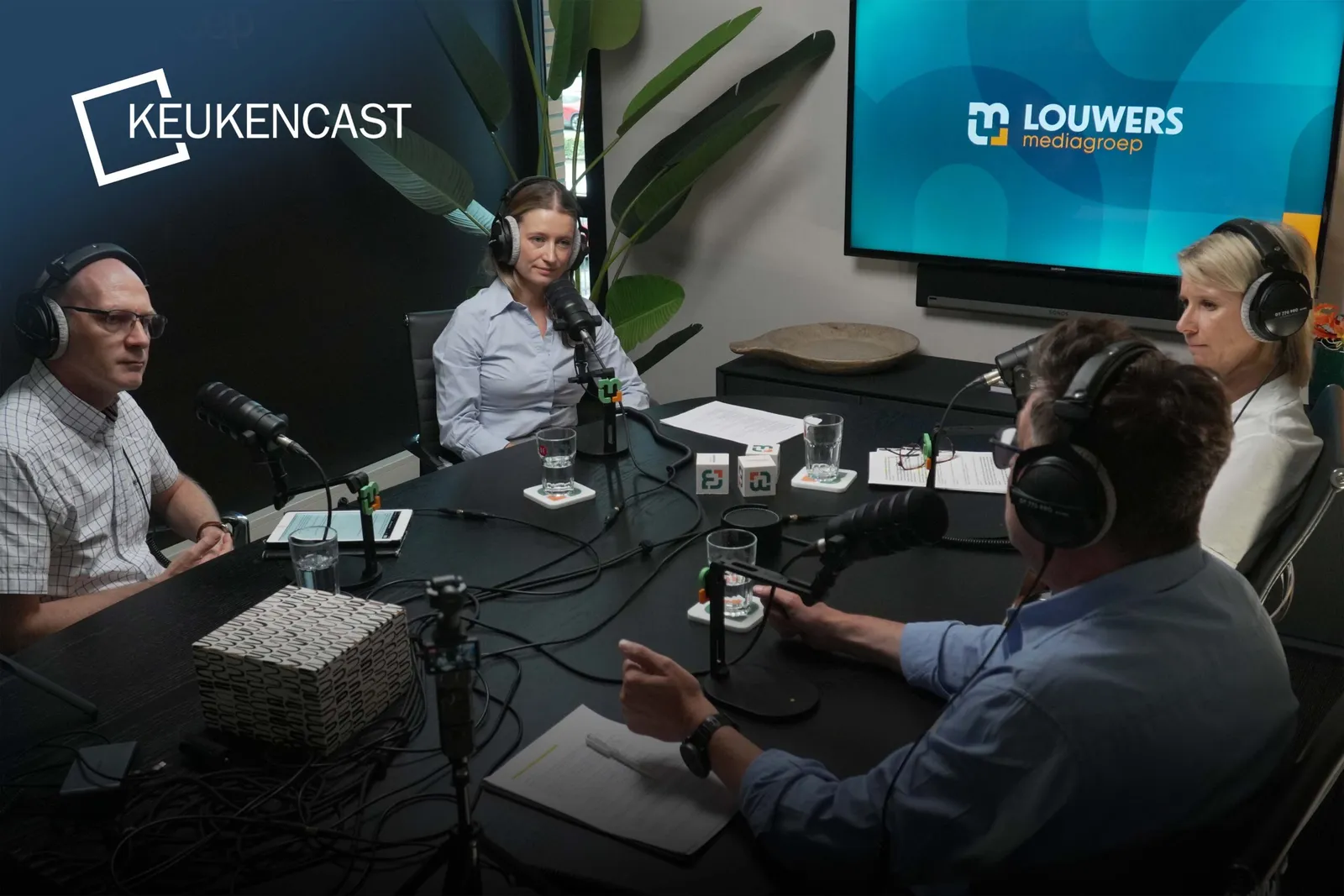
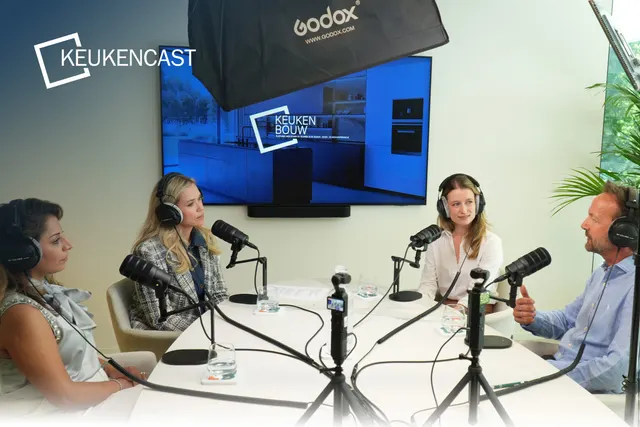
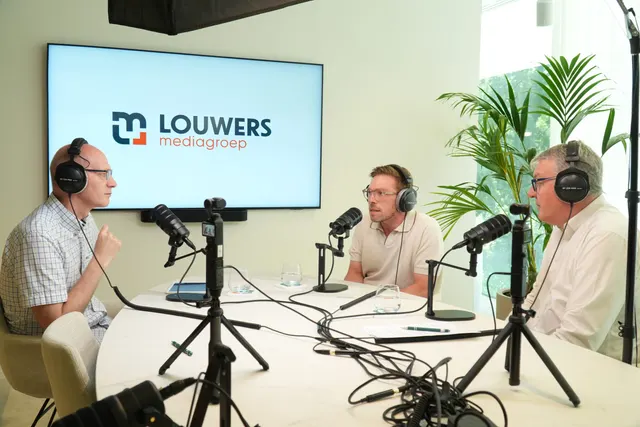
How can a family business remain successful in a rapidly changing sector? In this episode of the Brio Broadcast, Björn Crul, Katrien Taelman, Jan van den Berg and Caroline Dries discuss entrepreneurship in the interior construction, kitchen and bathroom sectors. They share their experiences of succession within the family, staff, customer expectations, digitalisation, new technologies and the strength of a strong business network.
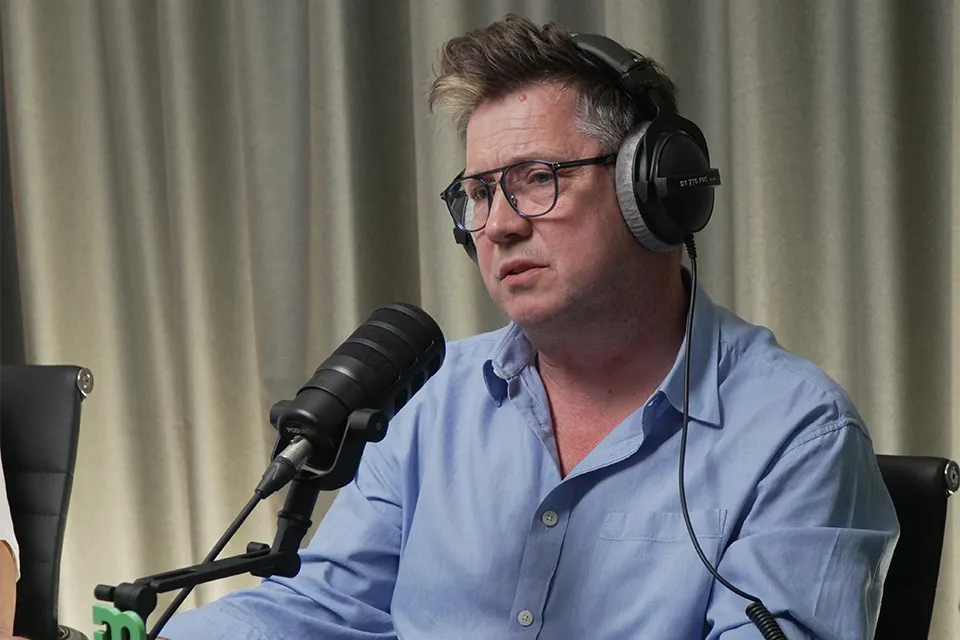
Host: Björn Crul
Guests:
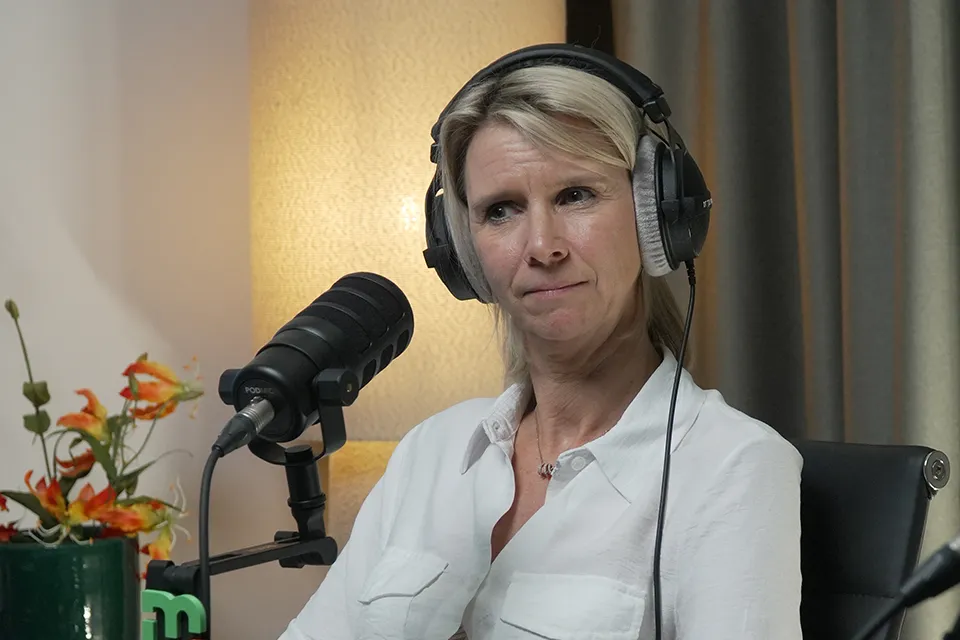
- Katrien Taelman: Taelman Home / Electro Taelman
- Jan van den Berg: Installatiebedrijf van den Berg
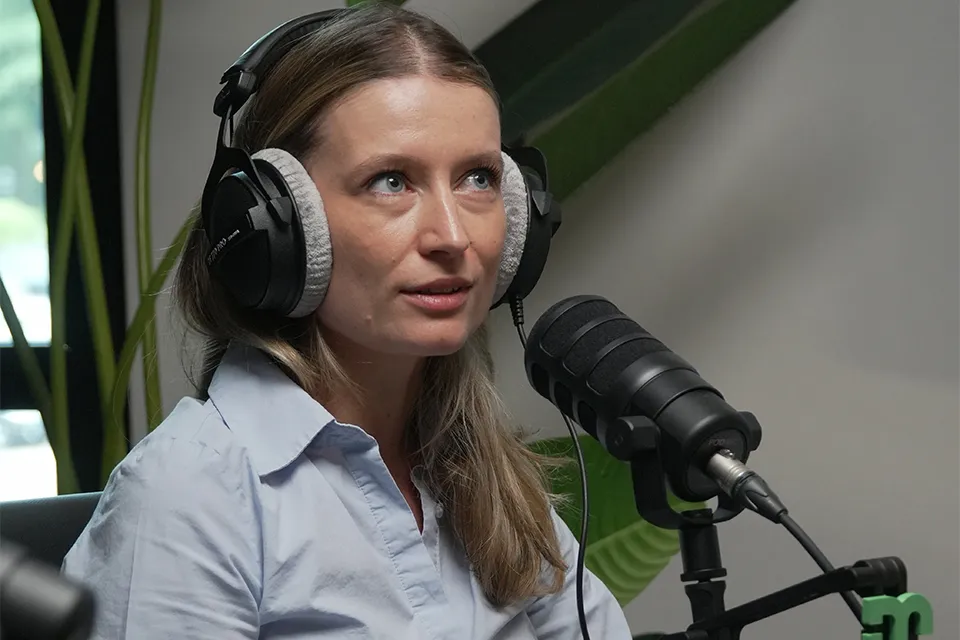
- Caroline Dries: Brio Group
Een zakelijke vraag aan Brio Group? Get in touch
Full transcript
Alle hoofdstukken (32)
- Entrepreneurship in interior construction
- The origins of Taelman Home
- Joining the family business
- The start of Installatiebedrijf Van den Berg
- The second generation
- Division of responsibilities between the brothers
- The takeover at Van den Berg
- The takeover at Taelman Home
- Success factors in family succession
- Family succession in the sector
- The growing complexity of entrepreneurship
- A changing customer landscape
- Changes in the bathroom sector
- The experience and customer expectations
- Profitability and planning
- Expanding into kitchens
- Specialise or broaden your offer
- New technologies and expanding the team
- Finding and retaining skilled workers
- Today’s sales assistant
- Standing out as an independent business
- The value of a family business
- The added value of independent entrepreneurs
- Putting craftsmanship and service centre stage
- Brio’s role
- Freedom within the group
- Future support from Brio
- How the Brio network is evolving
- The future of Van den Berg
- The future of Taelman Home
- Advice for self-employed business owners
- Closing remarks
Entrepreneurship in interior construction
Björn Crul Hello listeners, and welcome to this new episode of the Brio Broadcast, the podcast in which we discuss trends and developments in the world of interior construction. This time, entrepreneurship in the sector is our focus. In interior design, kitchen construction and bathrooms, we find many family-run SMEs that give their all day in, day out to make their customers’ dreams come true. What makes these entrepreneurs passionate about their profession? Does the installer make the difference? And what opportunities are still out there? My name is Björn Crul, and today I’m putting these questions to three experts in the field. Katrien Taelman, who runs Taelman Home with her husband, specialising in electrical goods, kitchens and home and garden accessories. Jan van den Berg, who runs Installatiebedrijf Van den Berg with his brother Bert, specialising in heating, bathrooms and sanitaryware. And bathrooms. Welcome to the studio, all three of you.
Katrien Taelman Thank you. Thank you.
The origins of Taelman Home
Björn Crul Katrien, let me start with you. Your company in Kortrijk has been around for more than 50 years. How did it all begin?
Katrien Taelman Well, yes, how did it begin? I’ll tell you: in our garage at home. Let’s go back to the 1970s. My dad was working for a wholesaler at the time, installing aerials on the roofs of people’s homes.
Björn Crul Always to receive TV signals?
Katrien Taelman Yes, that’s right, for radio and TV signals. He did that as a self-employed side job. Then people started asking, “Willy”, because that’s my dad’s name, “don’t you have a television? Could you get me a washing machine too? A coffee maker, you name it.” And that’s how the first little shop was born in the garage. A few years later, the second garage was taken over as a shop. Then a shop building was put up next to the house, and so on and so forth.
Read the full transcriptCollapse transcript30 more chapters
Joining the family business
Björn Crul And that brings us to today: a company that has been around for 50 years and which you joined with your husband. But that wasn’t really the path you had in mind.
Katrien Taelman That’s right. Let’s just say my ambitions lay elsewhere. I had sworn I’d never become self-employed, but I’ve since learnt never to say never.
Björn Crul So what made you choose to do it?
Katrien Taelman It was really at my husband’s instigation. We were still very much an electrical goods business at the time, so it’s also quite a male-dominated sector. It had never occurred to me as a woman that I might take the lead, so to speak. But I joined at his urging. It’s also really nice to be able to work together. Fortunately, we complement each other, share the same goals and each have our own responsibilities, which makes us a good team.
The start of Installatiebedrijf Van den Berg
Björn Crul Yes, and that’s a good bridge to you, Jan. You’re also part of a second-generation family business. It was founded exactly 50 years ago by your father Kees and his wife. What did your father actually want to do? Why did he set up his own business?
Jan van den Berg Dad worked for a heating and plumbing company. He thought he could do it better, and he knew he could. Especially when it came to new technologies, controls and heating boilers. That was 50 years ago, so the technology was nothing like it is today. He was very interested in the technology, so he and Mum got started together.
Björn Crul Things took off quite quickly, didn’t they?
Jan van den Berg Yes, two colleagues from the company Dad worked for joined him straight away. They then retired from our company more than 30 years later.
The second generation
Björn Crul It’s a great story. So much so that you and your brother joined the business too. But you told me it wasn’t plain sailing for you at first.
Jan van den Berg No, our Bert started working at home as soon as he finished his electromechanical engineering studies. I did the same after finishing school. I started working at home straight away, too. But I thought I knew better about everything. So the apple didn’t fall far from the tree. Then I went to work for a wholesaler for eight years first, to learn more about the trade. It soon became clear there that sales were more my thing. Bert had already been working in the business for eight years. Then we started talking together, and I thought: the two of us could make a great story of this.
Division of responsibilities between the brothers
Björn Crul So what’s it like working with your brother? Are your areas of responsibility clearly defined? Do you each have your own specialism?
Jan van den Berg At first they were quite close together. But Bert really moved more into the technical side. He moved into bathrooms. Renovating a bathroom wasn’t really a thing 25 years ago, because it’s nothing like it is today. I had a very clear vision of it. We were going to turn it into a complete concept. And Bert had his own part in that. He was also working with solar energy very early on. So by now, our roles are very clearly defined. But we still often work together every day, because we are a team.
The takeover at Van den Berg
Björn Crul Fifteen years ago, you and your brother also formally took over the company. Was it a kind of big bang, or was it a very gradual process?
Jan van den Berg It was a very gradual process, which was really nice. At least, Bert and I found it very nice. We were able to develop in our own fields and then grow to a slightly larger scale. At that point, you can also take someone on to help with the accounts. We work in our own fields, but in the meantime we have two managing directors who know what we’re working on.
The takeover at Taelman Home
Björn Crul Katrien, how did the handover work in your case?
Katrien Taelman It was actually quite similar. First of all, electrical retail wasn’t unfamiliar to me. I’d grown up with it, so to speak, and that’s how we gradually grew into it. My parents, my husband and me. Then we took on our first employee, then another, and so on. That gave us the chance to give it a try. My parents also gave us quite a lot of freedom to experiment, to use a bit of trial and error. That continued until the takeover became official. That was when my dad turned 60, so 18 years ago now.
Björn Crul Which is quite early, isn’t it? For someone of that generation?
Katrien Taelman Yes, but we were ready for it by then. And I’m grateful to my parents for giving us that opportunity and having the courage to let go, so to speak.
Success factors in family succession
Björn Crul Looking back on it now, what makes a family handover successful?
Katrien Taelman Yes, I think there are some important factors. First of all, I think the finances need to be in good shape. Leaving behind a difficult financial situation is not a good start, of course. I also think there needs to be freedom: the freedom to launch new things and try new ideas. The younger generation is coming through with new ideas, rather than simply keeping everything as it is.
Björn Crul Does that sound familiar, Jan?
Jan van den Berg Exactly the same. That’s absolutely true for us too. I think our success was also largely down to the fact that Dad was always very forward-thinking. We had lots of computers and had new technologies in-house. But the key is to make the transition to the new generation work, to support them, let them grow and give them the chance to try things.
Family succession in the sector
Björn Crul Caroline, let me turn to you. Through Brio Group, you have a good overview of the whole sector, from interior and kitchen manufacturers to bathroom specialists. Among people who are 60-plus today, is family succession still the preferred option, and are young people still motivated to join the business?
Caroline Dries It plays a very big role. I still see it happening regularly among our partners, absolutely, because it’s still a great way to pass on that knowledge and company culture. On the other hand, I also notice that it’s becoming less of a given. I hear from many businesses that families are now giving people more room to talk about it openly. Are we going to do it? As Jan mentioned earlier, the younger generation may first gain experience elsewhere or focus on specific studies before taking that step or making that leap. And honestly, I think that’s a positive development. I no longer see people doing it out of a sense of obligation, but rather because they’ve really immersed themselves in it. Because they genuinely believe in the family business. And that naturally adds value.
The growing complexity of entrepreneurship
Björn Crul What is the biggest challenge in a family handover?
Caroline Dries I don't think the biggest challenge is necessarily the handover itself. It is more that running a business has become more complex. So don't get me wrong: craftsmanship is and will remain the foundation. Absolutely. Business owners still have to work just as hard as they did in the past. But the challenges around it have changed. Running a business has become a bit of a team sport. You're dealing with HR, marketing, IT, finance, you name it. And when I listen to some of our partners, I notice the same thing Katrien and Jan have mentioned: the success of a handover is also largely determined by the structure and preparation put in place across those different areas of the business. And the handover doesn't always happen at the exact moment you pass on the baton, as you both said earlier. It happens gradually. The process starts well beforehand. Sometimes responsibilities are passed on step by step over a period of several years. And, of course, both sides, both generations, have to make a serious effort. You want to preserve the value of the business, but you also want to be ready for the future. The idea isn't for the younger generation simply to copy the business, but to prepare it for the next generation.
A changing customer landscape
Björn Crul I'd like to pick up on one of the things you said earlier, Caroline, namely that running a business has become more complex. That's a fact of life. That's just how things are. Katrien, looking back at the more than 25 years you've been with the company, how much has the world changed?
Katrien Taelman The world has changed enormously. The arrival of AI, social media and online sales means that everything moves faster. Customers go through the buying process in their heads, but when they come into our shop, they want to move to the purchase very quickly. They also expect the sales staff they meet to be well informed, to explain things properly and to help them in a professional and efficient way. Kitchen sales are a slower process, whereas electrical appliances are a quick sale. Usually, someone comes in for a washing machine, chooses one and has it installed a few days later. A kitchen project naturally takes a lot longer. Buying a kitchen is also more of an emotional purchase. People may have one in mind, or have seen one on social media or elsewhere. Usually, there's a period of deliberation beforehand, too. There needs to be a good rapport with the kitchen salesperson, and the plans then need to be carried out properly and within budget, of course.
Changes in the bathroom sector
Björn Crul Jan, how has the world changed for you in the bathroom sector?
Jan van den Berg Well, we basically have three divisions: bathrooms, heating and plumbing, and energy. Things have become very demanding. Everything has to happen at lightning speed. We can manage that. It's not a problem in itself. With the technical side, it's often a case of keeping it as cheap, as good and as fast as possible. Bathrooms, like kitchens, are an emotional purchase. Customers come into the shop with a pretty clear idea of what they want, and you often have to temper their expectations a little. They think the sky's the limit, but if you want beautiful, special, high-quality products, they come with a price tag. And that's often something customers don't take into account. They have high expectations, but their budget doesn't always match. So we see quite a few differences. In the past, you might have sold one particular shower tap... Now they want it in black. The choice for customers is enormous, and the differences in quality between products are enormous too. So it's our job to guide customers towards high-quality products that fit their budget.
The experience and customer expectations
Björn Crul When it comes to dealing with this more complex world and these demanding customers, I'm often told that it takes a very... for a business to handle these things properly and remain profitable. Katrien, I imagine that both your companies, which have been around for 50 years, are now highly professional operations.
Katrien Taelman Well, professionalised. Looking at our business, I think the main thing is what we focus on: the customer experience. That's become very important these days. In the past, people had... but were happy and went home. That's no longer enough. They've seen all sorts of things on social media, in adverts on TV and elsewhere.
Björn Crul So do you need to have twenty coffee machines ready to go?
Katrien Taelman I'm afraid so. You need a wide range, and even then customers don't always find what they're looking for. There's such a huge variety of products, as Jan said, that people can lose touch with reality. I recently read a post by a pastry chef who'd been asked to make birthday cakes. They were cakes created using AI. Something similar happens in our world too. People see a kitchen in some Instagram post... and lose touch with reality. Everything is retouched and made to look luxurious. And there are also TV programmes such as Blind Gekocht, for example. People are given a false impression and think they can have anything they want on a small budget.
Jan van den Berg What Katrien says is true. But that's also a great challenge for a business. Customers often have an idea, but in the end it has to be practical. It has to be easy to maintain and fit within their budget. So it's rewarding to be able to help customers at that point.
Profitability and planning
Björn Crul You both go to great lengths to take the pressure off your customers and provide the right solutions at the right price. Jan, how do you need to organise your business to make sure it's profitable in the end?
Jan van den Berg For us, the biggest challenge when it comes to profitability is planning. It's one of the biggest challenges in our business. We can have a good plan, which is usually the case. The materials arrive on time and everything is scheduled neatly. But there are so many factors in construction that can throw our plans completely off course, which immediately eats into profitability. Or practically devours it, in fact. So it's a real challenge. Keeping track of customers. Yes, using good-quality materials throughout, that's really...
Björn Crul That's a no-brainer.
Jan van den Berg Yes, that's a no-brainer, but it's still important. It's difficult for customers too. They buy a new bathroom once every 25 years. They see all sorts of products on the market. So you have to be clear with them: look, we don't install that. You often hear: we don't install that brand, or we don't fit something like that because it's not durable.
Björn Crul In the end, you're the installer who gets held responsible for that?
Jan van den Berg Yes, definitely. First of all, by our own team. If we sell something like that, the installers will tell us straight away that it wasn't a good idea. It's good that we have that communication within the business. But the customer will hold us responsible too. Something can go wrong with any brand, of course. When we choose a brand, we look at how problems are resolved, because we're the ones who have to resolve them. We often need the manufacturer, wholesaler or buying group to help sort things out. So that's important.
Expanding into kitchens
Björn Crul Katrien, let me come back to you. One of the things I took away from our preparatory conversation was that, in the highly competitive electrical appliances market you operate in, you decided during the coronavirus period to broaden your range, move towards more bespoke projects and start installing kitchens.
Katrien Taelman That was actually necessary for our business too. Everything is very competitive these days. So we decided to start offering kitchens ourselves. That was a challenge, and it still is. We're also a challenger in that market. We're still small, if I can put it that way. We're just dipping our toes in the water.
Björn Crul But I can see your eyes light up when you talk about it.
Katrien Taelman Yes, also because we're rolling it out... It's working, step by step. Of course, we have to invest time in it, put in a lot of effort and do a lot of advertising. This will be the second time we take part in the BIS-beurs. The first edition was definitely a success for us. It helped us put our name on the map in the kitchen world too. Yes, that's really what we're working on now. And all the projects we've completed have left us with happy customers. So far, it's going well.
Specialise or broaden your offer
Björn Crul Caroline, are you seeing this more often, what we're talking about now? Installers taking on more of the work for their customers, choosing to offer a broader service and deliver more integrated projects?
Caroline Dries Yes, absolutely. We're seeing two clear trends. Some are really specialising in a niche. On the other hand, more and more partners are broadening their offer. They're helping customers with their project from A to Z, creating real added value for the customer in front of them. We have one example of a partner who has completely reinvented their concept. They had a traditional furniture shop. The next generation has now combined the furniture side with kitchen design, and added an element of customer experience, such as a coffee bar. It creates a real buzz, making it an outing for customers too. Broadening your offer can be a very strong choice. You can build on what you're good at and turn it into a complete offering for your customer. It's important to make it clear, and to know, that your customers understand they can come to you for those things. Then you're a winner.
New technologies and expanding the team
Björn Crul Jan, as the world becomes more complex, that certainly applies to your work in the technical fields too. In the past, we had radiators and fossil fuels. Today there's an incredible range of options, including electrification and heat pumps. How has that affected your business?
Jan van den Berg Our approach has always been that we can take care of all the technical aspects for our customers in-house. But in the past, that just meant the boiler and the bathroom. Nothing else. In the meantime, solar panels have been added. For us, that comes under the solar and energy division. It covers everything from solar panels to charging points. Buying is... But of course, that also means expanding your team. In the past, we had plumbers and heating engineers. Now we also have electromechanical technicians in the business. They need to be very interested in keeping up with how quickly that branch of the trade is changing.
Finding and retaining skilled workers
Björn Crul And is it easy to find those people?
Jan van den Berg Finding a good tradesperson is no easy task, I think. We’re lucky to have quite a few technicians in our company who are very interested in these new technologies, so they train themselves or upskill through us. That means we’re in a very strong position when it comes to technology. But growing a good team isn’t that straightforward. I think it’s a real challenge in every trade. And keeping people in the company, too. You invest a lot of time and energy, and that also means money, in getting your team ready for the job. You put a lot of time and energy into making your team stronger. And if you don’t look after them, they’ll leave.
Björn Crul Katrien, does that reflect your experience too?
Katrien Taelman Absolutely. It’s very difficult to find people with technical skills. I also think the government bears some responsibility for devaluing technical education. That’s a real shame, because we can still offer a lot of added value. Everyone is always talking about sustainability, but there are no technicians left to carry out repairs. That’s one issue. The other, of course, is finding sales staff.
Today’s sales assistant
Björn Crul Because you have to be able to handle demanding customers, I assume.
Katrien Taelman Absolutely. A salesperson today is much more than just a salesperson. They’re also, well… You have to be able to handle demanding customers, too.
Björn Crul Almost a bit of a psychologist.
Katrien Taelman Absolutely, definitely. They have to be psychologists, and they also need to be comfortable using computers, preparing quotes, and doing a bit of maths and counting. Especially as we work Saturdays and evenings, too. The shop is open until six. It used to be open even later. Fortunately, we were able to cut back on those hours when we moved to Kortrijk, so that’s better. But it’s certainly not easy. Nor is it the most glamorous job in the world, I’d say. People might say: “We’re sales assistants.” They’re product specialists, and they can wear that title with pride, certainly at our company.
Standing out as an independent business
Björn Crul Perhaps that’s one of the areas where you can really stand out, and I’d like to talk about that. You’re both in a world where online is hugely important, where there are large chains and retail plays a role. Katrien, how do you stand out as an independent business?
Katrien Taelman Well, as an independent business, it comes down to a personal approach. You want to build a connection with the customer. Ideally, we see them more than once. We also try to win their loyalty through the range we offer. And we’re there throughout the whole purchasing process, before and during the purchase, but afterwards as well. If there’s a problem or an issue, they can always come to us.
Björn Crul Jan?
Jan van den Berg Yes, it’s exactly the same for us. The chains don’t affect us all that much directly, because we take care of everything for the customer. A chain can never do that in the way we do. We have a very strong team that will go through fire for one another to make sure the customer gets what they need. We always say: solve it, and deliver the job the way the customer wants it.
The value of a family business
Björn Crul Does being a family business play a role?
Jan van den Berg I’m sure it does. It matters to our team, and to our customers too. We visit customers for whom we’re renovating a bathroom or installing a boiler for the third generation. So it definitely has value. Your team has made a certain impression on the customer, and that’s appreciated. I think the chains still have a thing or two to learn there, beyond offering a rock-bottom price. It’s about taking care of everything and providing service.
Björn Crul Katrien, I saw you nodding.
Katrien Taelman Yes, I also think having strong local roots is important. Especially when you consider how many online chains, or online players, as I’d call them, have entered the market. They’re now looking for physical shops too, to get closer to the customer. We know each other. If there’s a problem, ideally we want to talk it through with someone we know, and even better, someone we bought it from, so they can help resolve it. That’s definitely one of our strengths.
The added value of independent entrepreneurs
Björn Crul Caroline, where do you think independent entrepreneurs in this sector add the most value?
Caroline Dries I think it’s a combination of several factors. It’s been ingrained over many years, as you can see with the two guests here. There’s the personal approach, the time they really take, and the flexibility afterwards. That’s very important. They have a real opportunity to listen to the customer in front of them and tailor what they offer accordingly. Above all, they can respond very quickly to the customer’s needs. Over the course of the process, they get to know their customers better, and they also have everything they need to adapt the project or product they’re proposing as they go along. That really makes an impression on customers.
Putting craftsmanship and service centre stage
Björn Crul How could they make even more, or better, use of those strengths than they do today?
Caroline Dries Well, I think quite a few business owners in the sector can be a little too modest about their craftsmanship. Things that are everyday work for them aren’t necessarily familiar to the customer in front of them. Customers are well informed, they have social media and AI to look things up, but that tends to be about attractive projects they’ve seen or other things they find interesting. They hear less about the advice they can get from interior specialists. After-sales service really does add value. For the people in the sector we work with, the service really only begins after the sale or installation. I’ve heard plenty of stories from partners who provide a maintenance package, then call or email the customer after a few weeks or months to ask: “Hi, is everything to your satisfaction?” Customers often quickly forget about appliance warranties, but it means you stay top of mind. Those are things that can really add value.
Brio’s role
Björn Crul Those are exactly the kinds of stories we want to bring to the fore in this podcast series. That’s why you set up Brio Broadcast. Jan and Katrien, both your companies are members of the Brio buying group. Jan, what does Brio mean to you? What do you turn to Brio for?
Jan van den Berg Mainly because, as a buying organisation, it gives us a voice with the big multinationals. As a small business, you’re just a number to them. But as a group, we can get a bit more moving, so they listen to our needs and wishes. That’s the main reason.
Björn Crul Katrien?
Katrien Taelman Yes. At the time, where could we turn? Nowhere. It really wasn’t straightforward, but the people at Brio gave us a very warm welcome and excellent guidance. They took us to see similar partners to show us the differences, which helped us make a selection and get started. The outing, I mean the B2B trade fair, as I’d call it. That’s right, isn’t it, Caroline?
Caroline Dries Yes, exactly.
Katrien Taelman It’s also important for us to spot the trends there, see what new materials are available and what the latest trends are, so we can make the right choices as independent businesses.
Freedom within the group
Björn Crul Does it matter that you’re part of a group that brings independent businesses together, while still giving you the freedom to run your business?
Jan van den Berg Yes, definitely for us. We’re too stubborn to simply sell whatever a buying group puts forward. We want to be able to make our own choices, and that was very important.
Future support from Brio
Björn Crul Katrien, where do you see Brio continuing to play a role for you in the future?
Katrien Taelman These things can be quite expensive for an independent business to take on or develop alone. So I think that’s where the added value could lie. For example, 3D visualisations that could be developed for use in the showroom or elsewhere.
Björn Crul Where else could Brio play a role for you in the future?
Jan van den Berg As a company with our own bathroom showroom, I think there are opportunities to learn from other businesses with a similar profile and their own showroom. We don’t all need to figure everything out on our own. We all face the same challenges, so there’s a lot we can learn from one another.
How the Brio network is evolving
Björn Crul How do you see the network developing?
Caroline Dries Our network is constantly evolving in response to the market and the input we receive from our partners. We’ve moved from being a buying group to a genuine business network, where each member can retain their own identity. We’ve also adapted our range to reflect the broader market, so we can move into total interior design and do more for our customers. We’ve also made a lot of progress in providing extra support with professional development, in areas such as marketing, training and trade fairs, so we can really share knowledge. But as Jan says, our priority now is to put even more focus on entrepreneurship and networking, so members can learn from one another. For a while, I felt that in the past it was every business for itself. Fortunately, I’ve heard from people throughout the network that partners and interior specialists are opening up to each other, learning from one another and sometimes even working together. We want to encourage that further, because it’s simply smart business. And it’s up to us to make that easier by bringing everyone together.
The future of Van den Berg
Björn Crul So, naturally, we’re looking to the future. Jan, as you look ahead with Installatiebedrijf Van den Berg, what does the future hold for you?
Jan van den Berg We’re very optimistic about the future. Businesses like ours, which take care of everything for customers, are providing exactly what customers are looking for, so the outlook is very good. Technology is also evolving so quickly. If you can keep up with it, the future looks very bright indeed.
The future of Taelman Home
Björn Crul Katrien, what does the future hold for you? Where can Taelman Home continue to grow?
Katrien Taelman Yes, further growth. First of all, we’re very pleased with the step we took around five years ago, when we moved to a larger, brand-new premises where we’re putting a lot of emphasis on the customer experience. That was also an important step in preparing for the future. Are we still ambitious? In Torhout, we also have an IT and telecoms shop, on a smaller scale than the one in Kortrijk. From 1 September, we’ll have another shop in Menen, focused on white goods, so all kinds of small and large household appliances. And we want to expand our area further.
Advice for self-employed business owners
Björn Crul Caroline, I’m hearing two business owners who are very optimistic about the future. If you could share one message with our listeners, the independent installers, what would it be?
Caroline Dries I’d like to say that there’s still a great deal of potential in the sector, but it’s also clear that customer expectations are changing. Companies that have been around for 50 years haven’t succeeded because they’ve been doing the same thing for 50 years. They’ve succeeded because they’ve kept an open mind and adapted to the market and their customers’ needs for 50 years. And, of course, it’s also that passion that has made it work, and you radiate that too. But when I combine that with what I’ve learned from the network, a few pointers do emerge. Invest in your people. We’ve heard that regularly, because they’re the future. Whether they’re family or not, ambitious employees need to be given real ownership so they can help drive growth. Invest in your organisation, so that the business doesn’t depend on one person, but has different areas of expertise. And embrace AI, and try to use it to give your business a backbone. It won’t make decisions for you, but it will help you make better decisions more quickly. And I hear this quite often too: running a business in our sector isn’t a sprint you can quickly get through and think, ‘yes, that’s it’. You need to adapt to your surroundings and the market. But if you do that, the future certainly looks very bright.
Katrien Taelman It’s a marathon.
Closing remarks
Björn Crul And I think that’s been the perfect conclusion to this podcast. May I thank you all very much for this lovely conversation? Katrien Taelman, Jan van den Berg and Caroline Dries.
Caroline Dries Thank you.
Björn Crul Listeners, I hope you’ve found some inspiration in our guests’ wonderful stories of entrepreneurship. I hope they’ll help you in your own business too. Con brio. Thank you for listening to this Brio Broadcast. We look forward to seeing you next time.
Companies in this story
Keep following this
Get an email when a new story is published. No account needed.
- ThemeBusiness in the kitchen industry
- SubjectGeneral
- CompanyBrio Group