Bathroom trends: new vanity tops and premium surfaces
Text Eva Goossens
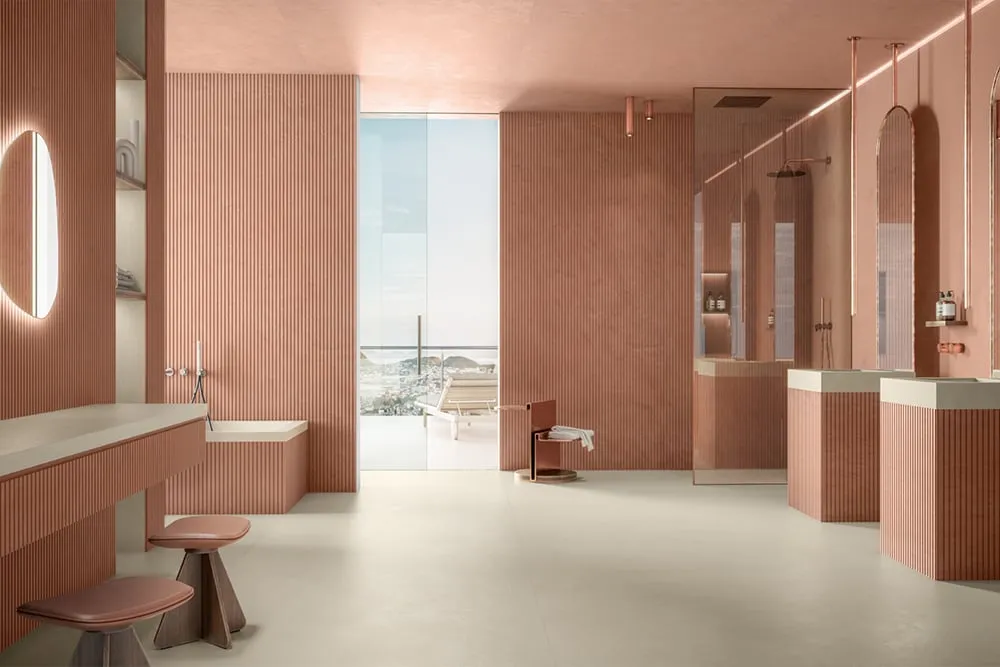
Natural stone is not the only material making its way into the easy-care bathroom with character. Related stone-look surfaces are finding their place too. These materials are evolving with the trends and play a decisive role in creating the desired bathroom atmosphere. They feature in vanity tops and furniture, in showers, on walls and on floors. We take a closer look at some of the latest products and trends.
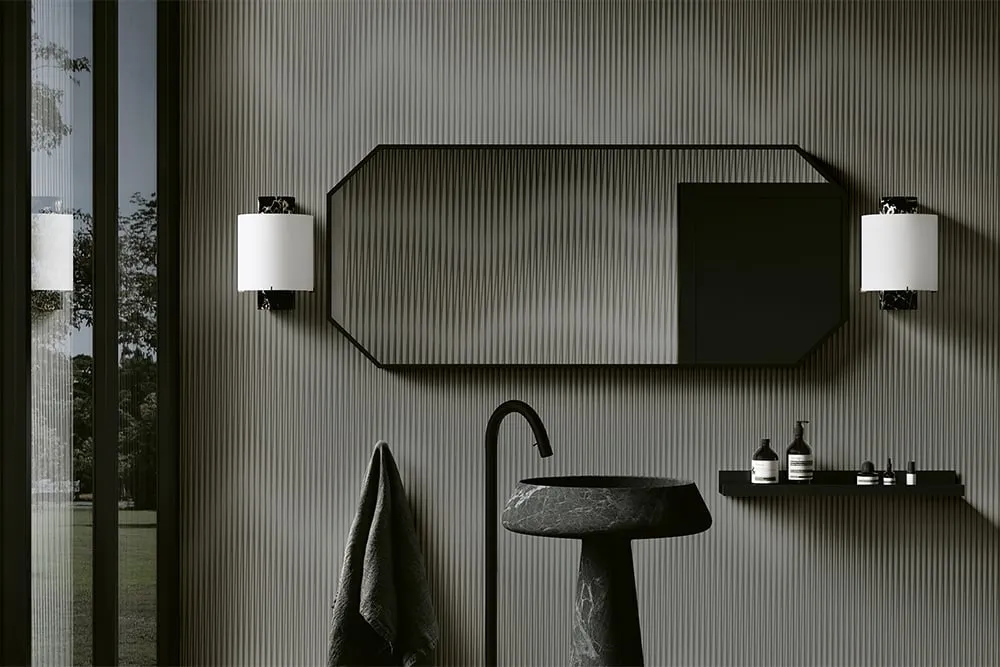
How can you make a bathroom stand out? With distinctive surfaces! Alongside natural stone, a host of other innovative sheet materials, from ceramic, sintered stone and quartz composite to solid surface and ultra-strong concrete, take design to the next level. Here is our selection.
A taste for texture
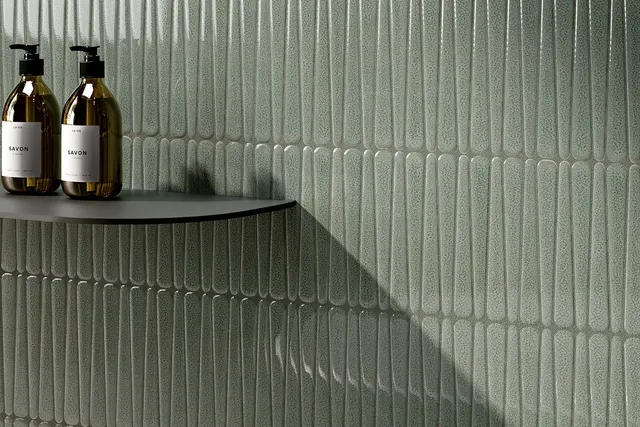
Ribbed surfaces have been in vogue for some time, in kitchens and just as much in bathrooms. Fluted furniture fronts are particularly sought after, adding extra texture and a new sense of depth to the overall design. Stone materials are getting in on the act too. A new arrival is Dekton Ukiyo sintered stone, developed in collaboration with designer Claudia Afshar. This new textured collection features linear grooves, designed specifically for vertical cladding applications. The slabs measure 45 centimetres wide by 300 centimetres high and come in five matte colours, with a choice of two groove options. Ceramiche Coem is also pushing the boundaries of texture with Moiré, a porcelain stoneware collection bearing the design signature of Alessandro Pasinelli. As the name suggests, the surface has a wavy, ‘vibrating’ moiré effect, familiar from the fabric of the same name. The collection comprises large ceramic slabs measuring 120 by 280 centimetres and six millimetres thick, available in five colours. The undulating moiré effect really comes into its own over a large area, when several slabs are installed side by side. A refreshing change from the usual.
New natural stone designs
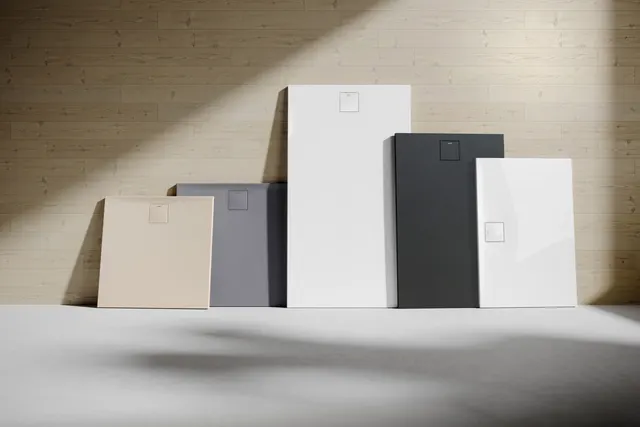
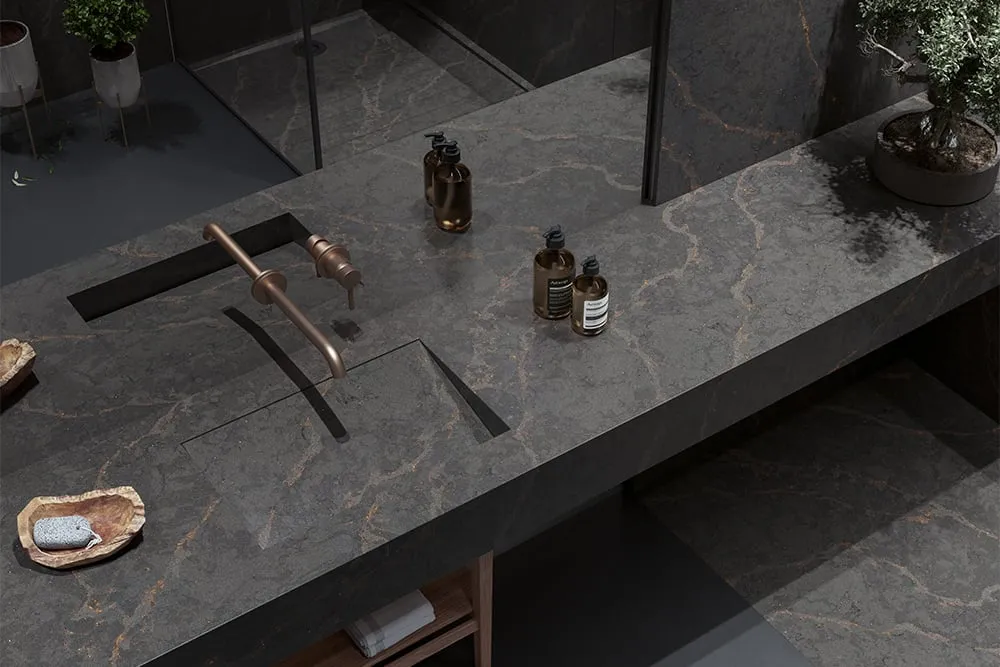
Many new designs for a range of surfaces continue to draw inspiration from nature. The marble trend, in particular, shows no sign of slowing down. This is evident in the range of thermoformable, seamless and easy-to-clean solid surface from Himacs, which has recently been expanded with four new marble colours. Hygiene is also a key consideration in Casalgrande Padana’s brand-new Aquatio porcelain collection for bathrooms. The range includes single and double washbasins, vanity tops and shower trays made from six-millimetre-thick ceramic sheet material, drawing on various collections from the Italian brand. The ceramic material is treated with Bios Antibacterial, a silver-based technology that eliminates 99% of bacteria and prevents stains and odours. Available in a range of natural stone designs, as well as other colours from the Casalgrande Padana collection.
Sustainability in focus
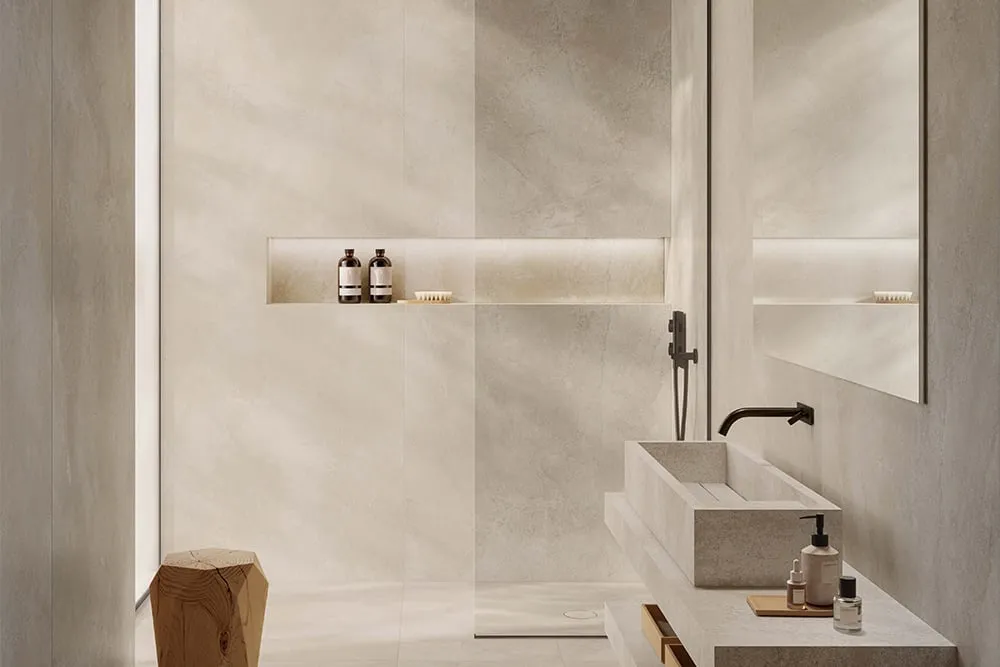
There are also several new natural stone designs among quartz composites. New to Silestone’s range is Le Chic, a collection of six designs created using a new design process. The result is a highly realistic, detailed vein pattern with metallic accents that faithfully recreates the look of natural stone. In terms of sustainability, the new collection uses patented HybriQ+ technology: the sheet material is made using 99% recycled water, 100% renewable energy and 20% recycled raw materials. In addition, the composition contains just 10% silica in two designs and 40% in the other four. Caesarstone, meanwhile, is presenting a new generation of mineral surfaces focused on sustainability. Caesarstone Mineral combines premium minerals and innovative materials with recycled elements, including up to 30% recycled glass. It also features a reduced silica content. Sustainability is increasingly becoming a key consideration for bathroom and kitchen surfaces.
Concrete with character and exceptional strength
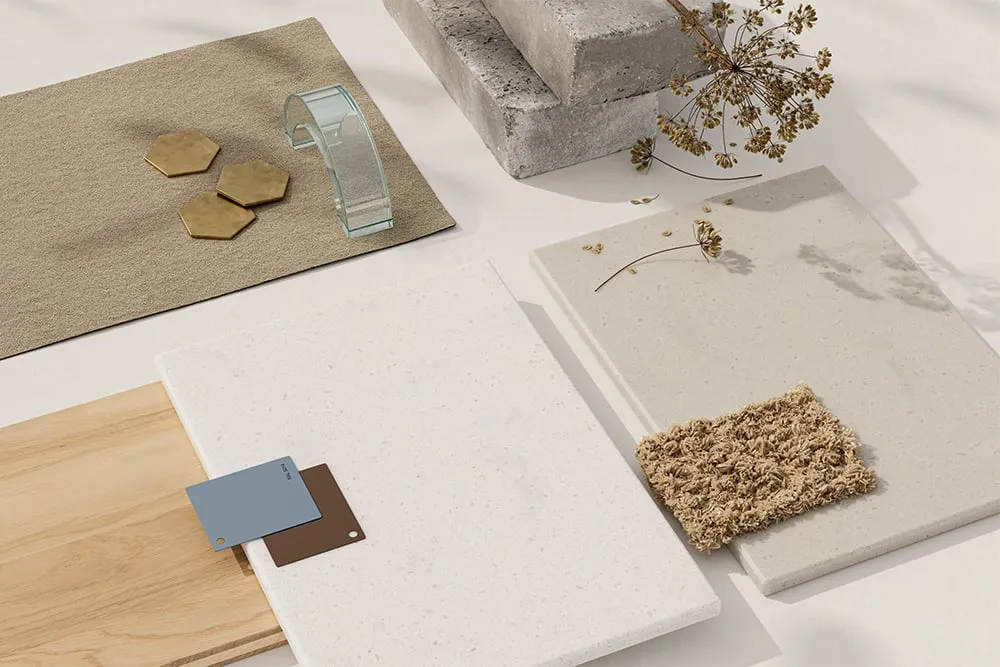
Concrete as a characterful, tactile sheet material in the bathroom? Absolutely. One example is the ultra-strong concrete from Kwantz, a quintessentially Belgian family business. The technology behind Kwantz stems from research at Ghent University and was further refined in collaboration with the Willy Naessens Group. The concrete gets its strength from its optimised composition, made with 100% natural materials and no resin or synthetic adhesive, and using minimal fresh water. The result is a durable product with high hardness, good scratch resistance and a natural appearance. The sheet material is available in six colours that bring out the concrete’s distinctive character. It has a wide range of applications: washbasins, shower and bath cladding, as well as kitchen and table tops, window sills and much more. The concrete is coloured throughout, so it can be sanded again as needed over time, just like natural stone, restoring the surface to its original appearance. The price? Comparable to affordable natural stone and quartz composites. There is no shortage of possibilities.
Question about this story? Ask your question
Keep following this
Get an email when a new story is published. No account needed.
- ThemeMaterials and finishes in balance
- SubjectSanitaryware