Connectivity everywhere
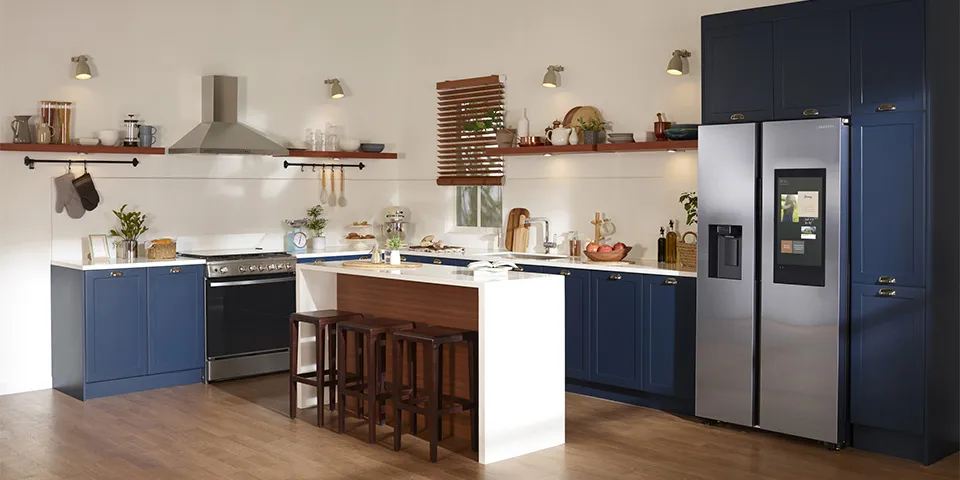
We live in a connected world, that much is clear by now. The technology is available to let appliances talk to each other and coordinate everything automatically. With a proliferation of apps, we can even switch everything on and off, control it and monitor it remotely. But is this connectivity really necessary? Is it a curse or a blessing?
In recent years, the phrase ‘Internet of Things’, or IoT for short, has been on everyone’s lips. Every sector, and even every manufacturer, has been working on a solution, product and/or app to ride the IoT wave. Perhaps it still is. We see several brands offering ‘connected’ and ‘standard’ versions of every kitchen appliance. While conventional appliances require you to operate them at the appliance itself, sometimes with the help of user-friendly displays, connected products can be operated from the comfort of your armchair or on your way home from work. “It’s great that you can preheat the oven so it’s ready to use when you get home”, is a common refrain. It’s also handy to be able to check what ingredients you’re missing for that delicious meal by looking inside the fridge via a camera. Are these the applications we want connected appliances for? Or should we be looking for more possibilities?
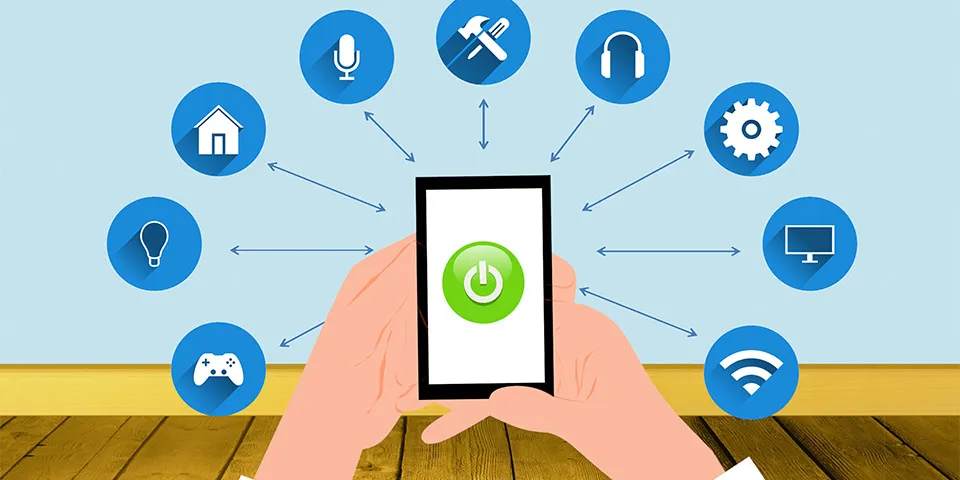
In a connected kitchen, and by extension a connected home, the smartphone or tablet is the nerve centre. This is where all commands are sent from and data is collected.
Appliances talk to each other
Another form of connectivity made possible by today’s technology is communication between appliances, without any human involvement. Direct communication between the hob and the cooker hood improves efficiency and ease of use. The hob tells the cooker hood which pans are on the hob, how many there are and which setting is being used. The cooker hood then automatically adjusts its extraction rate based on this data to clear away the cooking fumes. These can either be extracted outside or filtered and recirculated back into the kitchen, depending on the type of cooker hood chosen. This connectivity is available in various forms. Manufacturers pursuing this approach always include the option of manual intervention when needed, or if the kitchen user wishes. Every connected appliance, provided the manufacturer has designed it to do so, can communicate with users’ smartphones or tablets via an app. This allows users to send commands or simply check that everything is working as it should. Information on operation and the need to clean or replace components is also provided in this way.
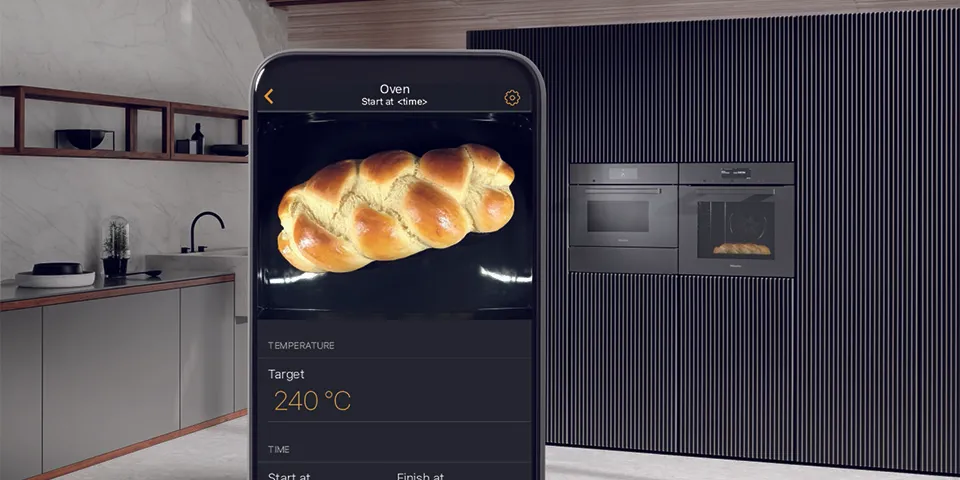
Cooking even when you’re not physically in the kitchen. (Image: Miele)
‘Smart’ solutions for the heart of the home
The kitchen has been the beating heart of the home for years. We spend more time there than anywhere else each day, at least while we’re at home. It goes without saying, then, that the many appliances in the kitchen are being made ‘smart’. Less obvious ideas being developed (or perhaps already available) include cooking islands that adjust their height using facial recognition, fall detection (especially when someone remains on the floor for an extended period), and more. The technology is there. What one person sees as a handy feature might be the missing link that completes someone else’s kitchen. For older people, it might even mean they can stay in the home they know for longer. In short, what a connected kitchen, also known as a smart kitchen, looks like differs for everyone.
Question about this story? Ask your question
Companies in this story

Keep following this
Get an email when a new story is published. No account needed.
- SubjectGeneral
- CompanyMiele