Discover the possibilities of stainless steel

Once found almost exclusively in professional kitchens, stainless steel is now making its way into more and more domestic kitchens. This ranges from entire kitchens in this popular material to taps with a stainless steel coating and appliances featuring stainless steel accents.
A brief explanation first. Nothing too lengthy, we promise. Stainless steel is a group of corrosion-resistant, but not corrosion-proof, steel grades. It is an alloy made primarily of iron, chromium, nickel and carbon. Stainless steel and rust-resistant steel are often considered the same thing, but that is not always the case. Stainless steel must contain at least 10.5 per cent chromium and no more than 1.2 per cent carbon. As the proportions of the materials used can vary, there are also different varieties of stainless steel. To classify them, a standardisation system was developed, primarily in the US, with designations (stainless steel followed by a number) and corresponding percentages.
Choosing strength and durability
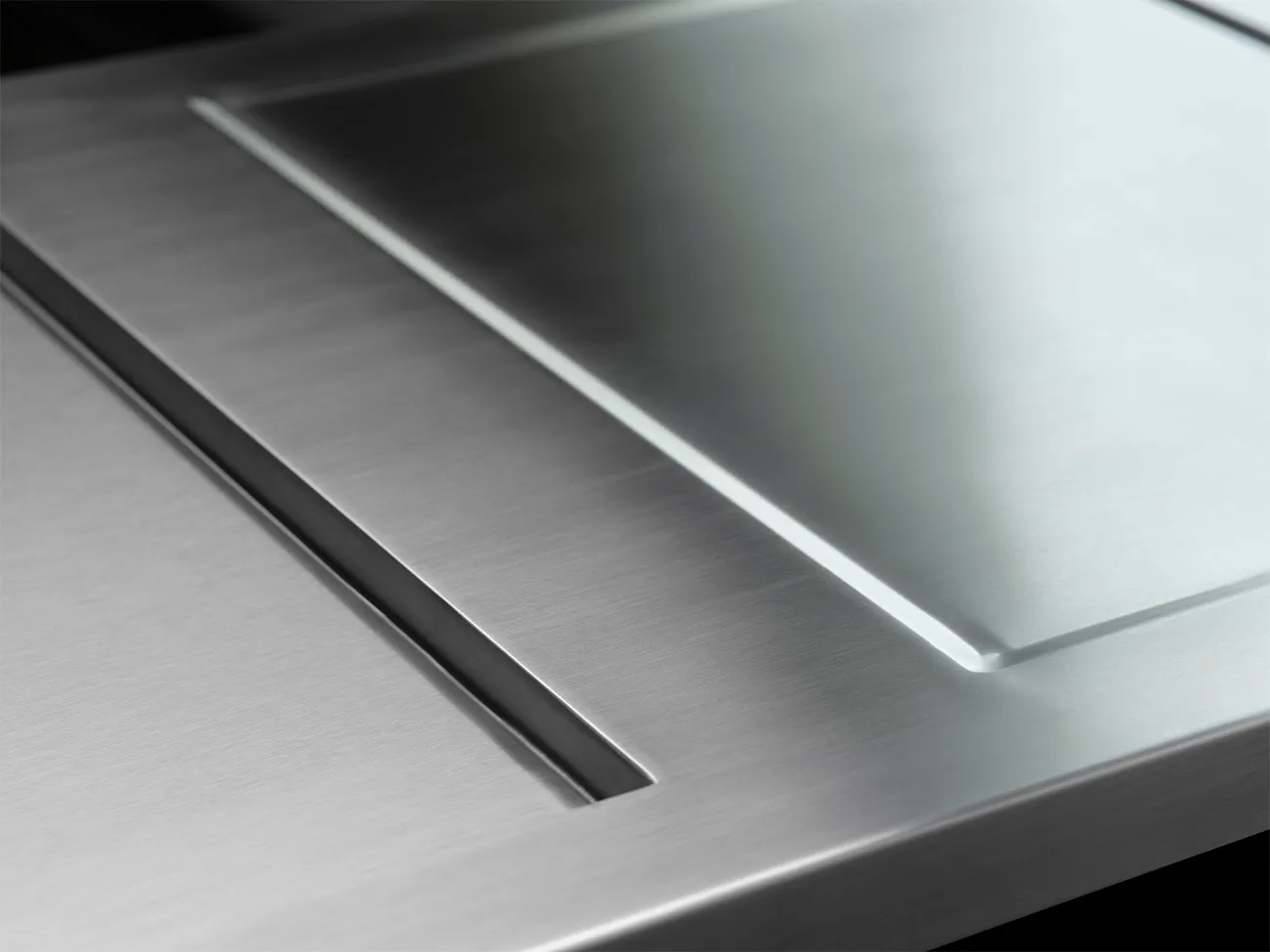
Stainless steel is an alloy of iron, chromium, nickel and carbon, produced by melting these materials at high temperatures. This process gives it the familiar qualities that make it a popular choice: durability, ease of maintenance, and resistance to heat and oxidation. Easy to maintain does not mean it requires no attention at all. Of course it does. A stainless steel worktop, for example, takes quite a battering. Think greasy fingerprints, the occasional cooking stain and so on. Regular, thorough cleaning is all it takes. One major advantage of stainless steel as a worktop material is that it is completely waterproof and therefore highly corrosion-resistant. With proper use and timely maintenance, a worktop will last a lifetime. Add to that the fact that it is recyclable without compromising on quality, and you have an extremely environmentally friendly material. And that matters today!
Centre stage
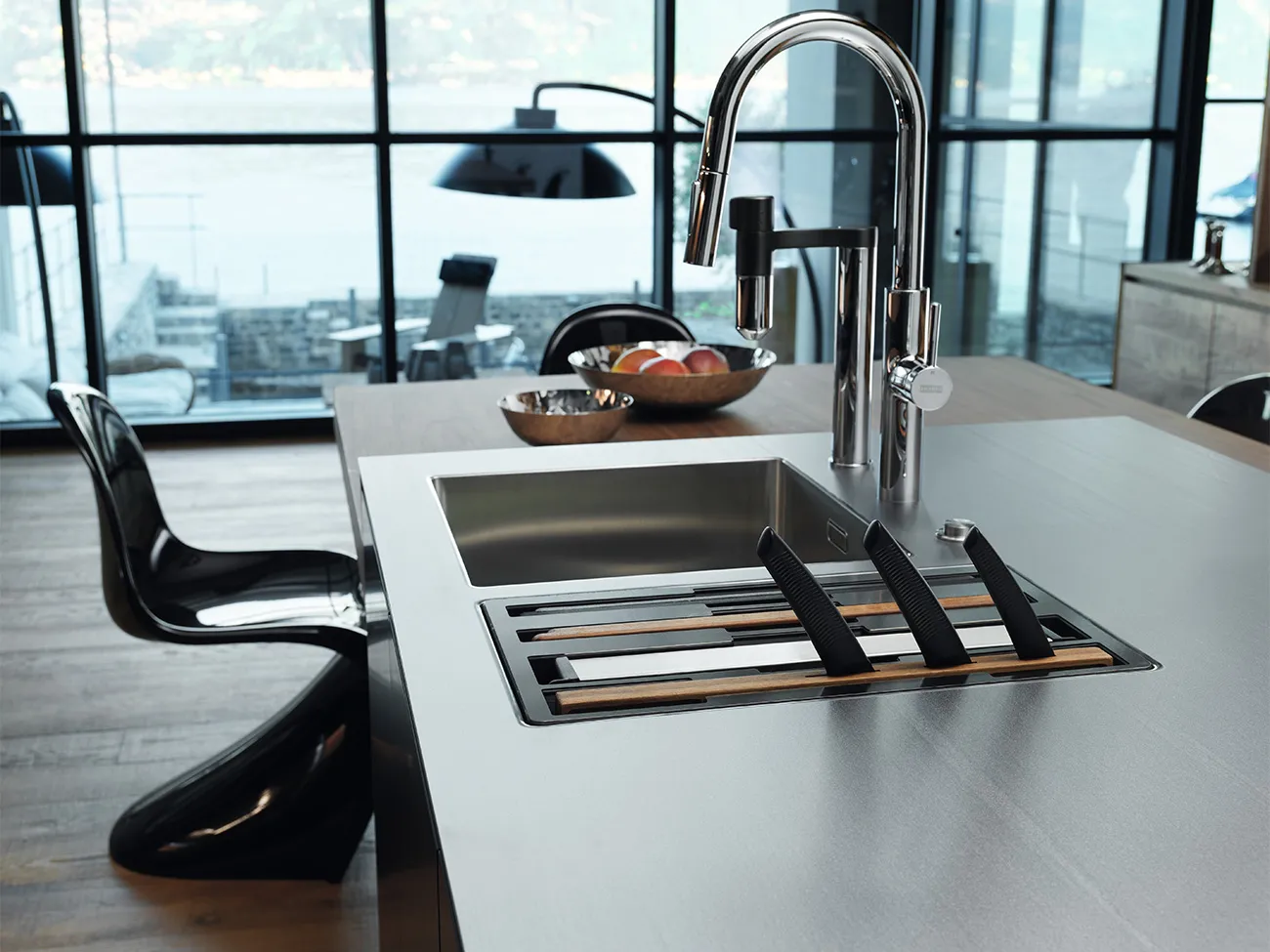
A worktop immediately catches the eye in a kitchen, but the same is true of the kitchen tap, probably the most frequently used fixture in any kitchen. A kitchen tap needs to withstand plenty of wear and tear, which is why it receives so much attention. But it is also a prominent feature, prompting manufacturers to offer a wide range of sizes, proportions, formats and finishes. Black is a popular choice in the kitchen, so black taps are a common sight. A tap with a stainless steel look is a perennial favourite, suiting a wide range of kitchen styles.
Attention to detail
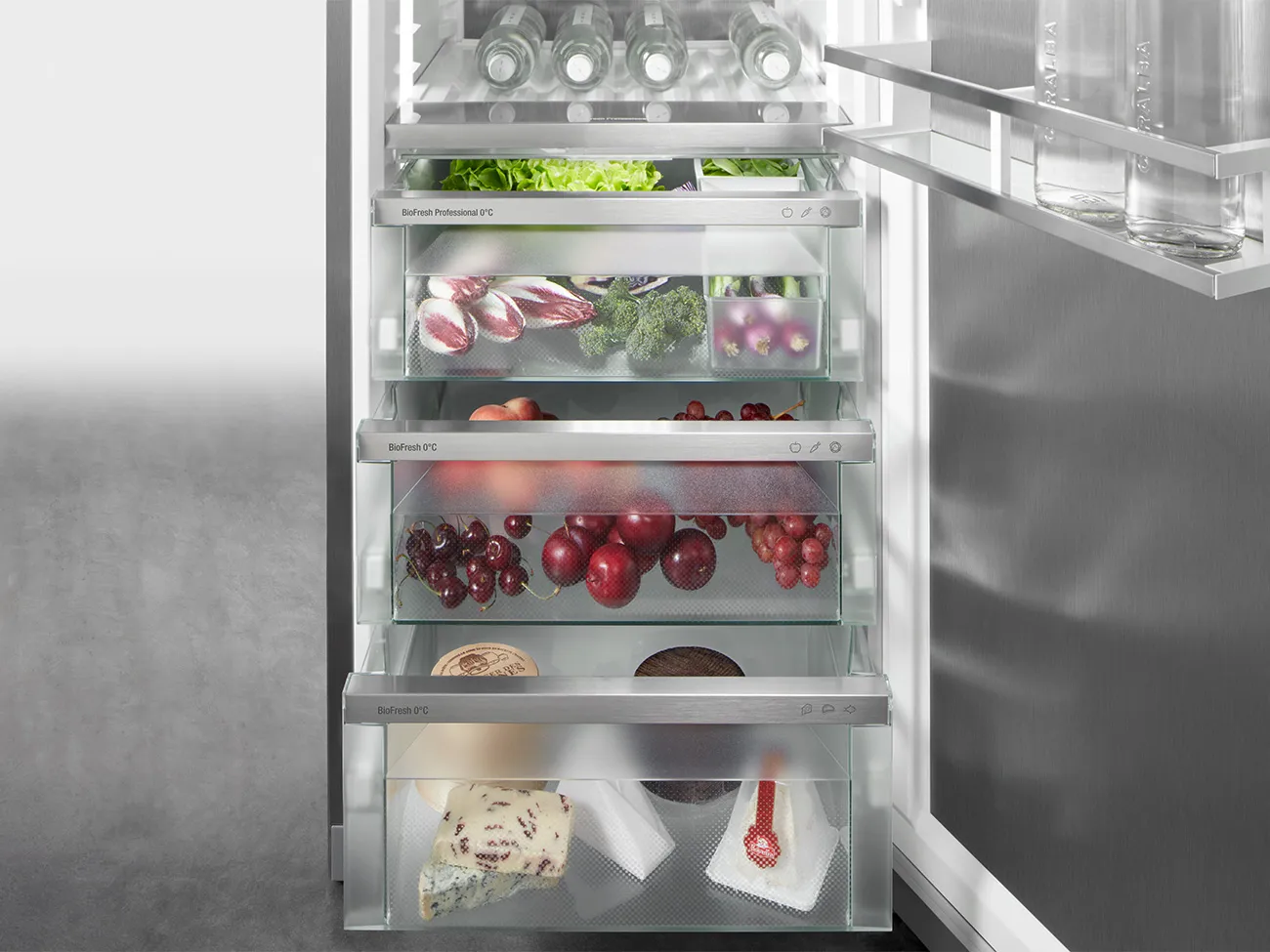
Entire kitchens made of stainless steel certainly exist. But when we talk about stainless steel in the kitchen, we are generally referring to accents on various appliances. For example, cookers and ovens are available both with controls integrated into a user-friendly touchscreen and with robust, eye-catching control knobs on the appliance itself. “They highlight quality and attention to detail without compromising ease of use,” we hear from several manufacturers.
We are also hearing from built-in appliance manufacturers that stainless steel is being used more and more. Here, too, the material is used for accents that give appliances a more luxurious look. It is no surprise, then, that appliances with stainless steel accents tend to be the more high-end models in the range.
Question about this story? Ask your question
Keep following this
Get an email when a new story is published. No account needed.
- ThemeMaterials and finishes in balance
- SubjectGeneral