Everything in its place. A welcoming atmosphere, all in one
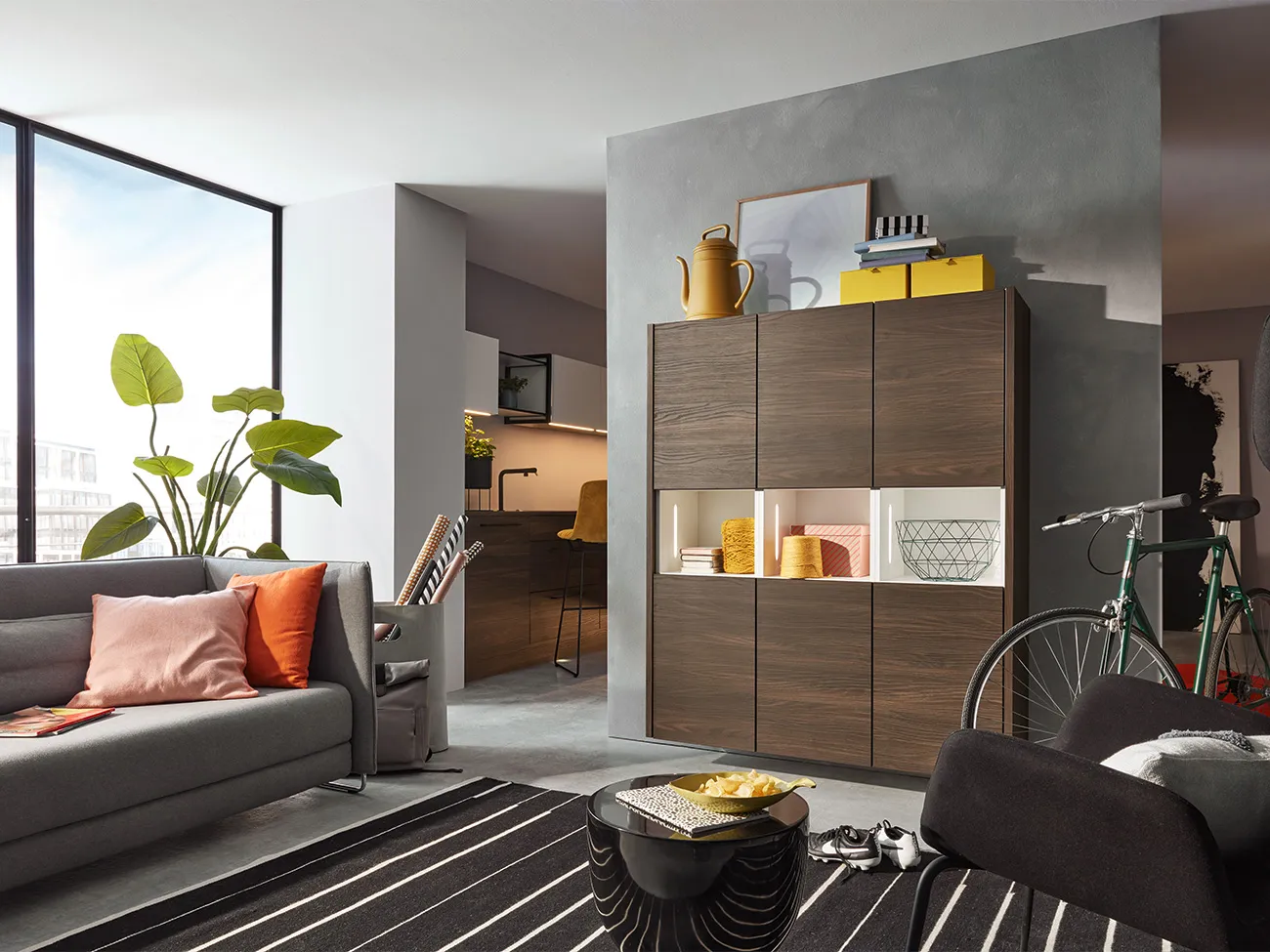
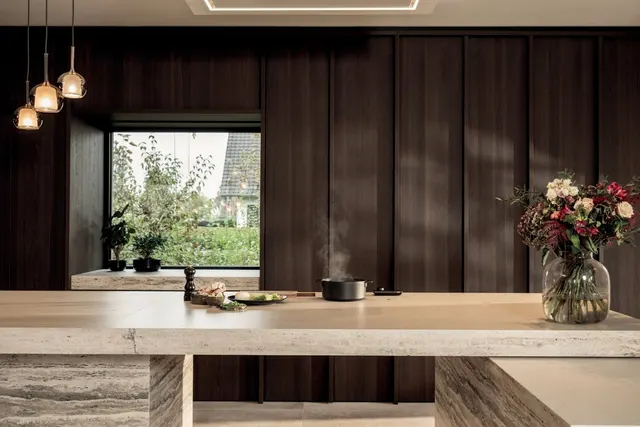
A glass of water, a quick rummage in the biscuit tin, a glance in the fridge: we’re magically drawn to the kitchen. And once we’re there, we’re happy to stay a little longer. Over a coffee, for example, or during a party, which traditionally tends to gravitate towards the cold drinks and the enticing smell of food. So why not extend the kitchen’s look and feel into the adjoining rooms? With a flexible range of kitchen furniture, it’s child’s play.
Today’s kitchen is not just functional, it is made for living. It often opens onto the dining room or living room. That makes it all the more important to consider the transitions between spaces at the design stage. If you want everything to feel like one cohesive whole, you can go a step further and incorporate the entire room into the design.
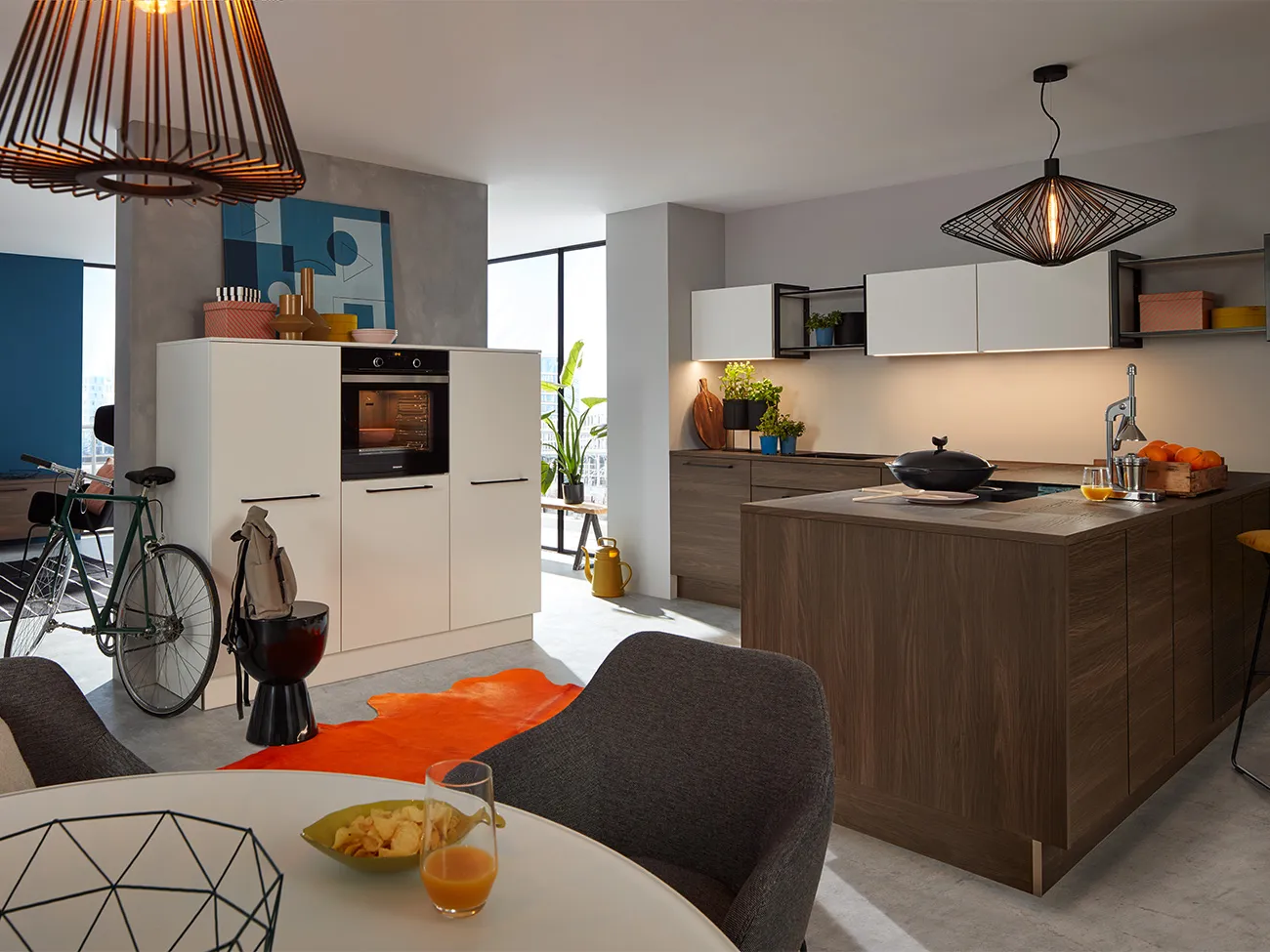
Even without an island
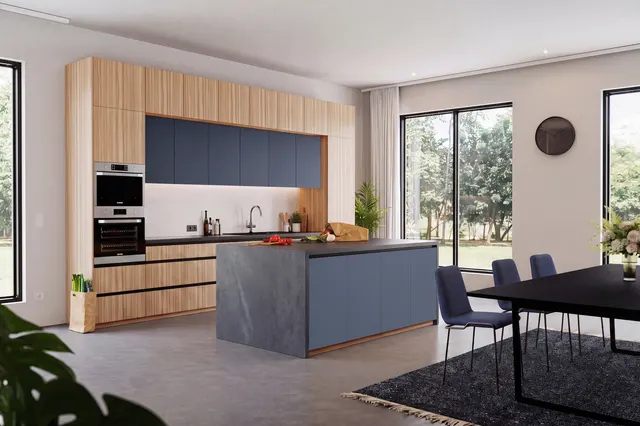
Where the kitchen flows into the living room and space allows, islands are a popular design feature. They make it easy to move around and communicate while cooking in the living space. However, structural constraints do not always allow for this kind of design.
Sideboards or lowboards made from wall units are good alternatives for creating a homely transition. Glass doors can make cabinets look less imposing. There are no design compromises: with coordinated decors, the inside of the cabinets looks just as homely and elegant as the outside. Alternatively, uninterrupted door fronts can be broken up with shelves. A contrasting colour adds extra accents. Lighting brings even more depth to the room and creates a cosy atmosphere, too.
Less is more
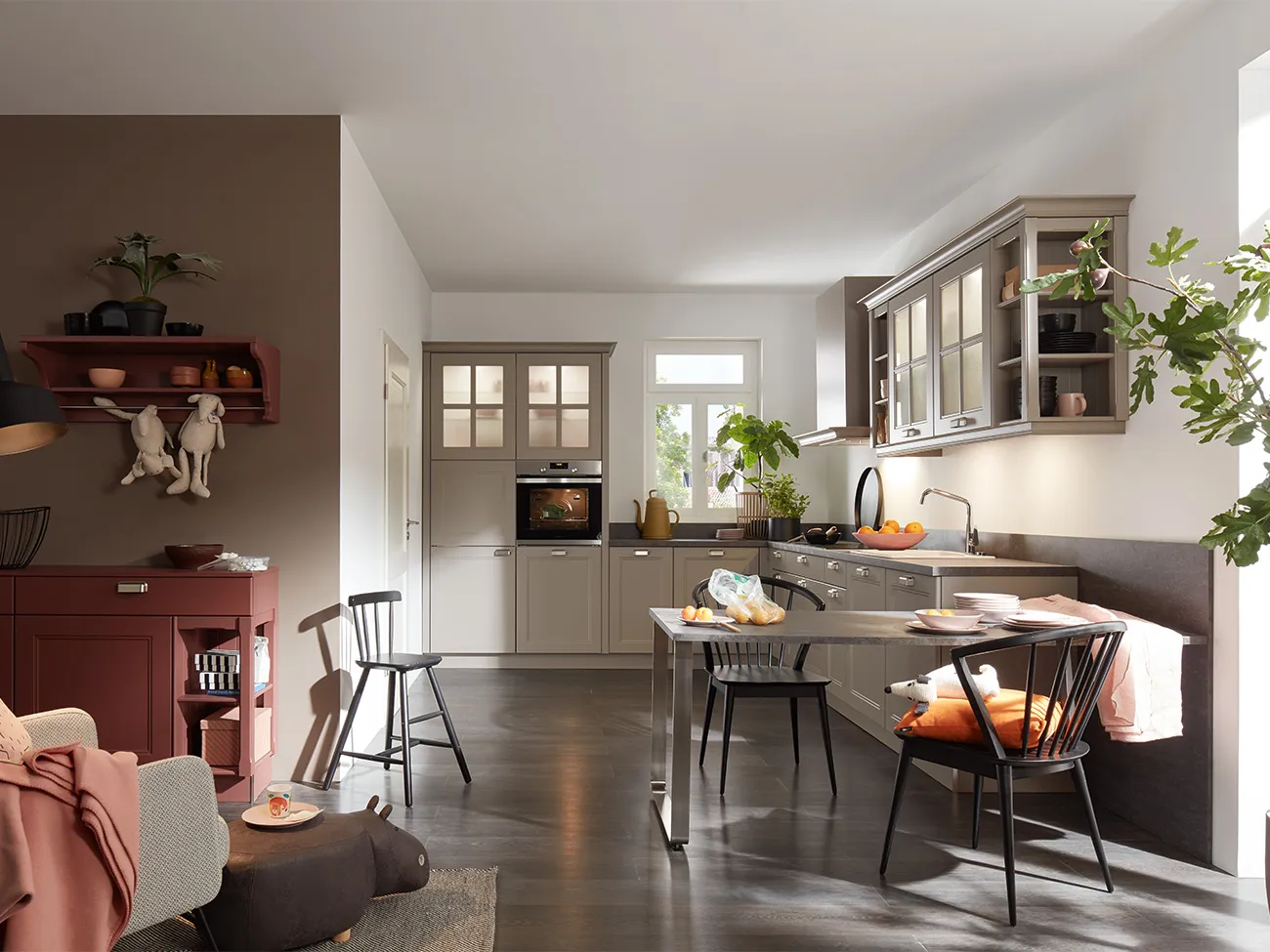
Surfaces play an important role in creating a coherent design. If you want to furnish the kitchen, dining room and living room together, you need to choose a theme. This could be a particular material, a front style or a favourite colour. This is usually paired with a carefully chosen contrast.
The targeted use of surfaces gives the design structure. Individual zones can be visually separated from one another. For example, the country kitchen could be finished in a soft shade of beige. The living room, with the same fronts, could be defined by a different colour. Another option is to repeat a contrasting surface used as a focal point in the kitchen on the living room furniture.
Versatile kitchen furniture
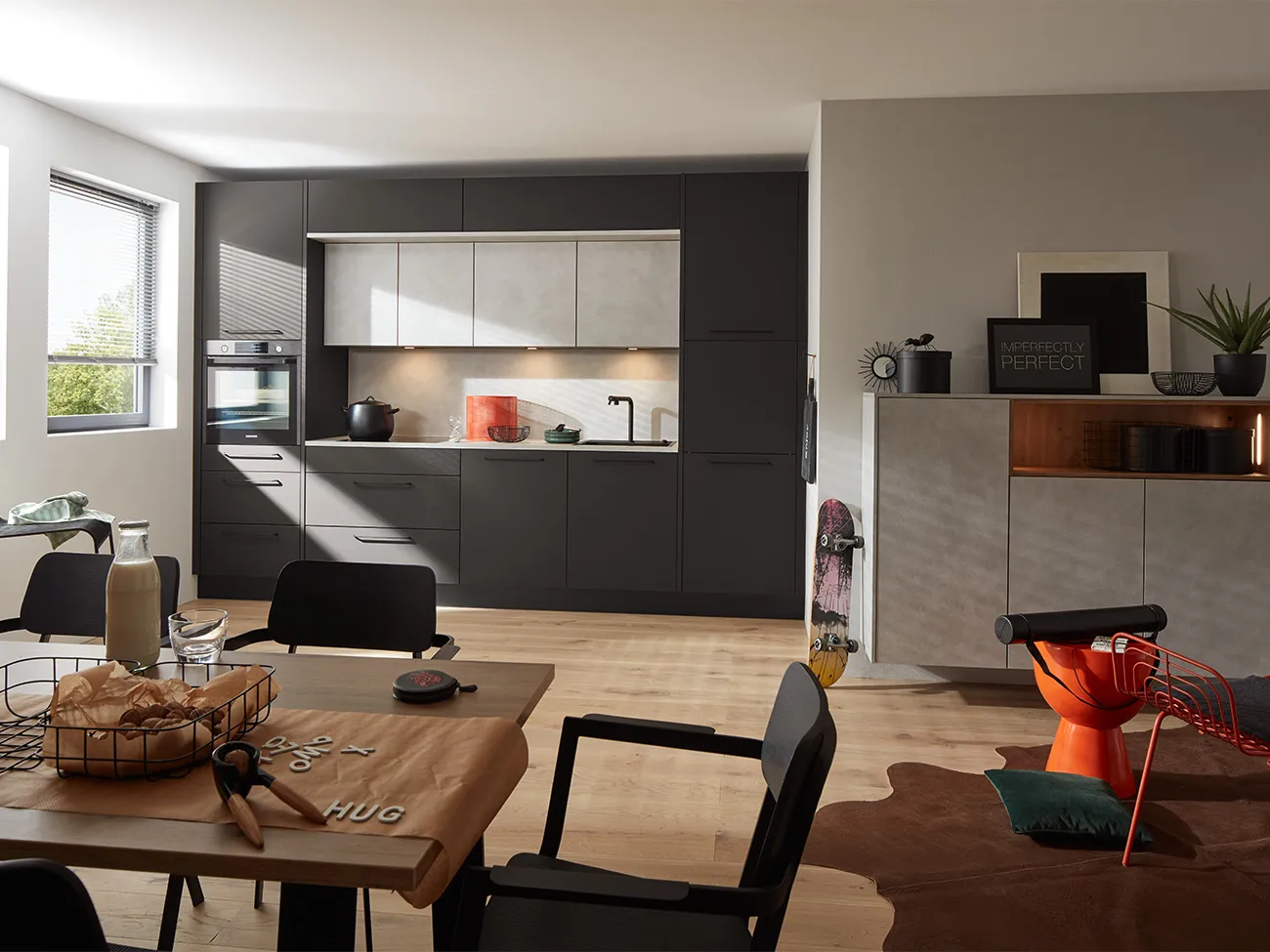
Kitchen furniture allows for individual, creative planning. This is important not only for meeting personal needs, but is especially practical when a home has to serve several purposes at once. A home office workspace, for example, can now be designed using kitchen furniture. Anyone who wants to relax undisturbed at the end of the day can keep certain appliances and work processes in a utility room. Flexible furniture also makes it possible to furnish hallways and dressing rooms. There are even matching bathroom furniture ranges. But we’ll tell you about those another time.
Question about this story? Ask your question
Keep following this
Get an email when a new story is published. No account needed.
- SubjectGeneral