Hospitality as a growth driver: how customer experience sets interior fit-out and showroom sales apart
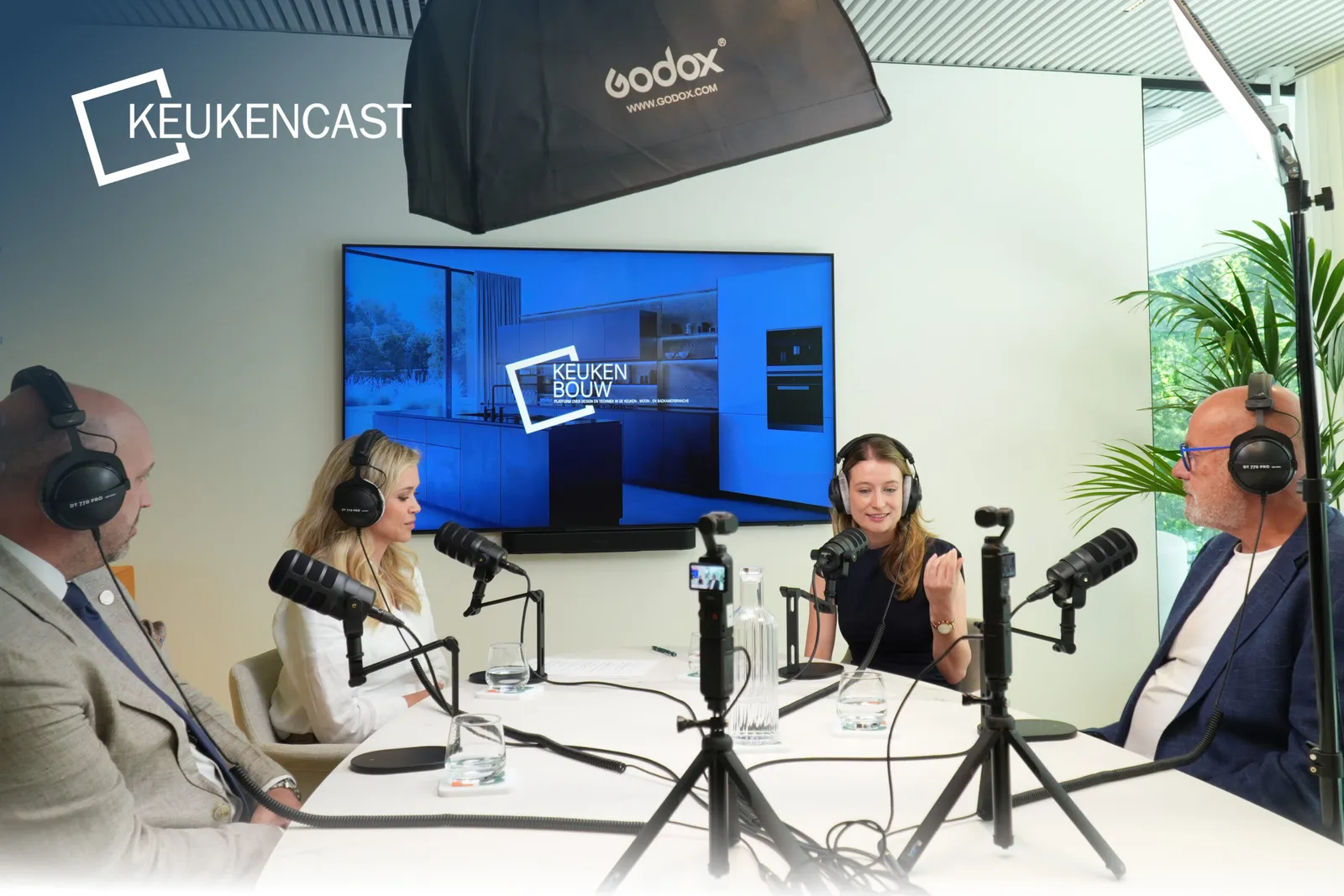
This episode of Brio Broadcast focuses on one key theme: hospitality. How do you ensure that customers remember not only your products, but above all how you made them feel?

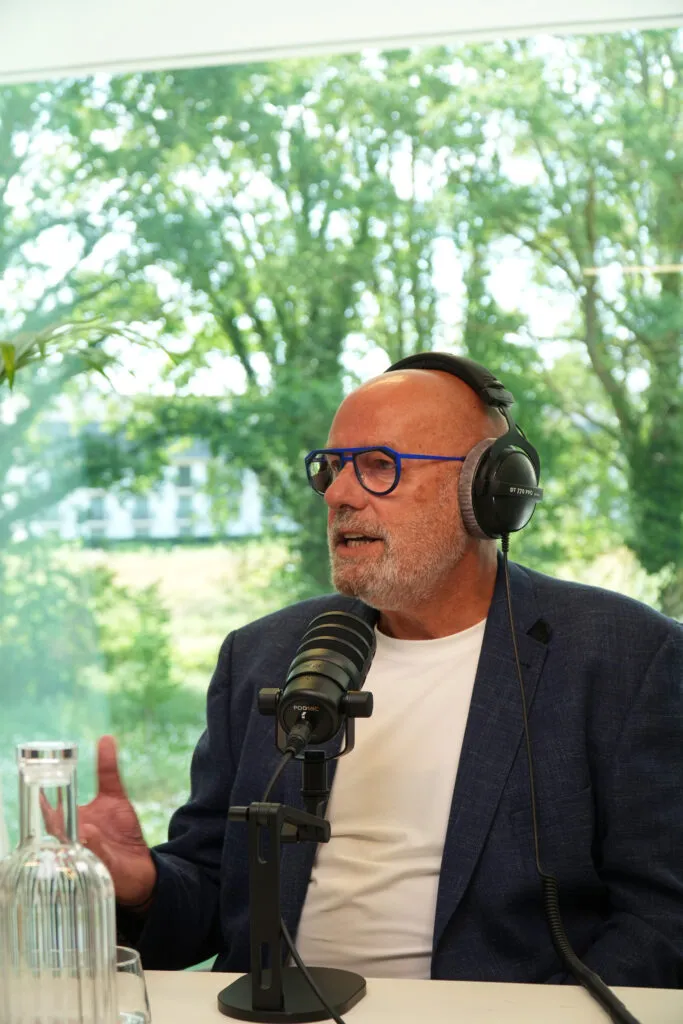
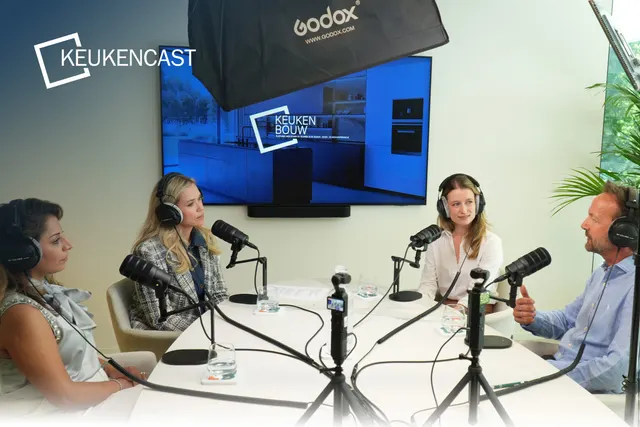
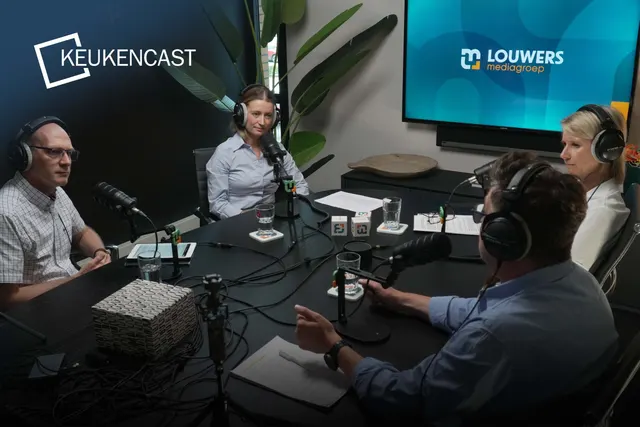
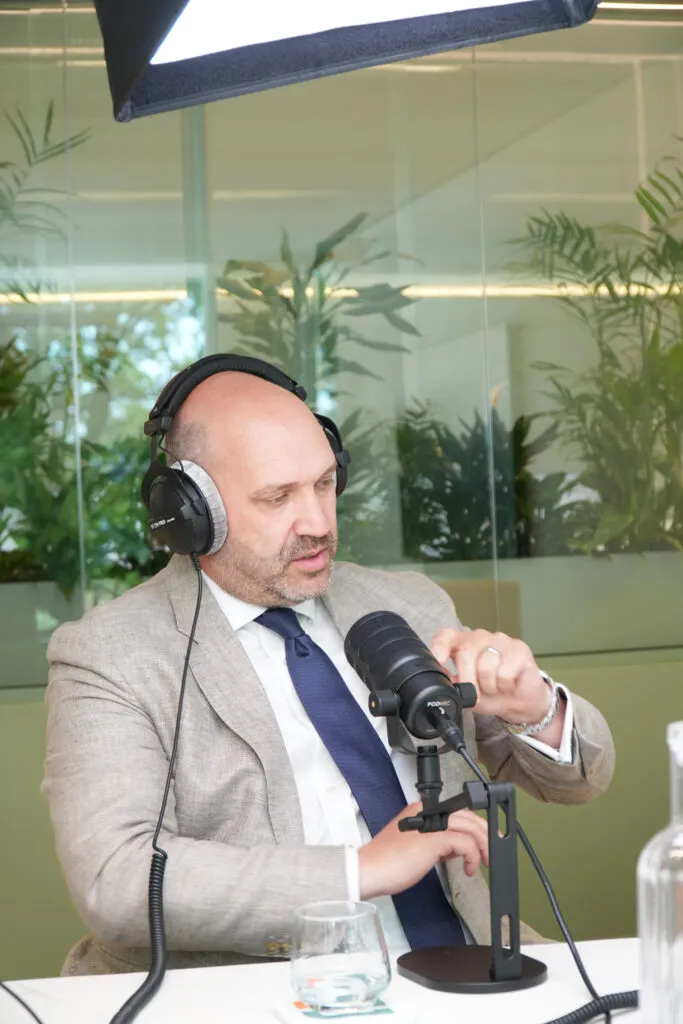
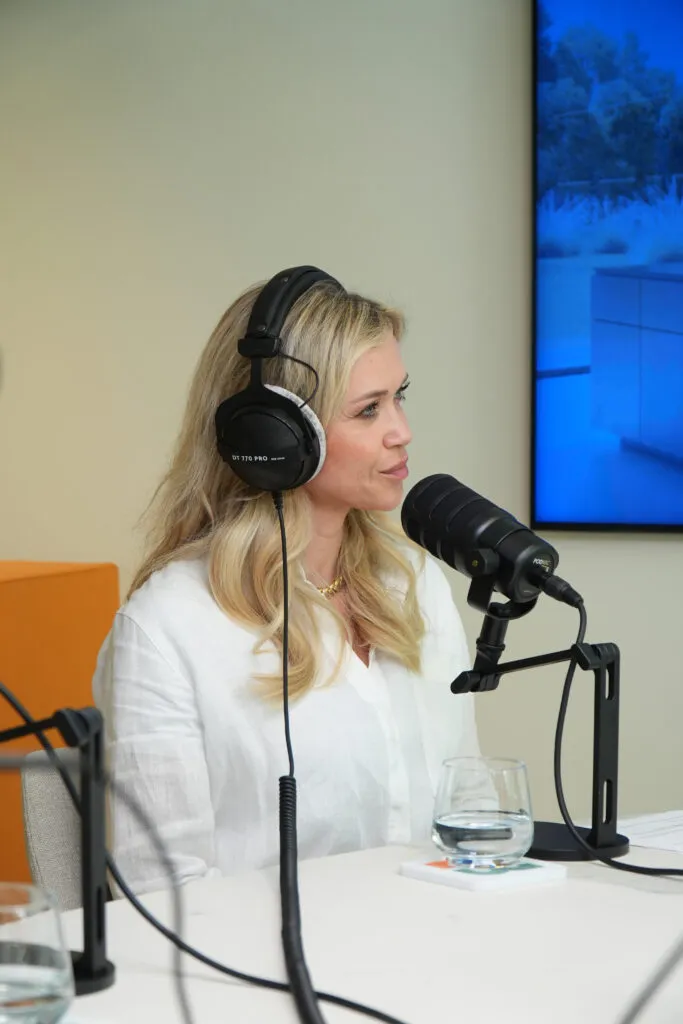
Together with Caroline Dries (Brio Group), Vincent Vermeulen (School for Butlers & Hospitality) and Chris De Waele (Customer Delight Works), Virginie Claes explores the power of hospitality, customer experience and emotional connection. From the first impression in a showroom to following up with customers after a purchase, discover how small details can make a big difference.
Drawing on practical examples from the hospitality sector, retail and interior fit-out, you’ll gain concrete insights into building stronger customer relationships, creating greater trust and taking your showroom experience to the next level.
Een zakelijke vraag aan Brio Group? Get in touch
Full transcript
All chapters (27)
- Welcome to Brio Broadcast
- Hospitality, showrooms and experience
- Why this topic
- The overall customer experience
- Feeling like a priority
- Putting the product in the customer’s hands
- Making a good first impression
- Food, service and hospitality
- Thinking alongside the customer
- From informing to inspiring
- Asking the right questions
- Talking to customers
- Working on your business
- Practical tips for customer experience
- The shopping experience starts before the store
- What remains unchanged in hospitality
- AI and training
- Recovering from a poor first impression
- Enhancing the showroom experience
- A homely feel instead of a shop-like feel
- Hospitality beyond the business
- The counter as a barrier
- Making the product visible
- Attracting passers-by
- Stopping power
- Don’t talk about the product
- Closing remarks
Welcome to Brio Broadcast
Virginie Claes Welcome to Brio Broadcast, an initiative by Brio Group. And this is also the first episode in this podcast series. So if you’re an entrepreneur, interior specialist or tradesperson looking to grow your business, you’re in the right place to do business con brio.
In this first episode, we’re talking about hospitality and making people feel welcome. I’d like to start with one of my favourite quotes: People will forget what you said or did, but will never forget how you made them feel.
Hospitality is very important today, because you can compare products and prices online, but the experience, offering real inspiration, guidance and trust, is what matters. I’m convinced that this ties in perfectly with Brio Group’s vision, because as a network organisation, it’s there to support you, work with you and build strong customer relationships.
Hospitality, showrooms and experience
Virginie Claes Right, hospitality, showrooms, experience. Who better to invite to the table than a few specialists?
Caroline Dries, I’d like to introduce you first. You’re the commercial manager at Brio Group. Through your day-to-day contacts, you know all about what’s happening across the interior and construction sectors. Welcome.
Caroline Dries Thank you.
Virginie Claes We also have Vincent Vermeulen at the table. I think we know you as something of a rock when it comes to hospitality. You’re a fourth-generation hotelier, but you can tell us more about that in a moment.
You founded School for Butlers & Hospitality, but what I mainly remember is that you support companies, organisations and brands around the world. From luxury brands to the aviation sector, as well as companies closer to home. In short, you’re a jack of all trades when it comes to hospitality. So it’s great that you’ve come along to help us out.
And welcome too to Chris De Waele from Customer Delight Works. You have 40 years’ experience in the hairdressing sector, hospitality and customer experience. You’re also a solutioniser. I take that to mean someone who finds solutions for businesses. But how can you improve customer relationships? That’s what I’d like to talk about with you today.
Read the full transcriptCollapse transcript25 chapters remaining
Why this topic
Virginie Claes Caroline, perhaps you could briefly explain why Brio Group chose this topic?
Caroline Dries One thing we’re seeing a lot in our sector today is that customers are making different choices. Bespoke work and craftsmanship remain very important, but it’s the overall experience that now determines which interior fitters people choose to work with.
It’s mainly about complete concepts, which involve quite a lot. It’s a complete interior, and a major investment. So customers today want a partner they can rely on, one with a solid structure that guides them from A to Z throughout the process.
And that’s exactly what our interior fitters can combine so well: craftsmanship and a personal approach. That’s one of the reasons why we wanted to talk about hospitality and customer experience today.
The overall customer experience
Virginie Claes You mentioned the overall experience. Have you noticed a difference over the years? What has changed?
Caroline Dries One of the main things I’ve noticed is that customers are looking for a completely hassle-free experience. As I said earlier, we’re talking about bigger projects, with lots of different elements that need to be brought together.
And they’re usually looking for one point of contact within the company. One person who follows everything through from A to Z and can really support them in meeting their expectations. And that doesn’t have to involve grand gestures from interior fitters today. It comes down to the little things, above all consistency, availability and communication.
Customers simply need to feel that the interior fitter is treating their project in the same way that they themselves experience it. For an interior fitter, of course, this is part of everyday life. They regularly take a number of projects through to successful completion.
But for the customer, this isn’t something that happens every year. So it’s an intense experience. And they want to make the most of it, bringing all those beautiful details and personal touches into their interior.
Feeling like a priority
Virginie Claes Wow, yes, that’s so true. You want to feel like a priority. I think that applies to everything. I was at a company recently for a meeting, and they already had my name written on a little chalkboard behind reception. I thought that was so lovely.
Have either of you ever had an experience like that? You’re here today to talk about hospitality and experiences, but what’s an experience that has really stuck with you?
Chris De Waele I’ve had the same experience as you. I arrived for an appointment somewhere and they had my name up, along with my photo and everything, which they’d taken from my website to welcome me. It made me feel great.
And something that happened to me a long time ago, which is very important: I started working 42 years ago and bought my first suit. The trousers needed altering. A week later, I went into the shop to pick them up, and the man behind the counter said: “Good afternoon, Mr De Waele, welcome.”
As a result, I bought my clothes from the same tailor for 30 years. I think using someone’s name is an incredibly powerful tool that very few people make use of.
For example, in hospitality you have to book almost everywhere. I’m almost never welcomed by name, even though they know you’re coming. I imagine designers will also have plenty of appointments. So there are lots of opportunities there.
Putting the product in the customer’s hands
Virginie Claes Vincent, over to you. Tell us about it.
Vincent Vermeulen My 11-year-old son and I spend too much time looking at screens, so I was looking for something we could do together. Long story short, I found a particular board game. The thing about this game is that it has two hurdles. First, you have to make and paint the miniatures yourself. And second, you have to read a book about the size of the Encyclopedia Britannica to understand how to play.
I went to a shop here in Bruges. Everything was beautifully displayed, but nobody spoke to me. I still felt that friction, thinking: this is going to be far too difficult, forget it.
A few months ago, I was in London and saw the flagship store for that game. It’s called Warhammer, by the way. We went in, and there were eight tables all set up. My son and I were looking around when a guy came over and asked: “Do you know the game?”
I said: “I know it, but it seems pretty complex.” “Yes, but no,” he said, “I can explain it to you in ten minutes.” He got out the dice and explained the game. We had it all figured out in ten minutes.
And I said: “But there’s still a lot of work involved, you have to paint everything, and it’s very intricate.” He turned to my son and said: “Come on, let’s paint one.” My son painted one of the miniatures. Once it was finished, the guy picked it up, put it in a little box and said: “Here’s your first Warhammer. Free, on the house.”
While we were chatting, he greeted everyone who came in. We walked out with a really big Warhammer box.
The point is, and this is what we see around the world, whether in showrooms or any other experience: put the product in the customer’s hands within the first few minutes. I mean, you’re walking around the supermarket on a Saturday and someone comes over with a piece of sausage. How often have you ended up buying a whole sausage because you tasted it?
Put the product in the customer’s hands in the first moments of the interaction. That was one of my best recent experiences.
Making a good first impression
Virginie Claes Speaking of which, how many seconds do we actually have to make a good first impression?
Chris De Waele Between seven and ten seconds, maximum.
Virginie Claes Oh dear, then I hope I’ve…
Chris De Waele But it can be over by then. If that first impression is a bad one, you’ve lost them. People talk a lot about customer experience, but the customer experience can be negative too.
That’s why my company is called Customer Delight Works, because you should be aiming for delight. You have to succeed in making the customer, as that quote you mentioned says, keep thinking about you. There are tools and systems for doing that, as well as methods.
My method, for example, breaks the customer journey down into four stages: before, arrival, during and after. And in my view, the before and after stages are almost the most important.
If you compare it with a restaurant, I eat out a lot, so it’s something I can compare each time. I can have fantastic food on my plate, wonderful wine and good service, but if something goes wrong when it’s time to pay, or they tell me: “You’ll have to take your card to the till,” the whole experience is ruined. And I won’t go back.
Food, service and hospitality
Virginie Claes Vincent, speaking of food, you know a thing or two about that too. What I mean is, professionally, you’ve…
Vincent Vermeulen I literally and figuratively grew up in a hotel. I went to the hotel school in Koksijde, then headed south to France to work as a sommelier in a two-Michelin-star restaurant.
And right away, when I was 18 or 19, I understood what personal service was. That’s stayed with me throughout my life. The foundations of classic French gastronomy.
I recently heard a top Belgian chef say that the kitchen always comes back to the basics. Customer experience is the same.
And honestly, it’s very much in line with what chefs do. For example, what’s the difference between service and hospitality? Service is your technical knowledge. It’s knowing how to make béarnaise, knowing how to make that sauce, and so on.
Hospitality is universal in every organisation around the world, because it is all about emotions. I could walk into a car showroom to have my vehicle serviced, and the first things they ask me in Bali are: what’s wrong with your car? Can I have the key? Where are the vehicle documents? Those are all technical questions.
But if they say to me: there was a diversion on the way here, you know what, take a seat first, have a coffee, we’ll get to your car in a minute, make yourself comfortable. That works well on an emotional level. And that is essential, wherever I go.
And strangely enough, I heard a story from someone who needed a new sofa. He had lots of those sofa kings, sofa-whatever-you-call-them. He had a particular brand, I won’t name it, but he had a particular brand. They have sofas on display in showrooms that look like hair. They actually look like nothing at all. They sell like crazy.
Because those people are trained in hospitality, and it’s phenomenal. That’s what always amazes me. Anyone can find investors for five-star hotels costing a billion euros, but without the people in them, they’re just empty buildings.
Thinking alongside the customer
Virginie Claes Yes, and sometimes it’s simply about spotting something that isn’t there yet, or thinking alongside the customer. Do you think that happens often enough?
Chris De Waele I think that’s sorely lacking. I’ve just got back from a trip, where I stayed in a few hotels. And if it’s five-star, you expect five-star service.
For me, that’s very much about paying attention. And, as you say, noticing things. Seeing that something needs to be done, seeing that something is missing, seeing that the glass is empty. And I have to be honest, I was left wanting, because people weren’t paying enough attention.
There are systems you can use today, data systems and cameras, to measure how quickly an employee responds to a customer. That means you can coach your staff.
I think what’s generally not happening enough is this: many retailers today think in terms of training. But training still focuses too much on the technical side. The cabinet, as you said, what goes in the cabinet?
But more attention needs to be paid to what happens around the cabinet, around the product. That’s where you really make the difference, that’s where you really engage with people’s emotions.
From informing to inspiring
Virginie Claes I’ll be asking you both for some practical tips for our listeners in a moment. But what I’m wondering, Caroline, is whether everything you’ve just heard is something you also see happening among your contacts in the interior sector?
Caroline Dries Absolutely. One thing we see a lot in the sector is that hospitality and the customer experience need to be more firmly rooted in emotion, as Vincent said.
So, rather than starting with products or furniture, people need to start by asking: who is the person sitting opposite me, what do they deal with every day, and how should that be woven into an interior?
One challenge for the interior fit-out sector is welcoming people into showrooms, because that’s a very important part of making the concept a reality.
What we’re seeing today is that many showrooms are shifting from informing to inspiring. In the past, showrooms were laid out with a dozen or so kitchens or bathrooms, where people could come in, choose and compare, and say: right, this one works for me, now make it to measure for my own home.
But that trend has changed. People are already informed. They’ve looked things up on Pinterest and social media. Often, they’re also working with an interior architect. So they’ve already done that part before they arrive.
So it’s up to our interior fit-out specialists to provide more inspiration and work with a freer hand. That means starting with a mood board of materials, but also bringing those interests together in the interior.
And that’s the challenge: getting people through the door, but above all, making them want to stay. I don’t mean literally, but making sure the experience they have, the journey and the way they’re treated by the interior specialists, stays with them, so they think: wow, that was brilliant, I’m going to go ahead with them.
Asking the right questions
Chris De Waele And asking the right questions to really understand the customer better. Take hairdressers, for example. Vincent and I probably don’t go to the hairdresser as often, but I hear from lots of women that they’re left wanting because the hairdresser asks: what are we doing today?
That’s not why you go to the hairdresser. The hairdresser is the specialist. They need to understand what you want, and especially what you don’t want. You can always start there. It’s a very good way to understand what makes customers tick: what don’t you like? Then you immediately know which direction to take.
Virginie Claes Can I borrow a broadcaster’s slogan? Is it true that everything starts with listening?
Vincent Vermeulen One hundred per cent. My wife always says that.
Virginie Claes Yes, but how do you get started? You can’t keep bombarding every customer who comes in with questions. So how do you approach it?
Vincent Vermeulen Well, there’s a step before that.
Talking to customers
Vincent Vermeulen I was there last week. They have a new hotel, and 55 hotels in total. They’ve just opened their latest flagship hotel. It’s been open for two months now. I was on the floor, having delivered the pre-opening training. I spent five days working on the floor there.
What did I notice? Nobody was talking. The maître wasn’t talking to the customers or to his team. At one point, I was in one of the top restaurants when a couple came in with two young children, aged three and five. They were wearing Arsenal shirts. Arsenal had just won the league, and so on.
Nobody spoke to them, so I thought: here we go. I went over to the two children and said: look, I haven’t got my glasses on, but I think you’re Manchester United fans. Hilarity all round. The father found it hilarious, of course.
The father said to me: well, we’re here for ten days, and the Champions League final is on 30 May. I can’t find anywhere to watch it here. I said: I’ll find out for you. I don’t work here. I told him: you’re in luck, they’re showing it in the bar.
The maître looked at me as if I’d invented hot water. Talking to a customer, something completely out of the ordinary. The next day I went to the breakfast room, because I was staying at the hotel too. The family came in with the two children, who ran over to me and gave me a high five.
That’s how you make a connection. For example, you walk into a showroom, a shop, or anywhere else. The worst thing you can ask is: can I help you?
But that’s why they’re there, to be helped. And it’s not just that. Whenever I ask at my keynote talks who doesn’t like that question, 80% of the audience put their hands up.
Talk to your customer, but connect on an emotional level. And, as Chris said, notice things, see what’s going on and respond to it in the way you speak. Wonderful things will happen. Wonderful things will happen. It really isn’t rocket science.
Working on your business
Chris De Waele And I also think there are opportunities for business owners today, if they’re willing to look for them. Many people spend too much time working in their business and not enough working on it.
I advise my clients to do their five days’ work in four, and outsource a little. AI might be able to help with that today. Then spend one day a week working on your future and your customer experience.
I don’t know if you’ve seen Peter Hinssen’s slides: today, tomorrow, the day after tomorrow. At the front is SOY, or shit of yesterday. If your system isn’t working, you’re always dealing with that shit of yesterday, and you certainly won’t get anywhere. Nor will you be able to reach that level of customer experience.
Caroline Dries Yes, it’s also about the little things. For example, if someone buys a wedding ring from a jeweller and you have the date, it’s easy to send them congratulations a year later. It’s the little things.
Practical tips for customer experience
Virginie Claes What other practical tips do you have for our listeners?
Chris De Waele What you said there is fantastic. My blue glasses are quite well known. They stand out, because I’m very much a blue type, in terms of Insights colours and all that. I bought them in Antwerp. But I have these glasses in four colours.
And how did that happen? When I bought the first pair, they were black and grey, black and silver, sorry, I received a birthday card a year later. Your glasses have a birthday. Feel free to pop in and have them checked.
So yes, I now have four pairs. I tell that story fifteen times a week, and people then ask: yes, but where did you get them? So I send customers their way, generating word-of-mouth recommendations far and wide.
And those are the little things. A kitchen can have a birthday too, or a bathroom. They may be small gestures, but you need a good organisation behind them.
Caroline Dries Exactly. Those are small things along the customer journey. But what you’re talking about, Chris, is post-sale follow-up: checking in with people to see how things are going, perhaps on the anniversary of their interior, and asking whether there’s anything else you can do for them. It’s about keeping that connection alive.
The shopping experience starts before the store
Chris De Waele And I think there are opportunities before customers even get to the shop. For you, the challenge is to get people into the shop. That’s what social media is for today, so you should definitely make use of it.
But there’s only one digital communication channel that you own: your website. If all the social media giants decide to shut it down tomorrow, all you’ll have left is your website.
And what I see is that a lot of websites could do more. Brio’s website is beautiful, but it could offer more interaction. That would encourage potential customers to share some preliminary information before coming into the shop.
And you can already start the diagnosis, as I call it, getting to understand the customer before they come into the shop. That way, they’re actively engaging with your website. So, as you said, get customers involved, put the product straight in their hands, and bring the website to life so the customer can immerse themselves in it.
Virginie Claes Yes, and how do you do that?
Chris De Waele I think you can do that today with gaming, with games, perhaps in your case with some kind of 3D rendering that they can interact with themselves.
I think the technology is available today to let people use a photo of their own interior and add your kitchens, fitted wardrobes and bathrooms to it themselves.
What remains unchanged in hospitality
Virginie Claes Okay, interesting. Vincent, this is relevant for you too, because I’ve touched on it already: you’re fourth-generation and grew up in a hospitality family. What did you learn from your ancestors that you still use today? In other words, what has remained unchanged in hospitality?
Vincent Vermeulen Order. It’s incredible how much time organisations spend on disorder, and how much time that costs them with customers.
We’re talking mainly about frontline roles, such as in restaurants, hotels, retail and so on. You walk into a shop and everything looks fantastic and spotless, until you go out back. It’s like some kind of war zone: they can’t find anything.
And then you have that friction, not just for the team but for the customer too. And frankly, you see it a lot in customer experience training: they map the customer journey, identify the touchpoints and say we can improve this and that. But take a moment to look for the points of friction. I think that’s really important today.
Because we’re dealing with a new layer, the AI layer, of course. Now, everyone is using AI for productivity and so on. But I think there’s one emotion we’re starting to overlook a little when it comes to AI.
The more popular it becomes, because we’ve had several waves throughout history. We’ve had the invention of electricity, the invention of the car, then the internet and now AI, of course. But AI puts something very important for organisations at risk: credibility.
Everyone is starting to create all sorts of things. We’re all beginning to recognise what’s genuine and what isn’t. But how credible are you now?
And frankly, that makes me a little happy too, because I hope creativity will start to come to the fore again, since everyone is going to end up doing the same thing anyway.
So yes, I think we need to pay more attention to points of friction. And that’s what I learned from my grandmother. I even wrote it in a book: my grandmother always used to say, “No order, no money.”
If your business isn’t organised, you lose time and all sorts of other things. And of course, we know that labour costs in Belgium are not to be underestimated.
AI and training
Chris De Waele I think, as you say, AI offers huge opportunities today to let people do different work. Because people are influenced not by AI, but by other people.
So instead of knowing the products inside out, which is no longer necessary today, those people can do something else. Consumers will look up the products online themselves. But if those people can be trained to improve the customer experience, to work on things like saying the customer’s name and using it...
Those are all very simple things, but you have to train people to make them second nature. It’s like footballers and tennis players: they train more than they play.
In retail, people spend far more time playing than training. We need to redress that imbalance.
For example, people still make phone calls. The way the phone is answered matters. If it isn’t answered properly, seven out of ten consumers will ask, “Have I got through to the right place?”
But you have to start with “Good morning”, “Good afternoon” or “Good evening”. That wakes the customer up, and then you can say who you are.
I’ve tried to get that across in the past, and it’s a monumental task. And we’re talking about just one small detail. But it’s all those little details that make the difference. If you make ten changes to the customer experience, the customer won’t know what’s happening. They won’t realise it, but something will happen here that gives them a gut feeling: this is where I need to be, this is where I should stay.
Caroline Dries This feels right.
Recovering from a poor first impression
Virginie Claes We were talking earlier about first impressions, those few seconds you get, which can also go badly. How do you recover, and can a product make up for it?
Chris De Waele I don’t think the product can make up for it. Perhaps you can recover by admitting that you may have got it wrong. I think that’s part of being human: admitting you’ve made a mistake and saying, “Look, I’m sorry, but let’s go back to square one.”
Caroline Dries Yes, that’s authenticity too. Are there things interior fit-out companies can tackle today, in a single day, to scale up hospitality in a showroom?
Enhancing the showroom experience
Chris De Waele I think there are lots of possibilities. If I were an interior fit-out company, I’d focus more on adding to the customer experience in ways that have nothing to do with my product.
I work for a top car brand with a dealership in Knokke. The head office has instructed them to devote half their floor space to the customer experience.
I regularly see artists coming in at weekends to showcase their work. They hold cookery workshops and wine tastings. None of it has anything to do with the cars, but it brings customers into the showroom.
I think the same applies to you.
Virginie Claes From what I’m hearing, it has a lot to do with interiors.
Caroline Dries And especially in the kitchen sector, of course. We can really build on that. Anything culinary is a great thing to incorporate. It’s the experience that makes it interesting.
Chris De Waele For example, I’d have Sergio Herman come to your showroom. And then give customers a copy of his book, signed by him.
Caroline Dries And then you stay top of mind. It sticks in people’s minds.
A homely feel instead of a shop-like feel
Virginie Claes So am I right in thinking we’re talking more about a living-room feel, a homely feel, than a shop?
Chris De Waele Yes, that’s one option, but I think it depends on the product. I think the main idea is that I should feel that I’m being given attention as a person, as an individual.
If there are fifty people in the shop, or five, I should feel that I’m the most important person there. And so should everyone else.
It takes a lot of work to get there, but there are huge opportunities.
Hospitality beyond the business
Virginie Claes What else can we do? We’ve talked about what happens in the business, in the shop. I drive an electric car, which is a rather silly example, but for me hospitality also has a lot to do with how I get there. Is there a charging point? How am I welcomed? Are these things we should be doing more of? Not just inside the business, but around it too?
Chris De Waele Yes, you can offer parking, charging points and perhaps a receptionist.
In the past, I encouraged hairdressers to have a receptionist. Most people thought I was mad, but around twenty or thirty salons in Belgium did it. A proper receptionist.
The customer experience improved by leaps and bounds. Why? Because the hairdressers could get on with their work, while the receptionist, usually a woman, could handle the administration.
At the end, they would also ask, “Do you need anything for home?” The hairdresser wouldn’t think of that because they had to get on with the next appointment. So these were people who effectively paid for themselves and brought in extra money for the business.
I think a receptionist is something you can’t do without in your sector, but they could be an asset in all kinds of retail settings today.
The counter as a barrier
Vincent Vermeulen The one thing I’d get rid of is those awful counters.
I once started out as a junior butler at one of London’s top hotels, where they were absolutely against having a counter. A counter, a desk, whatever you want to call it, is a physical barrier between the organisation and the customer. And it hides more than 60% of your non-verbal communication.
Just imagine going to your grandmother’s for coffee on a Sunday and she’s sitting behind a counter. How awful would that be?
And as for your question about what we can do in a day, if I’m completely honest: nothing. I’ll explain why.
One of the most legendary chefs of all time, Paul Bocuse, said: Il faut dix ans pour faire une béarnaise. That means it takes a full ten years to make a proper béarnaise sauce.
And that brings me back a little to the subject of training we were discussing earlier. Over the last 25 years, training and education have been turned 180 degrees on their head. Why? In the past, we had those top chefs, and the hotel schools tried to work towards that standard.
Hotel schools today are at their lowest point ever. I’m happy to admit that. And I’m an ambassador for one of those hotel schools, by the way, so I hope they aren’t listening.
But why is that? I’m often asked: “Does today’s younger generation no longer have any discipline? Have they no manners?” Well, the situation in hospitality has been turned on its head. We have a generation that still has discipline, but they no longer have role models. Everyone follows a role model.
Never before in history have chefs become Michelin-starred so young. Why? Because technology lets them travel faster and so on. We can reach the other Michelin-starred chefs they look up to more quickly. They learn from them and become Michelin-starred at a younger age.
But look at the customer experience. Where are the role models for customer experience? If you visit twenty shops, you’ll have the same experience nineteen times. That leaves you with one example.
So scaling the customer experience is really difficult. How can we bring butlers to the highest level of hospitality in just four weeks? Because the training is more demanding for the instructors than for the students. That’s the reason.
And when I sit on panels at hotel schools in this country and see 18-year-olds in their final year still struggling to perform certain techniques, I realise that there are no role models. Those people will be entering the job market in two weeks.
We urgently need to do something about that and rethink how we train people, and how training is delivered.
But what do companies do, for example? They hire us and we provide training. We go in for a day, two days, three days. We’ve trained our people. But no, that’s only the beginning.
They focus on the event itself: “We’ve had a training day.” But it’s on the shop floor that it happens. And that’s what we fundamentally need to change.
And that’s why, sadly, we no longer have the old roles you used to hear about, such as maître d’hôtel, chef de rang and commis. They no longer exist. But in France, for example, you couldn’t become a maître d’hôtel until you’d been a chef for ten years.
We’ve lost all of that. Look at the legal profession. You still can’t become a lawyer without completing a two-year traineeship. Why shouldn’t we have a structured pathway for customer experience too? It really needs to be a journey. We need to fight to bring that back.
And I understand. There’s a lot of investment involved in making that happen. But it’s very difficult to explain the return on investment for training and customer experience. Where do you see it?
Let me give you a very recent example: a spa in a five-star hotel. The door was open.
Making the product visible
Vincent Vermeulen It’s transparent, but opaque. The door was shut. I went in and said to the woman, “How’s it going?” “Well, we’re hardly selling any massages.” “Yes, people are afraid to come in.”
And there’s a beautiful table with a sort of pièce montée, with all the products displayed on it. But I said, “People can’t see the products. They can’t touch them. Let’s move that table out into the corridor and open the door.”
Good. The next day, at the management meeting, massage sales had gone from zero to seven in a single day. People walked past, rubbed the scrub into their hands and smelled it. Seven massages in one day, simply by moving a table and, to be honest, putting the product back into their hands.
But people aren’t trained to do that. The woman who ran the wellness business had been in the industry for twenty years. And she said to me, quite literally: “I’ve been sitting here looking at that new thing for two months and I hadn’t noticed it.” And that’s purely because, as Chris said, they’re caught up in the day-to-day, so focused on the service side, on having to do their job and get from A to B, that they forget the emotional side.
Chris De Waele You need an outside perspective. That’s why I think it’s so important to work with mystery shoppers. But of course, you have to invest money in that. It isn’t cheap, but you do get a real insight into what’s actually happening on the shop floor.
Caroline Dries You also get really constructive feedback from them, about things you wouldn’t otherwise give a second thought to because you’ve been doing them the same way for twenty years, so to speak.
Chris De Waele These things cost money, but I think it starts with time. If you don’t have money, you do have time, and you can use it differently.
You could spend an hour, two hours or three hours a week working on customer experience with your team, just the two of you, even without any outside help. Or you could visit another shop, or turn it into a game where the team has to go into other shops as customers. That way, they’ll see how well or badly the competition is doing, and you can build a story around that.
There are lots of options that don’t necessarily cost a lot of money.
Attracting passers-by
Virginie Claes But of course, I can imagine that for an interior fit-out business, an interior design shop or a home furnishings shop, you’re dealing with a large space. How do you attract passers-by to your business, for example? So far, we’ve been talking about people who are already showing an interest, but how do you reach everyone else?
Chris De Waele There are two ways to look at it. There’s online visibility, through social media and your website, and you need to make sure your window display is lively.
One thing that brings it to life is a screen. A screen that brings the inside out, in a way. The movement attracts consumers’ attention seven times more, and they spend seven times longer looking at the window display than they would if nothing was moving.
So that’s one thing: movement. And secondly, change your window displays regularly. If the same clothes have been hanging in a clothing shop for a whole month, you won’t go in any more. You need to see something new, a new colour, to think: I’ll have another look, they’ve probably got some new clothes in.
Because it’s no longer like it used to be, with spring, summer, autumn and winter. Collections now change week by week. Zara brought that in.
Caroline Dries And how would you approach that for interior fit-out businesses with showrooms that aren’t, for example, on a busy street? People have to know they’re there. How can you inspire them to visit the showroom?
They’re not the typical showrooms with large windows or display cases, either. They’re artistic interiors in their own right. It’s like walking into a loft. You can wander around and look, but you have to make a special trip.
Chris De Waele There are lots of shopping streets in town centres where several shops are empty these days. And those large shops you’re talking about aren’t in the town centre. Rent the window of an empty shop.
Use it to communicate, perhaps with a screen, and draw people walking around the town centre out to your showroom. I think these are small investments that can attract a lot of attention.
Stopping power
Vincent Vermeulen It’s mainly about stopping power. I’m going to turn things around for a moment, then I’ll ask you a question. What have you ever stopped your car for?
Caroline Dries With my…?
Vincent Vermeulen Your car. You’re driving along, you see something and you stop. Why?
Caroline Dries Because something caught my attention. Something you don’t normally see on the street.
Virginie Claes For me, it’s often something from nature.
Vincent Vermeulen Yes, that can do it. But one of the best examples is McDonald’s Golden Arches. If you’re driving in the Netherlands, they’re on 25-metre-high poles. If they were right outside the McDonald’s, you wouldn’t see them.
There’s Willy Naessens’ hat, which is famous worldwide. There was the naked Eenoog alongside the E17. Those are things and people. And there’s that purple rhino, or whatever you call it. Suddenly people start wondering: yes, but who does that belong to? What is it?
The artist Christo. I don’t know if you remember him, but he wrapped an island, he wrapped the Eiffel Tower, all sorts of things. And yes, there it is, all wrapped up. Who would do that?
So, to be honest, we need to get people asking themselves: what is this?
Caroline Dries And how would you do that if you aren’t physically at a location? We’re talking about interiors, which you usually plan well in advance. You do your research. How do you make sure you still end up going to an interior specialist?
Don’t talk about the product
Vincent Vermeulen By not talking about the product. Nike has been selling sports shoes for forty years and never talks about the shoes. They never talk about how soft the soles are, how much air they contain or how thick the laces are. They talk about empowering women, just do it.
I don’t know if you know this, but Nike’s first-ever slogan was: There is no finish line. They always speak to people’s emotions. And the moment you stop talking about the product, you’re creating a brand.
Why not try taking the word “kitchen” out of the conversation and talking about something other than kitchens? Because, to be honest, that’s what we’re really buying. I’m not buying a kitchen. I’m buying a moment when my daughter tells me she’s been accepted into university, or when I find out I’m going to be a grandparent. Or my morning coffee while everyone else is still asleep.
The fact is, if you look at car brands now, I’m not saying they’re the same as kitchens, but there aren’t that many bad cars any more. I mean, the technology is pretty well developed. The car gets you from A to B.
But what does that brand do for you? That’s all about emotions, and emotions are created by people.
Caroline Dries It’s the personal touch that will really make the difference.
Virginie Claes I think Lego is a great example of that, too.
Vincent Vermeulen But why has Lego boomed? Why has Playmobil fallen so far behind Lego? Because Lego has aligned itself with all sorts of things, like Marvel, Harry Potter and so on.
Playmobil hasn’t managed to do that. Star Wars. I grew up with Star Wars. So if I walk into a shop and see a Playmobil farm that means nothing to me, or Star Wars, which I’ve watched a hundred times and passed on to my children, that’s all emotion.
Caroline Dries Yes, that’s right.
Vincent Vermeulen So when you think about people who build kitchens, for example, it can be something passed down through the generations. My great-grandfather bought his kitchen there, and that lives on… you name it.
Caroline Dries That’s when you really turn your customer into an ambassador.
Vincent Vermeulen One hundred per cent.
Chris De Waele Yes, instead of talking about the kitchen, you could talk about cooking.
Caroline Dries Absolutely, absolutely.
Chris De Waele Then ask the customer what they like to cook. The focus is on the customer, and the kitchen can come later.
Virginie Claes And a delicious food box once the kitchen has been installed.
Caroline Dries Exactly.
Virginie Claes Great idea.
Closing remarks
Virginie Claes Well, I think we’ve shared a lot of inspiration. I’m sure our industry professionals, our listeners, will be able to take plenty away from this.
Want more inspiration? Well, this was episode one, but believe me, my name is Virginie Claes and, on behalf of Brio Group, I can tell you that plenty more interesting episodes are on the way.
So I’ll wrap up here. Thank you for listening to this Brio Broadcast. And if you have any tips, ideas or suggestions of your own, please share them. Let us know. Until next time.
Companies in this story
Keep following this
Get an email when a new story is published. No account needed.
- ThemeBusiness in the kitchen industry
- SubjectGeneral
- CompanyBrio Group