Kitchen design in Belgium: how independent kitchen specialists continue to stand out
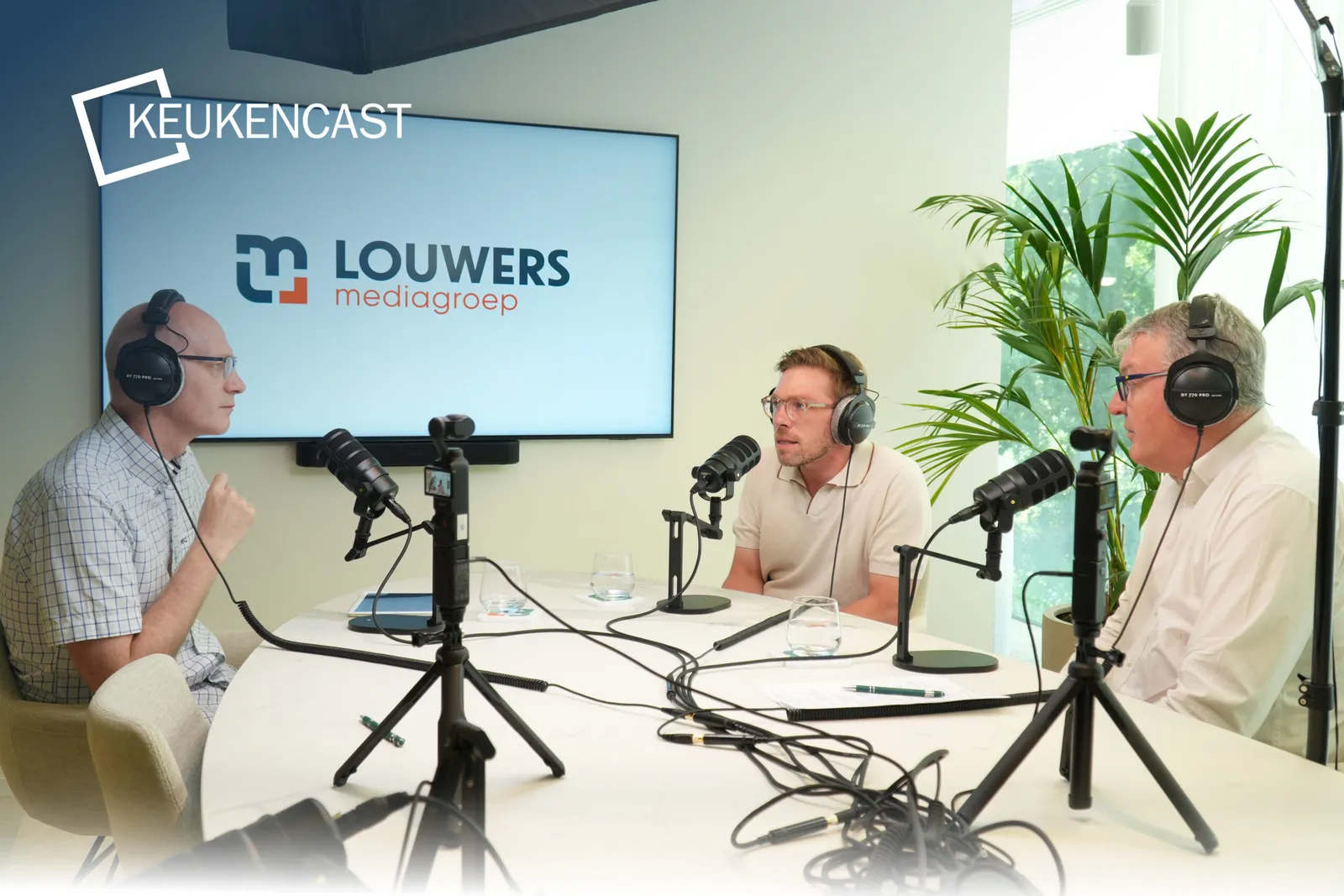
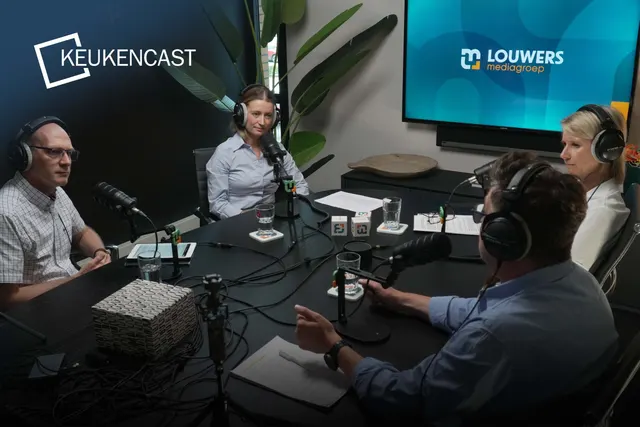
The Belgian kitchen market is under pressure. Customers are comparing more than ever, new-build activity is slowing, skilled tradespeople are in short supply, and digitalisation and sustainability are profoundly reshaping the sector. Yet Peter Vanthienen (Brio Group) and Frank Rombouts (Royal Crown) see plenty of opportunities for independent kitchen specialists. In conversation with host Björn Crul, they discuss bespoke work, renovation, competition, interior trends, artificial intelligence and the future of kitchen design in Belgium.
Host: Björn Crul
Speakers:
- Frank Rombouts, Managing Director of Royal Crown
- Peter Vanthienen, Manager at Brio Group

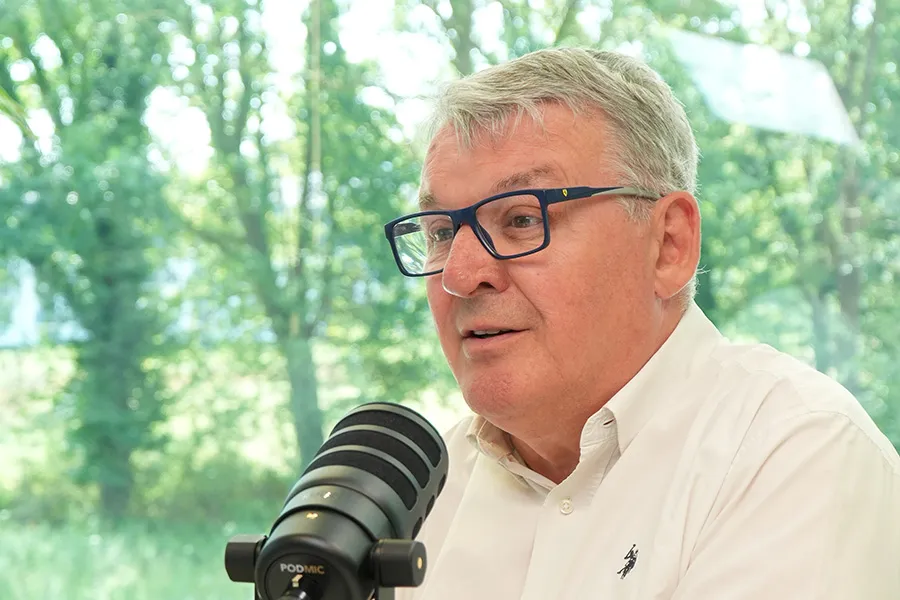
Full transcript
Alle hoofdstukken (49)
- Introduction
- Challenges facing kitchen specialists
- Introducing the guests
- The pandemic changed the way we live
- Existing trends accelerated
- The post-pandemic period
- The market today
- New builds versus renovation
- Customers are comparing more
- Price as a negotiating point
- Price as a point of discussion
- Quality as a point of difference
- Differences between Flanders and Wallonia
- Positioning in Wallonia
- The discerning Flemish customer
- Inspiration for customers
- The showroom as an advice centre
- Price expectations
- Kitchen trends
- Open-plan kitchen
- Italy’s influence on design
- Competition in the market
- Discounts and promotions
- Price perception
- Ikea’s position
- Standing out as an independent kitchen specialist
- Added value through bespoke work
- Transparent pricing
- From kitchens to complete interiors
- Organising complete projects
- Challenges facing independent kitchen specialists
- Skilled staff as a brake on growth
- Technology and automation
- Succession in family businesses
- Collaboration and professionalisation
- A new generation of entrepreneurs
- Digitalisation as a foundation
- Artificial intelligence
- AI in practice
- AI adoption
- Sustainability in kitchen manufacturing
- Sustainable business
- Waste streams
- The circular kitchen
- Reusing kitchens
- Taking your kitchen to your next home
- A look at 2030
- The future of the sector
- Closing
Introduction
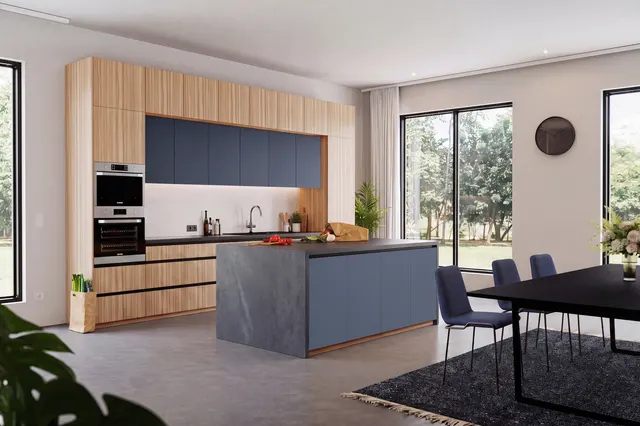
Björn Crul Hello, listeners. A kitchen is now much more than just a place to cook. We want it to be part of the living space and to serve as a place to come together. It is no coincidence, then, that it is one of the biggest investments in a home, whether in a new build or a renovation.
Challenges facing kitchen specialists
Björn Crul That is good news for kitchen specialists, but the sector still faces significant challenges. The residential construction market is slowing, while customers have become much more demanding and compare more than they used to. It is a competitive sector, in which independent kitchen specialists are up against national retailers and international chains that are increasing the pressure. Add to that the shortage of skilled tradespeople, the digital transformation and questions around sustainability, and it is clear that kitchen specialists have a lot on their plate today. The key question, however, is this: how can independent kitchen specialists stand out in these times, and where do the opportunities lie?
Introducing the guests
Björn Crul Joining me are Peter Vanthienen of Brio Group and Frank Rombouts of Royal Crown. They both support an extensive network of independent kitchen specialists and interior specialists in Belgium. Gentlemen, welcome. Let’s take a step back in time to begin with. During the coronavirus pandemic, we all had to stay at home, prompting many Belgians to invest in their homes, and particularly in their kitchens. Has the way people think about their interiors changed for good?
The pandemic changed the way we live
Peter Vanthienen I think we can definitely say it brought about a real change. I don’t just mean the look of the kitchen. People had more visitors and spent more time at home, so they paid more attention to the attractive things around them. But, for example, cupboards for washing machines and tumble dryers in the utility room were almost unheard of before, and have been very much in the spotlight ever since. The same goes for cupboards in the hall, and so on. So it really has been a major change.
Read the full transcriptCollapse transcript45 more chapters
Existing trends accelerated
Björn Crul Frank, did you see those trends too?
Frank Rombouts Yes, some trends were already under way to an extent. But it is certainly true that events accelerated them somewhat. As Peter rightly says, the trend towards a complete interior became more pronounced. People also had more guests over and spent more time living at home. That had positive consequences for the bespoke sector. The idea of the kitchen as the starting point for a complete interior became more established from that period onwards.
The post-pandemic period
Björn Crul You say there were positive consequences. That means more work during the pandemic. Was there a backlash immediately afterwards?
Frank Rombouts I think every sector experienced a certain backlash. In the bespoke sector, I think it has been limited, because there is always… You have to remember that if you go to a specialist showroom today, you’ll have to wait at least five or six, seven or eight months. That helps to smooth things out a little. But of course there was a huge peak, partly because investing in our homes was about the only thing we could do. Everything else was off the table. So that did create a peak. But we were able to keep riding that wave. Other sectors, for example, saw very sharp peaks and then fell back again, whereas things were fairly steady in the bespoke sector we represent.
The market today
Björn Crul Peter, looking at where the sector is today, has that had an impact on bespoke work?
Peter Vanthienen I don’t think we should overstate the idea that things are getting worse. I’m not seeing figures that show the market is doing worse. I would almost say the opposite. By expanding our offer in bespoke work to include cupboards and so on, I think we’re actually doing better than before the pandemic. Of course, we had a peak during the pandemic and immediately afterwards, from those who offer the complete picture. That also appeals to people and encourages them to continue investing in their homes.
New builds versus renovation
Björn Crul Frank, do you see major differences between new builds and renovation?
Frank Rombouts Yes. The type of customer we work for is mainly active in renovation, let’s say. So I agree with Peter in the sense that I don’t necessarily have the impression that the market is doing badly either. The market is organising itself differently. There is also a squeeze in the lower segment and the one just above it. That may give a misleading impression, but interior bespoke work is actually doing very well. We do see a significant fall in the number of planning permits granted. Everyone can also feel that there are fewer private new-build projects than there used to be. But renovation, given the targets for Flanders and Wallonia, is not going to decline.
Customers are comparing more
Björn Crul If anything, the opposite. Are the kitchen specialists in your networks finding that customers take longer to decide or ask for more quotes?
Frank Rombouts That is definitely a clear trend. People are starting to look around earlier and earlier, and they are hesitating more. I don’t know how it is for you, Peter, when you talk to customers. But we can feel that it is becoming harder to get them to sign on the dotted line. That is partly connected to the uncertainty people are feeling.
Price as a negotiating point
Peter Vanthienen You can feel it, and that’s understandable. There’s a war, all sorts of things are happening, and there’s a lot of talk about it. But I would also say it is often used as an excuse. Interest rates rising from three to four sounds like a lot, but unfortunately I’m a bit older, and we once started out at ten, nine, twelve and thirteen. So we shouldn’t exaggerate that either. It is often used as a negotiating tactic, to ask: what about the price? Is our price right?
Price as a point of discussion
Peter Vanthienen So we shouldn’t exaggerate that either. It is often used as a negotiating tactic, to ask: what about the price? Is our price right?
Quality as a point of difference
Peter Vanthienen When the skilled professional comes into the conversation, they can counter a lot of objections when the time comes. Is the customer trying to cut costs on appliances or workmanship? I would say: I hope they do, I hope they try. But it is up to us, or at least our skilled professionals, to explain the quality, where we stand out, where the difference can be seen and where it can be felt. I think it is extremely important for us to focus on that even more.
Differences between Flanders and Wallonia
Björn Crul Belgium is a country with two cultures, let’s say. There are Dutch speakers and French speakers, who may have somewhat different tastes and perhaps different budgets. Do you see differences between Flanders and Wallonia?
Frank Rombouts Absolutely. Budgets are significantly higher in Flanders. We also live a little differently.
Björn Crul And what is the average in Flanders?
Frank Rombouts We’re looking at around 17,000 for an average, higher-end bespoke kitchen. There are areas where it is higher, around Brussels, for example. In Wallonia it is around 10, up to 15 at most, depending on the area. So there is a real difference. It mainly comes down to all sorts of factors. We do a lot of research into this: the materials used, and the fact that appliances tend to be cheaper. So, overall, the kitchens are less luxurious.
Positioning in Wallonia
Björn Crul Peter, what does that mean for independent kitchen specialists? Do they need to position themselves differently, or try to attract customers in Wallonia in a different way from in Flanders?
Peter Vanthienen Yes, they will certainly need to take the available budget more into account. That much is clear. People also talk about it more casually. Lighter colours are used too. The kitchens being sold are certainly different. The rooms are smaller, too. And in my view, people think less about the long term. They focus a little more on the short term: a kitchen for five years, ten years, fifteen years. Very few people really think about a kitchen for the rest of their lives.
Frank Rombouts That is something we in Flanders often do think about. It is closer to the French mindset. As a result, the bespoke kitchens we build in Wallonia are also of a very different calibre. For example, only a handful of members of our group in Wallonia are willing to make things themselves, whereas that is flourishing in both groups in Flanders. So the market has a different dimension. Depending on how you look at it, we also have the neighbouring market in northern France, which is different too and more focused on chains. I think that has something to do with it as well.
Peter Vanthienen I’d also like to add something. Flanders is very distinctive in this respect. We are between the Netherlands, where kitchens are much smaller and cheaper, and France and Wallonia, where they are also smaller and cheaper. So Flanders really does have a tradition of working with wood, of bespoke work, of making beautiful things and building beautiful homes. Not everywhere is equally beautiful, of course, but we do have that tradition. And that enables us to sell better kitchens with better appliances.
The discerning Flemish customer
Björn Crul Flemish people like investing in their kitchens, which are something of a central space in the home. Does that also mean Flemish customers are more critical and selective, with higher expectations?
Peter Vanthienen They are better informed. They also prepare much more thoroughly when choosing a kitchen or thinking about their interior. You can see that in the rise of interior designers and architects in general. I think people in Flanders focus much more on interiors and exteriors, on garden landscaping and looking after their homes. It is noticeable when you drive around Flanders. Compared with France, for example, it is like night and day.
Inspiration for customers
Björn Crul Frank, where does this demanding customer get their inspiration today? Where do they go looking for ideas?
Frank Rombouts Pretty much everywhere. I can pick out a few things. Social media, of course. The rise of Instagram as a visual medium has had a certain impact. We see that Pinterest is often where the customer journey begins, for young and old alike. We have actually measured this. I call it transgenerational. We brought together Gen Z, people in their forties and people in their fifties and older to talk about how this happens. Where do we go to see what we like? Then people head to a showroom. Trade fairs are also becoming more important again. Things were quieter for a while, but you can see that people are going to them now too. So, as Peter rightly says, they do a great deal of research before actually setting foot in the showroom.
The showroom as an advice centre
Björn Crul Has the role of the showroom changed, then?
Frank Rombouts First and foremost, the showroom needs to become a kind of advice centre. What are we seeing everywhere? People have already done some exploring. They are mainly looking for targeted advice, and then, of course, to see what the whole project will cost. The salesperson’s role is crucial. This trend also began during COVID, to come back to that for a moment. The salesperson is the adviser, the one who needs to channel the process. They have everything they need to guide those people, and customers will expect them to do so. We see that when people are spending large sums, their expectations are high too. But that certainly need not be a problem or a disadvantage.
Peter Vanthienen I agree with Frank that the salesperson’s advice and knowledge are becoming all the more important. Customers have no need for forty kitchens in a showroom that won’t fit in their home. That’s no use to them. They need a salesperson who knows the product and can show them a product, whether as a sample, on a computer or in a visualisation, and turn a dream into a drawing. I think that, if it can be done virtually, that’s even better and more appealing, of course. But I think that’s what our customers need to see today.
Price expectations
Björn Crul That dream is inspired by social media. You mentioned it, Frank: Pinterest, Instagram and so on. But could that also create somewhat unrealistic price expectations?
Frank Rombouts We know from various market studies that price is a highly emotional matter. What do I mean by that? The price of a kitchen or an interior varies considerably. People may start out with a certain budget in mind and end up spending well above it, or perhaps less, without being dissatisfied. So, when you ask people, whether consumers in a conversation, in a survey or whatever, they will always say that price is the most important criterion. We know that this is not really the case for the products our customers fit and install. Price is, let’s say, an emotional factor that changes over the course of the search. That is precisely why advice is so crucial. If you can get a customer to think differently and give them the right advice, and that comes at an additional cost, you’ll find that the customer generally has no problem with it.
Kitchen trends
Björn Crul Peter, I remember what you said earlier: when people in Flanders invest in their kitchen… What about kitchen trends? Do they change very slowly, or are you seeing rapid shifts?
Peter Vanthienen I think in Flanders we tend to see slow change. As was just mentioned, things move a little faster in Wallonia in terms of colours and changes. The fact that kitchens are cheaper there and easier to replace also plays a part. … have not changed dramatically. A few things have been added, and there have been some adjustments. The Japandi style has made an appearance for a while. That’s fine, there’s no issue with that. It gets made and used too. But when it comes to colours, white, beige and brown, there is very little deviation from those in Flanders. Every year, at every trade fair, people try to bring in green and blue. … remains fairly conservative.
Frank Rombouts Yes, we can confirm that. We’re not great risk-takers. What do we see? As technology and the skills used to make certain components, such as worktops, advance, a whole ceramics industry has developed that focuses on creating attractive patterns. You can see that this is gaining traction. But ultimately, Peter is right: 80% of people choose the safe option, which is nevertheless very stylish and timeless. As Belgians, we’re not really drawn to bold colours or striking details. But take sinks, for example. They used to be stainless steel, with either a brushed tap or a chrome tap. In recent years, however, we’ve seen gold and black become popular. This is often driven in part by technological developments. But Belgians generally have very good taste. We don’t go in for anything too striking as a nation.
Open-plan kitchen
Björn Crul Peter, I think one feature that has become well established in Flanders, when there is enough space, is the open-plan kitchen connected to the living area. Why is it so popular here?
Peter Vanthienen Yes, good question. We’re a people who like spending time with others, doing things in groups. Perhaps not out and about, but with family and in small circles. Groups of four, six or eight people. And, as we see on social media all the time, it’s nice to cook together, to have an aperitif while you’re heating up the soup. Social media has certainly helped drive this. And it’s nice to do things together. That doesn’t mean it’s always practical, though, which is also quite notable. From a practical point of view, the extractor hood and extraction system, for example, are often easier to position against a wall. I think this is a trend that may now be adjusted somewhat, as we were just saying, because of developments in hob technology and so on. But it’s a nice way to spend time doing something together.
Frank Rombouts I’d add two more points to that. We have a real food culture too. We like cooking, and we like spending time with people. Plus, the design of apartments and so on has generally evolved towards open-plan layouts, with the kitchen in the middle of the space, so it naturally becomes more of a part of the interior… What we’re seeing now is that it often becomes the starting point too. We saw this in Milan, including among the Italian brands that lead the way in layouts, colours and so on, and build whole living-room furniture ranges around them. We’re seeing that trend here too, but I think the way we build has changed as well, and the kitchen has inevitably come to occupy a central position in the home.
Italy’s influence on design
Björn Crul Yes, Frank, you mention Milan and Italian kitchen manufacturers. Are they still setting the direction for kitchens, design and interiors today?
Frank Rombouts As we say, the Italians are the ones who set the direction in design. They show what more can be done. I think Flanders, and Wallonia too, of course, but especially Flanders, are trendsetters in their own right. So it’s mainly about current trends. Italy is a fashion country, and we see that clothing colours from fashion are often translated into kitchen design at the trade fair too. In terms of technology and so on, I don’t think the Italians are any better or worse than us in Flanders. So I don’t really see a difference there. It’s more about asking: can we introduce a bold feature, such as integrating a glass-fronted display cabinet into the kitchen and extending it into the living room? They are willing to bring that kind of thing to market.
Competition in the market
Björn Crul Looking at the market you operate in alongside kitchen specialists, it seems quite crowded today. There are independent kitchen specialists, large chains, retailers, joiners and local manufacturers with their own networks. How intense is the competition, Peter?
Peter Vanthienen It’s certainly there. Has it increased in recent years? Definitely. But if everyone knows and understands their target audience, it’s not really a problem in itself. The challenge is to offer your USP to the right people, the right target group. I think that’s important. We operate in a different segment, or at least we ourselves are in a different segment from many of the suppliers on the market today. That’s not a problem, because we really can make a distinction between these groups. Advertising and social media can sometimes make that a problem, though.
Discounts and promotions
Björn Crul Sometimes you get the impression it’s a bit like buying a car: a car has a certain price, but you walk into a dealership and they immediately knock twenty or twenty-five per cent off. And if you look at the adverts and listen to the sales pitches here, you get free installation or appliances.
Peter Vanthienen It seems like there’s always some kind of promotion on. Every day, I hope people will start to realise that you can’t get free appliances or free installation. And especially not free VAT. I don’t understand why the minister continues to allow it when the government needs the money. So this is something that simply isn’t possible, and I assume our customers don’t believe it either.
Price perception
Frank Rombouts We’ve been able to prove it. Ultimately, price is dynamic and emotional. What do these practices achieve? We’ve seen that too. They may attract a particular type of customer more quickly. During the sales or advice conversation, they can also help move things along and get a customer to sign that very day, for example. What do we know? People who have taken up these kinds of offers may be very happy with the end product, but they never go back to those suppliers. That’s precisely because of the pressure they felt while planning their dream kitchen. For customers… We’re involved in this every day, so perhaps we underestimate it, but for the average Fleming, having a new kitchen installed is a very special occasion. They think about it for a long time and save up for it. So when they feel pressured and unrealistic expectations are created, they won’t return afterwards. You can’t go back to that kind of business a second time.
Frank Rombouts But it’s true that it can seem as though kitchen shops or chains are springing up all over Flanders like mushrooms. In fact, nothing could be further from the truth. The number of kitchen shops and specialists is still declining. It can therefore be a misleading impression, because ours is such an active sector in terms of advertising. It gives the impression that ten new kitchen shops are opening everywhere every day. They are very well concentrated. But this impression is mainly caused by the sector’s heavy advertising activity.
Ikea’s position
Björn Crul In our country, Ikea has a dominant position and sells a great many kitchens. How has the chain managed to achieve such a strong position, Frank?
Frank Rombouts Ikea has been able to sell kitchens as a commodity. It has built an image around offering affordable design in a Scandinavian style, and it delivers on that promise. It has also managed to generate a certain volume in the lower segment. Looking at neighbouring countries, where that segment is substantially smaller, I think it is also difficult for an independent business to operate in the lower segment given the current cost and tax structures in Flanders and Belgium. These are typical entry-level kitchens. Even in Flanders, it is very difficult for specialist retailers to compete in this segment because of high cost structures, labour costs and so on. So it is almost impossible. That is one of the societal reasons why Ikea, with a billion-euro business built around it, has succeeded. It has the infrastructure and has somehow also managed to create the expectation among consumers that they can buy an affordable, higher-quality product, and Scandinavian design to boot.
Standing out as an independent kitchen specialist
Björn Crul Independent kitchen specialists. How can they position themselves as skilled professionals who make a difference?
Peter Vanthienen That is not particularly difficult in itself. I would first like to add that we should not forget that it was not only the Italian and German markets that mattered. In recent years, the whole Scandinavian model, if you like, has also been decisive, particularly in the furniture business and our kitchen business. IKEA has benefited from that too. As Frank says, these are entry-level kitchens. That means young people without much capital can buy the basics at IKEA for relatively little money. The same applies to a bed, a mattress and a kitchen. We are talking about basic appliances. You can take three 60 cm-wide cabinets, put an oven in one and a hob on top, and you have a kitchen. That puts things into perspective too. What is a kitchen today? I think if we compare prices on a like-for-like basis, the prices would be very different, even at IKEA.
Added value through bespoke work
Björn Crul So that is where independent kitchen specialists make the difference with bespoke work.
Peter Vanthienen Yes, absolutely. We also see plenty of people who buy their first kitchen from IKEA and then come to us when they build or renovate a new home. They come to us for better, sturdier cabinets, and that is where we can make a difference. So that is not such a problem either.
Transparent pricing
Frank Rombouts I would also add that IKEA is the only one with an open, transparent online price calculator. IKEA often serves as a benchmark because it publishes configurators with prices online. Consumers often go there to draw up their first plan or concept. That does not mean we are more expensive. I know that is not the case. But it is often seen as a starting point. That transparency naturally means many customers stay with them throughout the process. They are really the only ones to show clearly and transparently what the product will ultimately cost. That is very difficult in a bespoke context, precisely because the advisory role involves recommending different materials and so on. That is obviously another reason for its success.
From kitchens to complete interiors
Björn Crul More and more kitchen specialists are moving towards offering complete interiors. Looking at the realities of running a business, is this kind of offering now essential to generate enough turnover and achieve a sufficient margin?
Peter Vanthienen I do not think it is essential. It makes things, how should I put it, easier. It gives me an extra USP to take to customers and say: we are a one-stop shop. But it is not essential. It does require a very different organisation, which also makes it considerably more difficult. It means you need to be much better organised as a kitchen or interior specialist. But in itself, it is a little easier to offer a complete picture, an entire dream, if it is done well, of course.
Björn Crul So, Frank, does a company need to be a certain size to do this?
Frank Rombouts To do it successfully. Anyone can do it, but to make it profitable and viable, it needs to be well organised. A complete project naturally involves much more. There is far more ancillary work to be done, whether in-house or not. The project needs to have a certain lead time, and that has to be respected. If I take on one complete interior project, I might be able to install several kitchens in the same period. We cannot deny that. Bespoke work, with its own production facility, can make a big difference here. Those businesses are also almost compelled to do this. Fortunately, they all do it very well. Efficiency in their processes is very important.
Organising complete projects
Frank Rombouts To do it successfully. Anyone can do it, but to make it profitable and viable, it needs to be well organised. A complete project naturally involves much more. There is far more ancillary work to be done, whether in-house or not. The project needs to have a certain lead time, which has to be respected. If I take on one complete interior project, I might be able to install several kitchens in that time. We cannot deny that. Bespoke work, with its own production facility, can make a big difference here. So I think those businesses are also almost compelled to do this. Fortunately, they all do it very well. Efficiency in their processes is very important.
Challenges facing independent kitchen specialists
Björn Crul Efficiency and keeping an eye on margins are major challenges, I think. What other major challenges do you see for independent kitchen specialists?
Frank Rombouts Finding skilled staff. I think we are fortunate to be putting up good figures. The sector is doing well. We are thriving in our segment. The biggest threat seems to be skilled staff: finding people who still want to learn the trade. It is not that there are no institutions where people can learn it. It is the willingness to learn. We are seeing cabinetmaking and installation becoming shortage occupations. I think that is a societal-level threat. Beyond that, there are margins, foreign suppliers, chains, you name it. Perhaps Asian markets will also want a slice of the European market. There are plenty of potential threats, but I think the most immediate question is: who is going to install it?
Skilled staff as a brake on growth
Björn Crul Peter, is that holding back the growth of kitchen specialists?
Peter Vanthienen It is absolutely holding us back, yes. It is absolutely a brake. It is time to make the profession attractive again. Some schools, including one in Herentals near us, are simply letting their woodworking and sales departments disappear. They are no longer investing in them. This is something we need to help address ourselves, to put the profession back on the map and make it attractive again. It is a wonderful, creative profession. I call these people artists. They fit things against a wall. It is something made by hand. That is art, that is craftsmanship. It is something we need to invest in, and customers are happy to pay for it when it is unique and special. That is no problem either.
Technology and automation
Björn Crul Could technology perhaps help solve some of the problem, Frank?
Frank Rombouts Absolutely, it is inextricably linked. I can tell you a little anecdote. We visited our supplier Liebherr. They had a highly ingenious welding line costing several million euros. It was phenomenal, completely robotised. The guide said, quite literally, that the quality of the weld in this case was extremely high. It is robotised, but we cannot find welders. So we had to solve this, because we need to be able to supply 3,000 a year. And there you saw, for example, that a process which might seem unfeasible at first glance had in fact been made to work. It was very impressive, I have to say. But it did make me think: technology and people working hand in hand. Here in Genk, where we are based, there is the Torsite, which is innovating in these areas. A typical Flemish street has been recreated there, and high-level technology is being tested alongside all the universities. There is now a MET robot moving around, as well as a maintenance robot. This work is under way, and Europe’s competitive position ultimately matters too. Certain processes have to be automated because there are no people left to do them. So I think it is great that Peter says we need to make the profession attractive again. I think purchasing groups, which naturally all have their own interests, can find common ground as a sector to make it attractive again. The fact is that the profession itself is not perceived as an art.
Succession in family businesses
Björn Crul Alongside labour shortages, there is another issue, I think. Many independent kitchen specialists have been built around one entrepreneur or one family. Is there anyone to take over? Are young people still inclined to take over the business, Peter?
Peter Vanthienen That is of course a problem. It is not just a problem for kitchen or interior specialists. It is an issue across family businesses as a whole, I would say. In itself, though, it is not such a problem, because there will also be some consolidation in our line of work. So that is not such a problem. Of course, you also end up with enormously capital-intensive businesses. That may well be a problem.
Collaboration and professionalisation
Björn Crul Especially if you want to integrate technology, for example.
Peter Vanthienen Yes, absolutely. There will have to be collaboration, and there will be consolidation. These are also areas where we, both Frank and us, can really make a difference. We need to look for opportunities, because that also creates very appealing and attractive businesses. Then they are no longer mum-and-dad businesses, which can be great, but where things tend to wind down from the age of 55, so to speak. That must not happen. The sector still needs to professionalise.
A new generation of entrepreneurs
Frank Rombouts Just to pick up on that, I’ve noticed that within the group, which has now been around for 30 years, the original members are still with us. They’re 30 years older, which goes against what some might have expected. I wouldn’t have expected it myself, perhaps to this extent, but the next generation, people in their twenties and early thirties, are genuinely interested in taking over the family business. These tend to be the slightly larger businesses. And I’ve noticed that they take a more consolidating approach to business. They ask themselves: how can I run this as an ecosystem? How can I make another acquisition? That’s a generational shift. So where we thought, ‘Oh dear, this is going to come to an end,’ we’re seeing the new generation, and there are quite a few of them in our group, approach things in a very different way. They’re more industrial and entrepreneurial in their outlook than the people who started out in a basic shed and eventually made a great success of it. I feel that professionalisation is key for the next generation. We’re seeing it happen in several businesses in our group, which makes me very happy. It will simply become a key factor.
Digitalisation as a foundation
Peter Vanthienen Yes, it’s important, of course, to know what we’re talking about. I think many businesses today still don’t really know where the key figures lie in their business. Digitalisation will make a major contribution here. We’ll finally know what our purchase prices and selling prices are, where the margins are and where the profit lies. If we can make that concrete, we’ll be able to get the younger generation interested in taking over the businesses.
Artificial intelligence
Björn Crul We’re talking about digitalisation and automation. Artificial intelligence is coming next. Frank, what AI applications could be relevant to the sector?
Frank Rombouts I think that, if we take stock of where things stand today, AI is already widely used in the design process, even if it’s just to create a beautiful, photorealistic render. If I speak for Royal Crown, AI often works in the background of the tools we provide to kitchen manufacturers. Various agents ensure that the customer gets the right price at the right time. AI releases the correct file. We’re developing AI-powered learning platforms. We have a digital avatar people can talk to. I’d say these are the first wave of applications. In two years’ time, though, it will undoubtedly be much more widespread.
AI in practice
Björn Crul Peter, I assume you’re working on this too.
Peter Vanthienen Of course. I’d also add that social media is now managed entirely using AI. That includes the leads you receive, customer follow-up and recommending new products. AI lets you make these things customer-focused and personal. You can take it a long way. Everything is subject to it today. But this is important too, because it’s part of the training. People need to learn how to use it, and they shouldn’t be afraid of it. Whether it’s creating a leaflet or an advert for Pinterest, AI is essential today. They really need to be aware of that, without losing sight of what’s happening behind the scenes. Automated orders going through and so on may be less visible, but day-to-day management is also affected by AI, or driven by it. We really need to emphasise that they should be using it too.
AI adoption
Frank Rombouts I read in De Tijd this morning that Belgium was doing very badly. So society is effectively moving at two speeds. The same will be true of our businesses: some people recognise what’s happening and get to grips with it quickly, while others remain somewhat sceptical. It’s up to us to convince people: this is a reality that is evolving very rapidly and cannot be ignored. Europe, Belgium, Flanders and all of us need to embrace it quickly and simplify processes wherever possible. And, of course, it will feed through into the production environment.
Sustainability in kitchen manufacturing
Björn Crul One thing we haven’t discussed yet is the shift towards greater sustainability, and even towards a circular economy. What are kitchen manufacturers doing to reduce the environmental impact of their production and products, Peter?
Peter Vanthienen I’d say they’re very much engaged with it. The only question is whether it’s purely for economic reasons or out of awareness. I’ll leave that open for now. The next generation, in 10 or 15 years’ time, will be the ones setting those requirements. They’ll be asking: is the timber responsibly sourced and properly processed, and has everything been done properly? My generation, I’d say, is less focused on this. But the next generation will certainly make it a priority, and we’ll be ready.
Sustainable business
Frank Rombouts We’re committed to promoting sustainable business. I see it as broader than just the industrial aspect. But there are still a number of quick wins. We also see that, depending on who you talk to, there’s relatively little knowledge about sustainable business. What is an SDG? How do you draw up a plan? What is VSME reporting? At Royal Crown, we help people take those first steps. Waste is a major problem, so we’re also looking at what can be done there. Waste MDF can be processed into new MDF, and collection schemes can be organised. There are still things we can do. And last but not least, consumers need to ask for it too. Peter is right to ask whether the motivation is economic or environmental. We’ll leave that open for now. It’s probably a mix of both. We know that consumers aren’t really asking for it yet. But I think it’s up to us to do some pioneering work, because we won’t have any choice. We all need to be able to keep living on this planet together. And the furniture industry and large-scale wood processors, too, have a certain duty to society and the planet.
Waste streams
Peter Vanthienen I’d like to add something, because we’re now working with Brio Group, a Dutch company that supplies sheet materials and also takes away waste material. That’s not yet the norm in Belgium. But I think our suppliers also have a responsibility here, and they need to be aware of what happens to the waste. Do we take back the packaging, for example? Because it amounts to a huge pile of waste.
The circular kitchen
Björn Crul Are we moving towards the circular kitchen? I know of a company in Brussels, for example, that carefully dismantles kitchens in older homes.
Reusing kitchens
Björn Crul And reinstalls them. Do you think that will ever become a business on a larger scale?
Peter Vanthienen I find that very difficult. Because of the intense price competition in the lower end of the market, it’s very difficult to compete there. What I do believe in is something along the German lines, where kitchens are installed and taken with you when you move. For example, you might have a number of cabinets fitted in an apartment, or, how shall I put it, install a number of ready-made units that you can take with you to your next home. I do believe in that. But when it comes to restoring and refurbishing a kitchen and then installing it again, I fear it would be difficult to make a business model work.
Taking your kitchen to your next home
Frank Rombouts Yes, as Peter says, we’re already seeing this crop up here and there. It’s more common in the Netherlands to say, ‘I’ll take it with me.’ You see it in Germany too. Research shows me that this idea is starting to take hold among consumers, particularly younger ones: my kitchen should come with me to my next home. Yes, the kitchen moves with them, partly because people are much less rooted in one place. It’s all linked to demographic change. We’re seeing an exponential rise in the number of people who prefer to live alone. They can’t afford to buy a new kitchen every five or six years. They can take their kitchen with them when they move, but then perhaps they meet someone and move again. So it’s partly a reflection of the way we live, I think. This is changing very quickly too. There’s a severe shortage and huge demand, you name it. Specifically in terms of product sustainability, we’ve set up a refurbishing project for appliances. As with an old phone or computer, you can replace certain parts and give the appliance a second life. That’s relatively quick, simple and practical to do. As for the kitchen itself, I agree with Peter. I’m afraid consumers aren’t really asking for that.
A look at 2030
Björn Crul Finally, looking ahead to 2030, which independent kitchen specialists will be successful and future-proof? Peter?
Peter Vanthienen Those who listen to consumers are the ones who will survive. It’s no more complicated than that, really. Of course, they need to be good with the numbers. First and foremost, they need to listen carefully. Then they need to calculate well, keep a close eye on the figures and do good post-calculations. And they need to keep investing in the equipment of the future, whether that’s machinery or something else. Investment must continue. Ideally, there should also be some consolidation, so that, as a small country, because that’s what Belgium is, we can continue to play our part in the market and ensure our suppliers remain happy with what we do. I think that’s important.
The future of the sector
Björn Crul Frank?
Frank Rombouts Yes, I can only agree. … is happening. I often tell my marketers that, in my view, a good marketer is first and foremost a good sociologist. You can’t create communications if you don’t know what’s happening in the world around you. I think the same applies to business owners. Going it alone, blind to reality, metaphorically speaking with a pencil behind your ear, is unfortunately no longer going to work. So they need to look at what consumers want, understand how society is changing and see what other providers are doing. They should join a good group like ours or Peter’s. That’s important, because one of our key roles is to keep an eye on these changes and make sure people have the freedom to manufacture their products to the highest possible standard. We’ll keep an eye on where things are heading and make sure there are initiatives in place in good time to make life a little easier.
Closing
Björn Crul Gentlemen, I’m afraid we’ve run out of time. My takeaway is that independent kitchen specialists still have strong advantages: their craftsmanship, bespoke work and, above all, personal advice. They’ll need to become more digital to survive in a competitive world. Peter Vanthienen of Brio Group and Frank Rombouts of Royal Crown, thank you very much for this conversation.
Peter Vanthienen Thank you too.
Frank Rombouts Thank you.
Björn Crul And thank you, ladies and gentlemen, for listening. Until next time.
Companies in this story


Keep following this
Get an email when a new story is published. No account needed.
- SubjectGeneral
- CompanyBrio Group
- CompanyRoyal Crown
- CompanyLiebherr