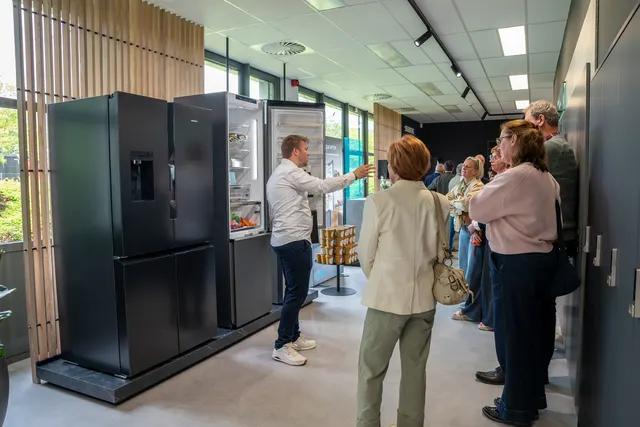
Must-have or unnecessary luxury?

Is it down to the success of programmes such as (Junior) Masterchef and the subsequent urge to do more cooking at home?
Is the ‘carpe diem’ spirit taking hold even more, perhaps prompted by lockdowns and other restrictions? Is it a combination of these factors, or something else entirely? The fact is that warming and vacuum drawers, and related appliances, are making their way into the mainstream.
Words Tom Rampelbergh Photography Quva, V-ZUG, Lisa Fotios (Pexels)
Appliances used in professional kitchens sometimes make their way into the kitchens of keen home cooks, or even ‘ordinary people’. Two appliances gaining ground are warming drawers and vacuum drawers. Other vacuum sealers and solutions can also be included. Are they useful? Do they suit the way their users cook?
At the right temperature
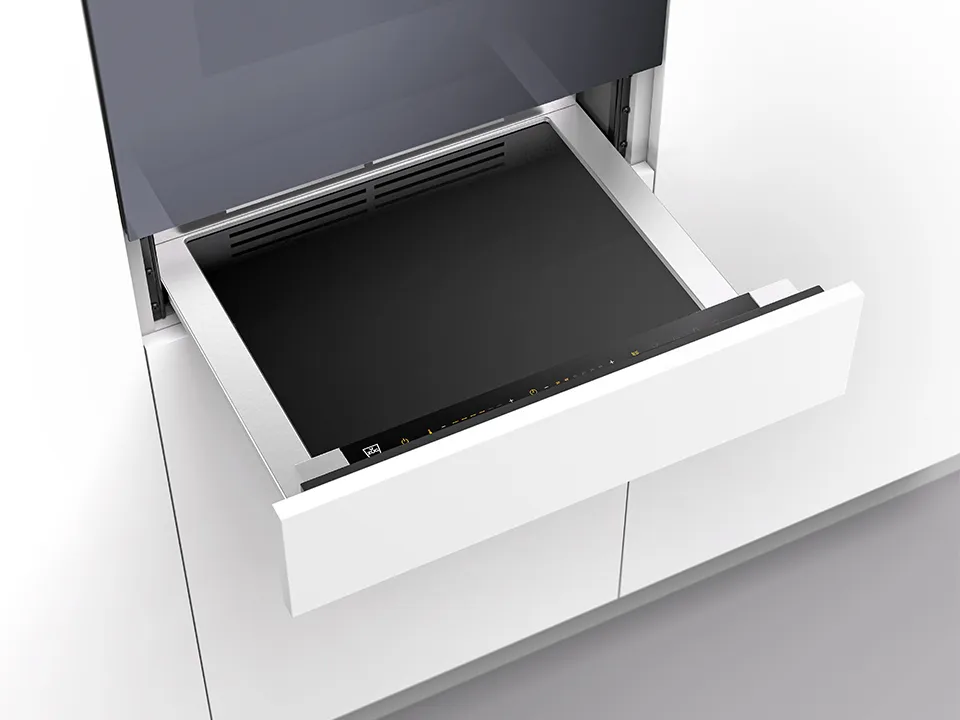
A warming drawer does exactly what its name suggests: it is a drawer that can be built into a kitchen to keep dishes warm. Warming drawers are often only slightly larger than a plate or serving dish, as they are not intended to hold several courses at once. This means you can give them a central place in the kitchen, for example close to the oven and/or hob. The warming drawer must, however, fit in with the kitchen’s design. The most commonly cited benefit of a warming drawer is, once again, exactly what its name suggests. Is a dish ready, but not all the guests have arrived yet? Are you serving several courses and are they all ready? Place the plates or serving dishes in the drawer until they are needed. Today, we see warming drawers that do a little more than simply keep food warm. Some also allow a dish to cook slowly, making them an additional appliance for preparing a meal.
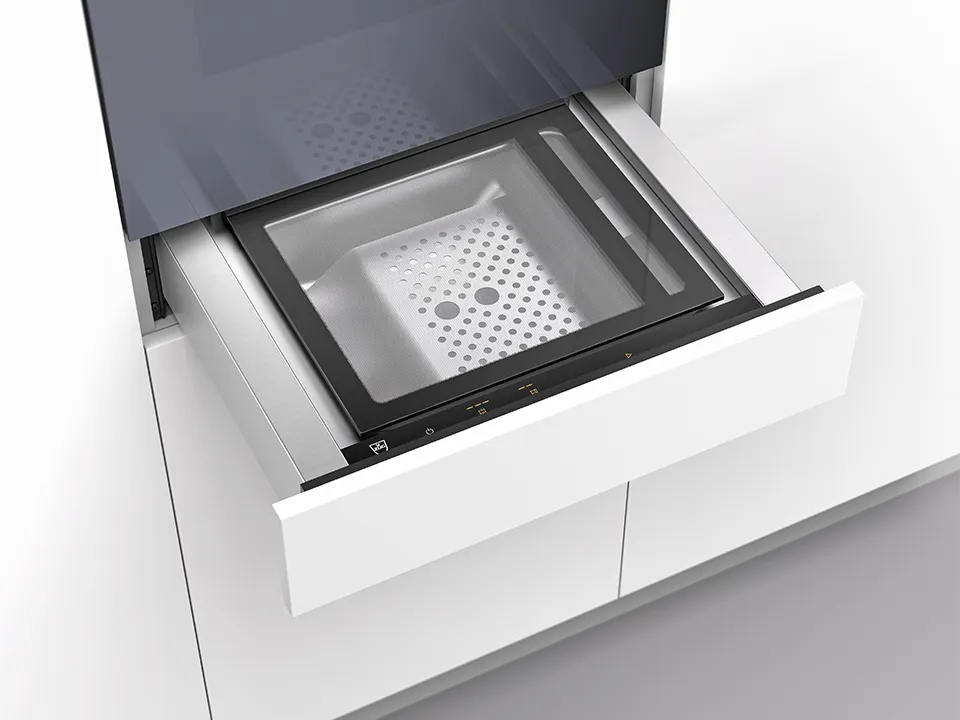
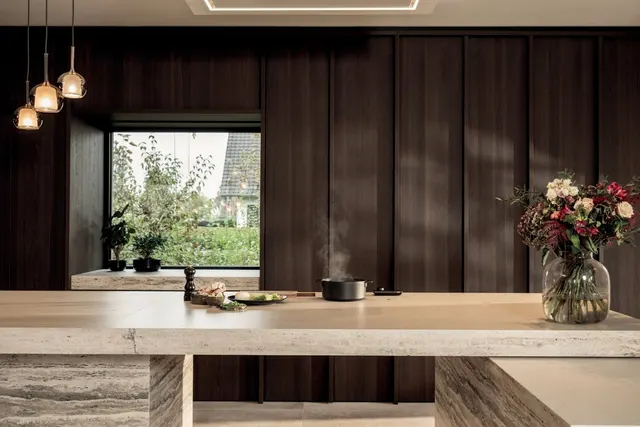
As built-in kitchen appliances, warming and vacuum drawers need to fit in with the design of the kitchen as a whole. (Photo: V-ZUG)
Preserving food in an air-free bag
Vacuum drawers are also gradually making their way into ‘ordinary’ kitchens. Vacuum sealing means removing all the air from the vacuum bag, bringing all the flavour components together and keeping all the juices and moisture inside. The idea is to prepare the ingredients first, then preserve them using vacuum technology until they are needed. Here too, the drawer’s design must match the other appliances and the kitchen. Like warming drawers, vacuum drawers are relatively compact, making efficient kitchen planning easier. Several manufacturers have been offering vacuum drawers in their ranges for a number of years.
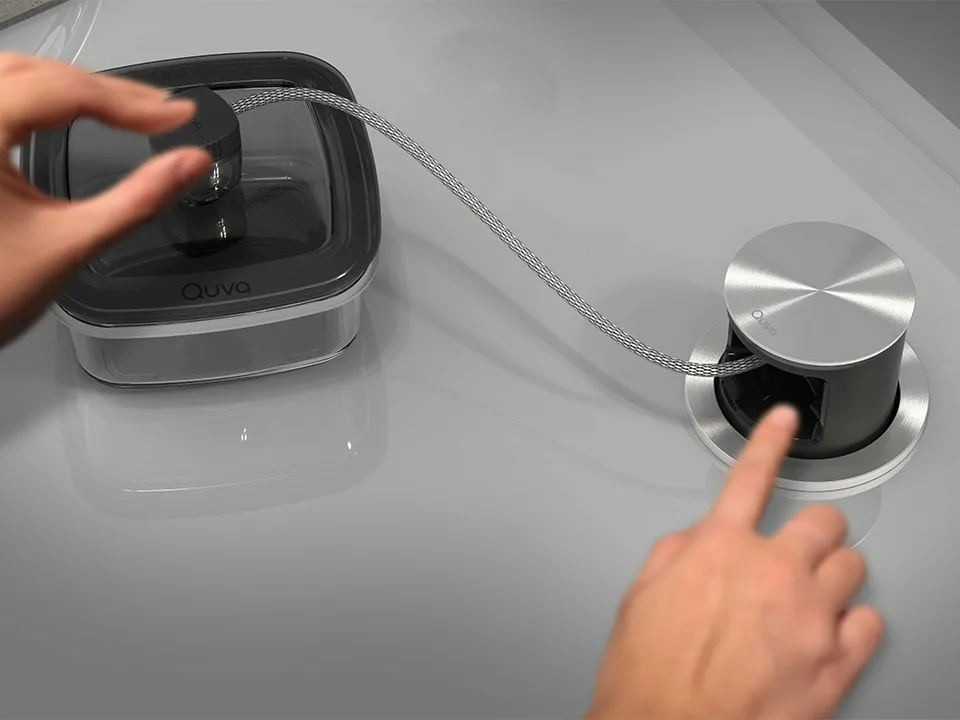
Quva, the vacuum appliance that rises up from the worktop when needed. (Photo: Quva)
Alternatives
There are, of course, alternative appliances that remove air from a vacuum bag, just like vacuum drawers. Almost all well-known appliance brands have one or more of these freestanding appliances in their ranges.
The vacuum process is usually a little slower than with a drawer. The advantage of these freestanding appliances is that they are easy to store in a cupboard, so the kitchen planner does not need to allocate space for them. But that is also their drawback, as the appliance takes up valuable cupboard space, whether in the kitchen or elsewhere.
A recently unveiled alternative is Quva’s solution. It is not a freestanding appliance, so it takes up no space in a cupboard or on the worktop. Nor is it a drawer, so the kitchen planner does not need to include one in the design.
Quva is a pop-up system. When not in use, it sits flush with the worktop, and rises above it only when needed. “Quva blends perfectly into the kitchen,” was the message at the recent Living Kitchen, where it was unveiled.
Question about this story? Ask your question
Companies in this story

Keep following this
Get an email when a new story is published. No account needed.
- SubjectGeneral
- CompanyV-ZUG