Ventilation in kitchens in new-build homes and major energy renovations

Indoor air quality has attracted growing attention from residents and public authorities in recent years. The better we insulate our homes, the more important it becomes to have a well-designed ventilation system. It is therefore no surprise that ventilation is a key part of EPB regulations.
Quality assurance
In 2016, the Ventilation Quality Framework was launched at BCCA vzw in Flanders to improve the quality of ventilation systems in new-build homes and major energy renovations. When the ventilation system is commissioned, an ventilation performance report (VPV) is drawn up by approved ventilation reporters. This report gives the client an overview of the ventilation system, which they can compare with the requirements set out in the specification. The EPB reporter needs this ventilation performance report to prepare the EPB declaration. As the quality of a ventilation system is largely determined by decisions made in the early stages of the design, a ventilation preliminary design (VVO) must also be submitted with the EPB start declaration. Only approved ventilation reporters may draw up these documents and reports.
Accessible air valves
It is important to be able to measure ventilation flow rates. Good indoor air quality must be maintained for residents, so the installer must be able to balance the ventilation system correctly and the flow rates must be reported in the EPB declaration. The effects of poor ventilation are usually not immediately visible, which is why it is important to measure flow rates at commissioning.
The most common method is to measure at the air valve (or grille). A hood (or cone) is placed over the air valve, capturing the airflow and directing it through a measuring probe. The flow rate is displayed immediately. The measuring instruments are easy to use, and this method confirms that the air is reaching the intended room.
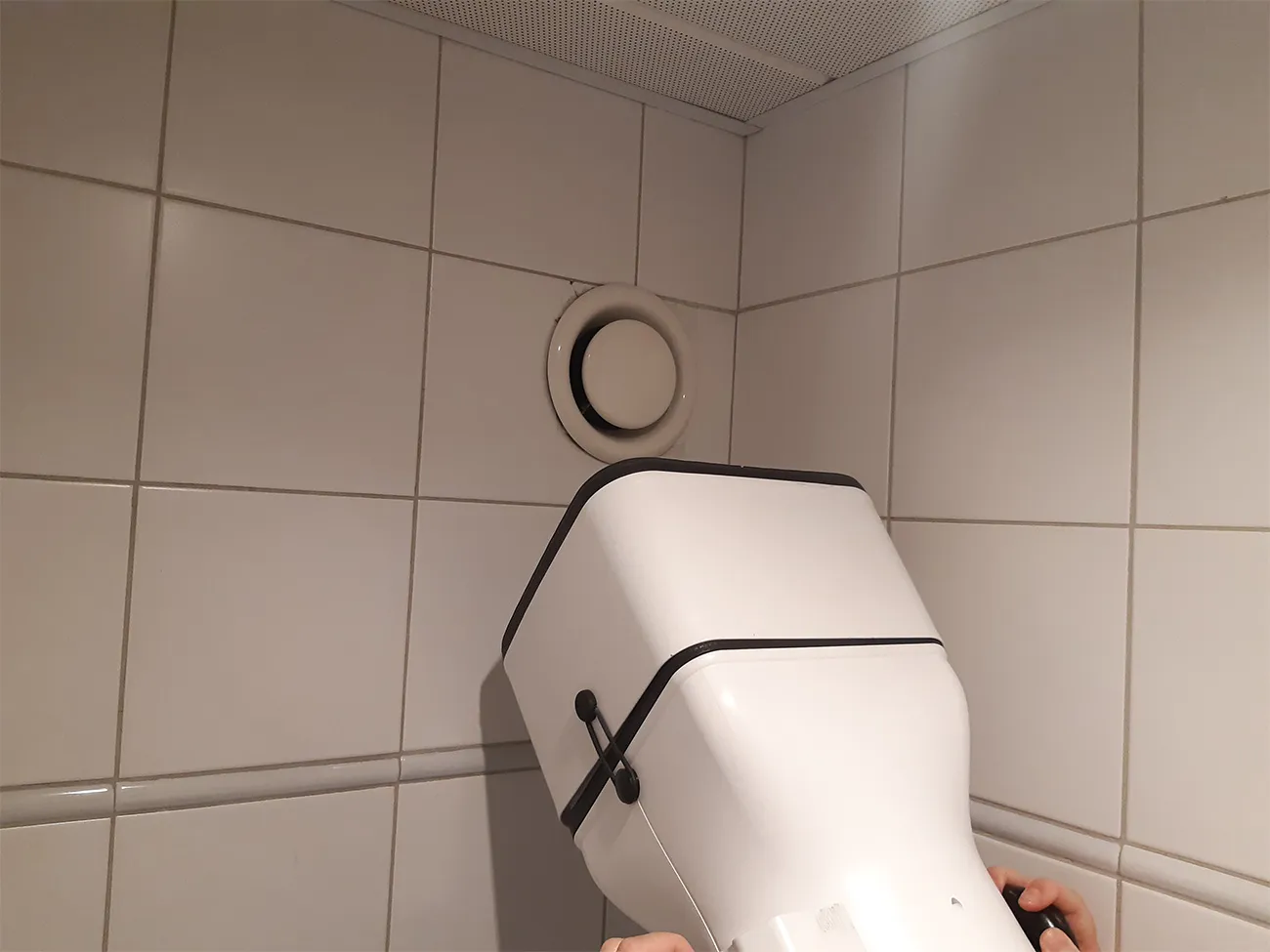
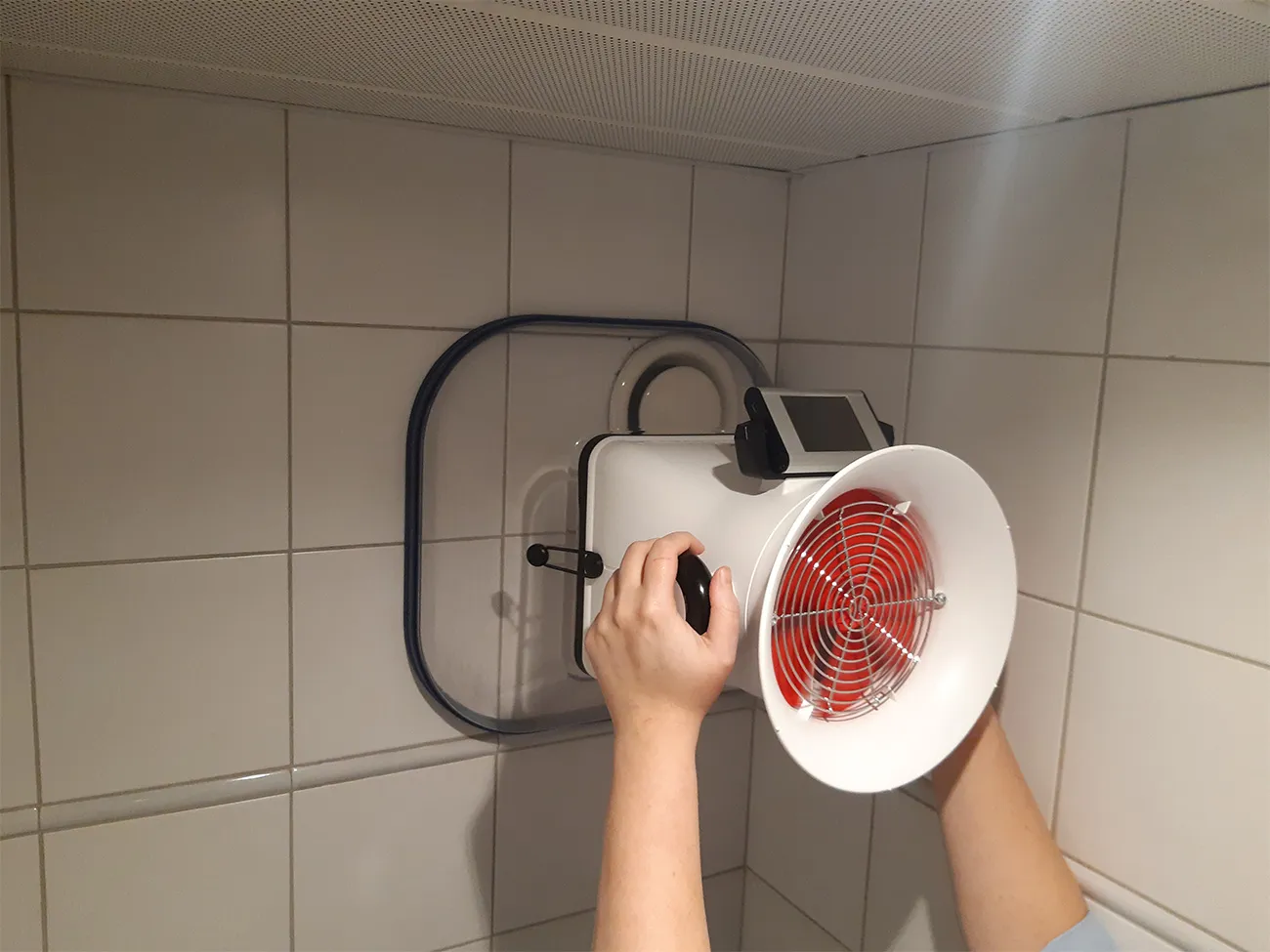
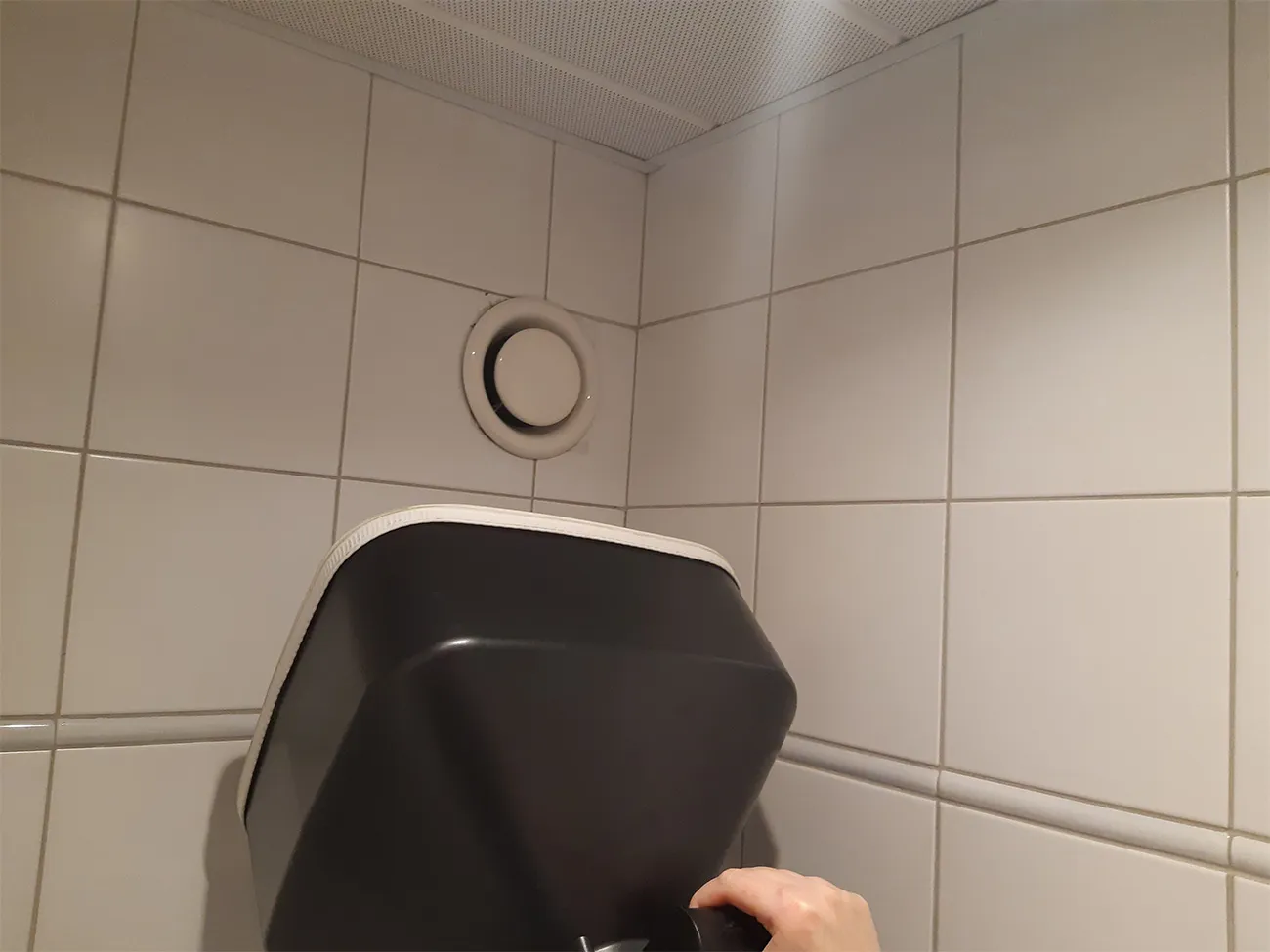
Measuring at the air valve does, however, mean that it must be accessible. Keeping air valves accessible is also strongly recommended for maintenance of the ventilation system.
To clean the ducts, the air valves are removed so that a brush can be passed through them.
Another option is to measure in the duct. This is not straightforward, particularly in residential applications, as several conditions must be met: the duct must have a sufficiently long straight section, a small hole must be made in the duct, and a different type of measuring instrument must be used. It also takes a certain amount of skill to measure the air velocity accurately, and the velocity must then be converted into a flow rate. For some air valves, however, this is the only way to measure the flow rate accurately.
In practice, we sometimes find that one or more air valves in a system cannot be measured correctly. This may be because the air valve itself does not allow the flow rate to be measured, or because of its location. An air valve that is too large or an unsuitable shape to fit under the measuring instrument’s hood cannot be measured this way. Nor can the hood be fitted over an air valve concealed in a corner or only partly visible. Considerable progress has been made in recent years, but ventilation reporters note that kitchens still present a particular challenge, as air valves are often concealed in a housing for aesthetic reasons. Below are some examples, along with points to consider and possible solutions.
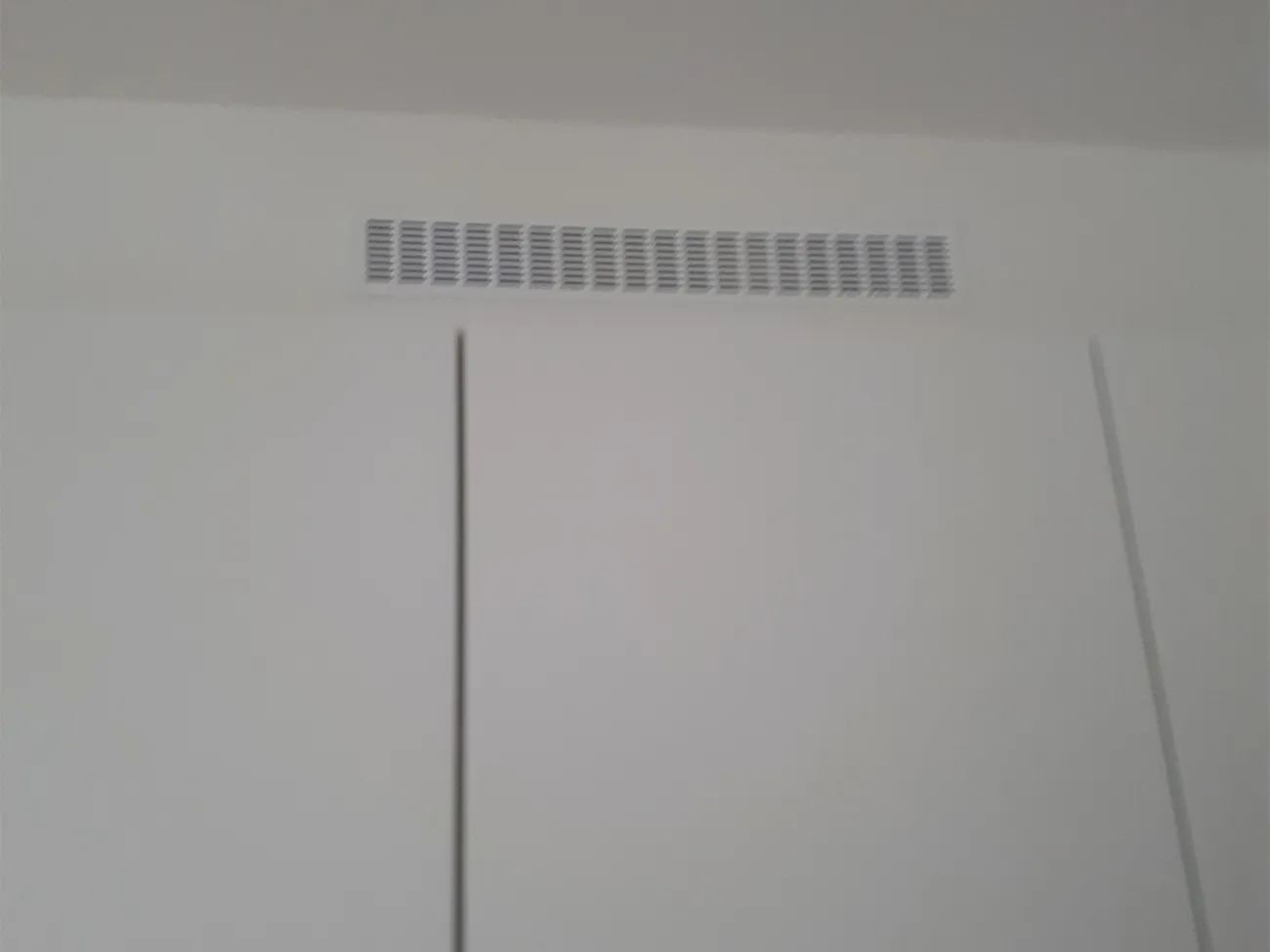
One common design is an elongated ventilation grille above the cabinet. These grilles are generally too large for the measuring instrument’s hood. Some instruments have special cones available, but not for every grille size. With this type of design, it is therefore best to ensure that the duct leading to the grille is also accessible for measurement inside the duct, for example in the cabinet below the grille.
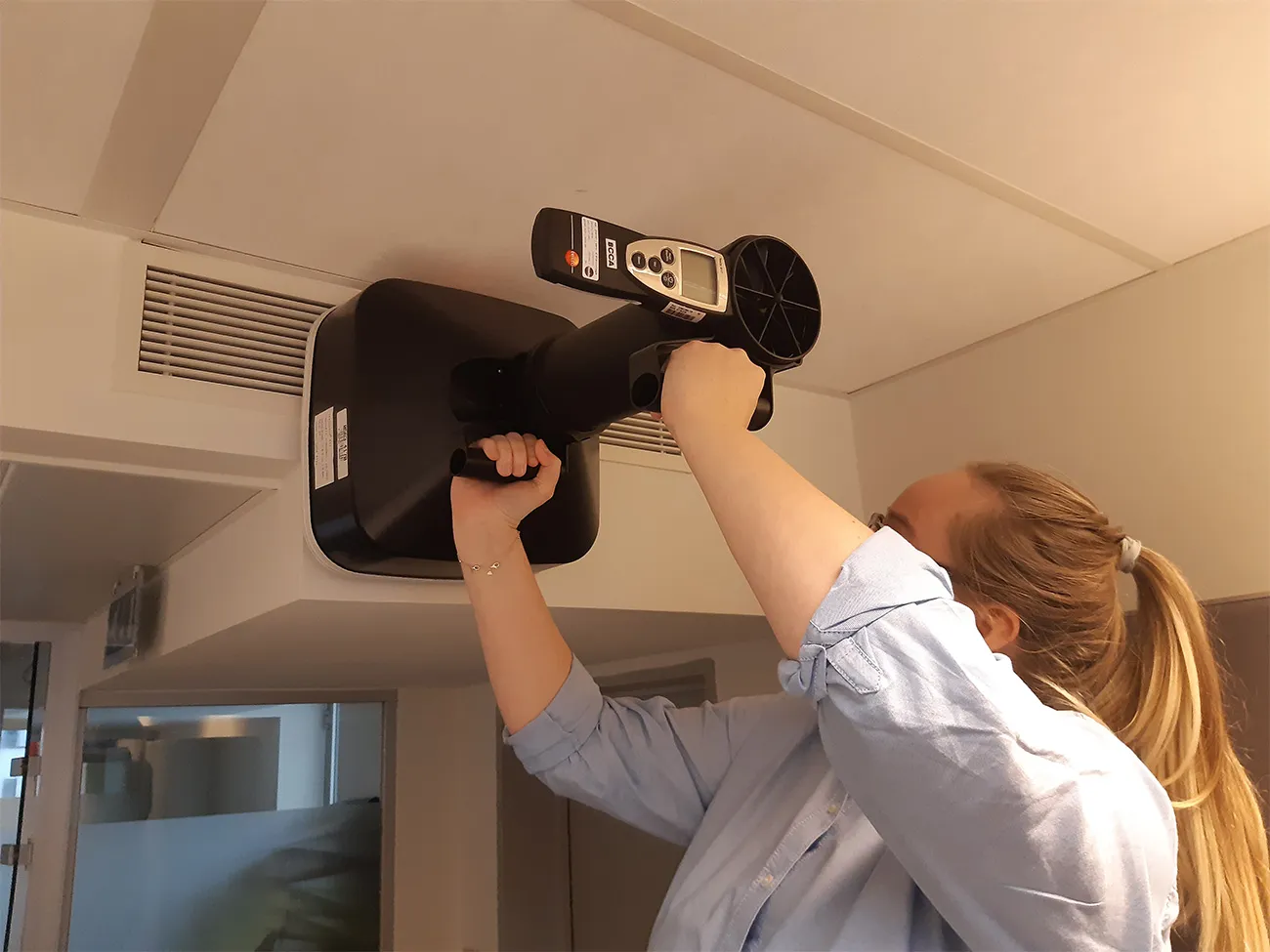
Another common design is to conceal the air valve inside a kitchen cabinet. This is possible provided that the air valve can be measured before the cabinet is installed and that a sufficiently large gap is provided to allow airflow to or from the air valve. The Flemish Energy and Climate Agency (VEKA) has drawn up guidelines on this, which you can consult here. The example below illustrates the point.
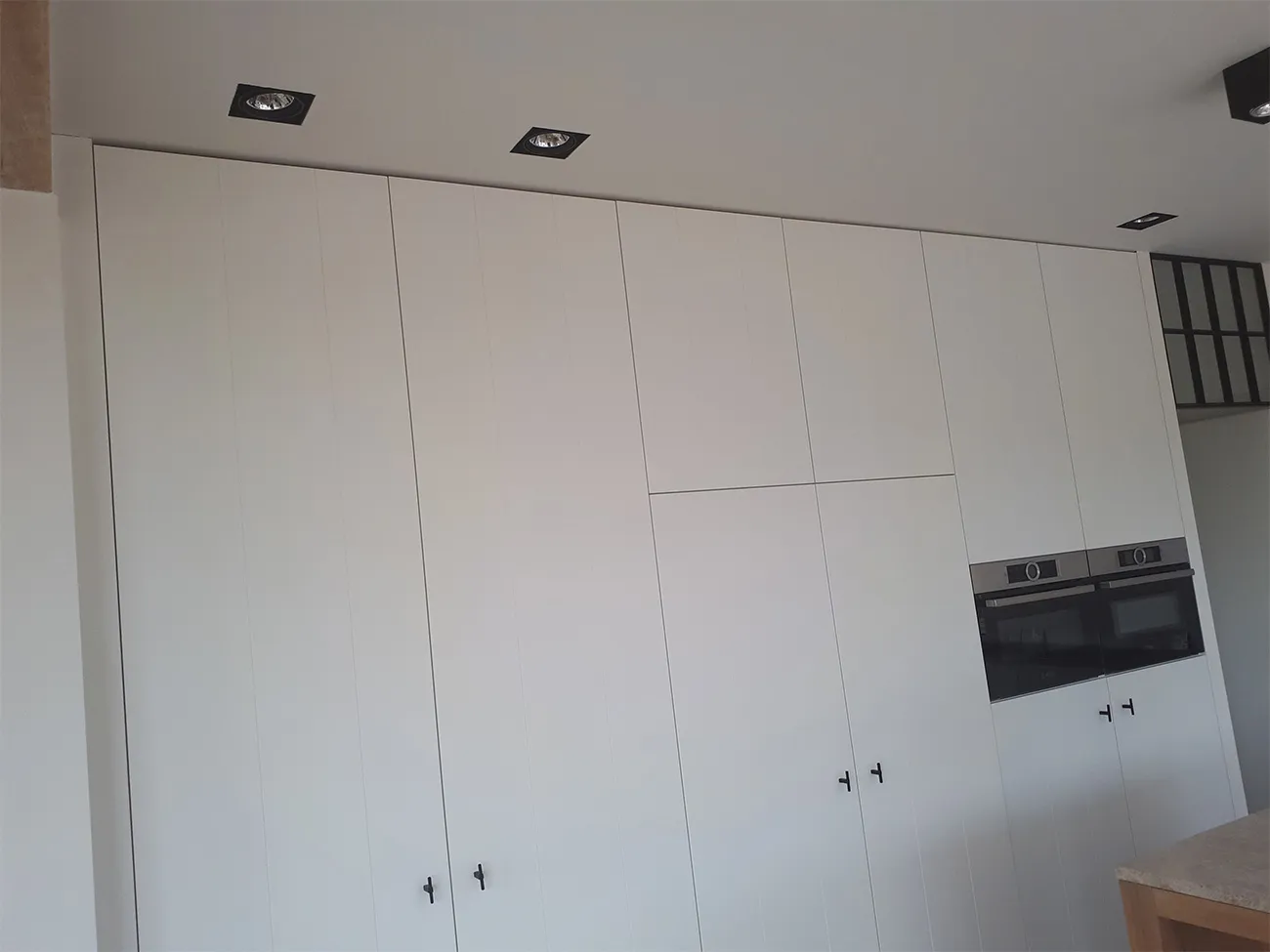
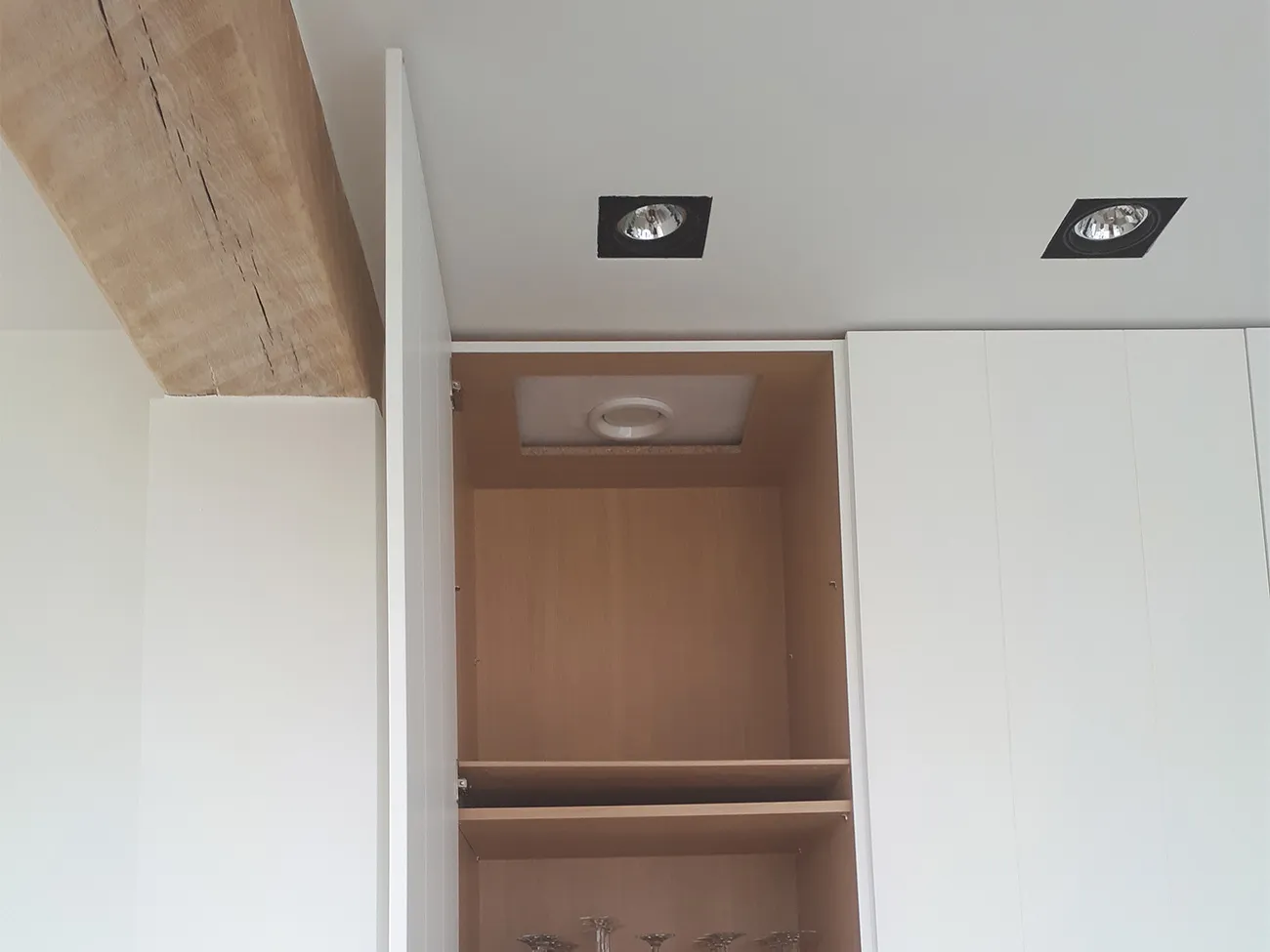
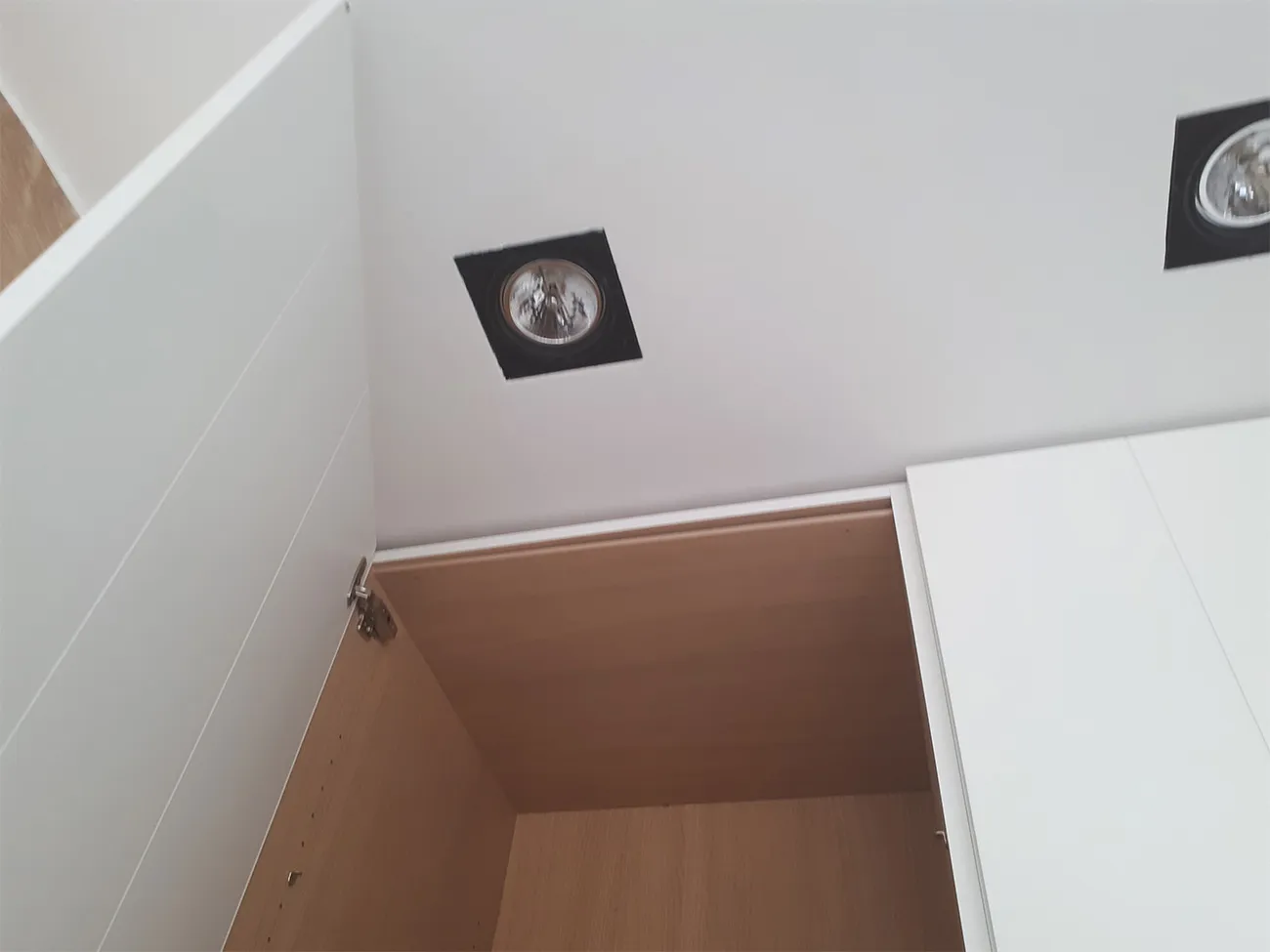
The arrangement in the photo on the left is acceptable. The air valve can be measured and there is sufficient airflow. In the arrangement shown in the photo on the right, the ventilation flow rate can no longer be guaranteed because the air cannot flow through sufficiently. There are several ways to conceal an air valve in a cabinet, but the flow rate must always be measurable, either before the cabinet is installed or by opening a cabinet door or removing a panel.
In the photos in the third example, the air valve sits exactly on the boundary between two cabinets. The flow rate must still be measured, either before the cabinets are installed or afterwards, if they can be dismantled. For the ventilation system to work correctly, airflow between the kitchen and the air valve must always be guaranteed. This will not be the case here, as part of the air valve is blocked. This arrangement will also cause problems when maintaining the ventilation system. Cleaning the ducts will be difficult if the air valve cannot be removed.
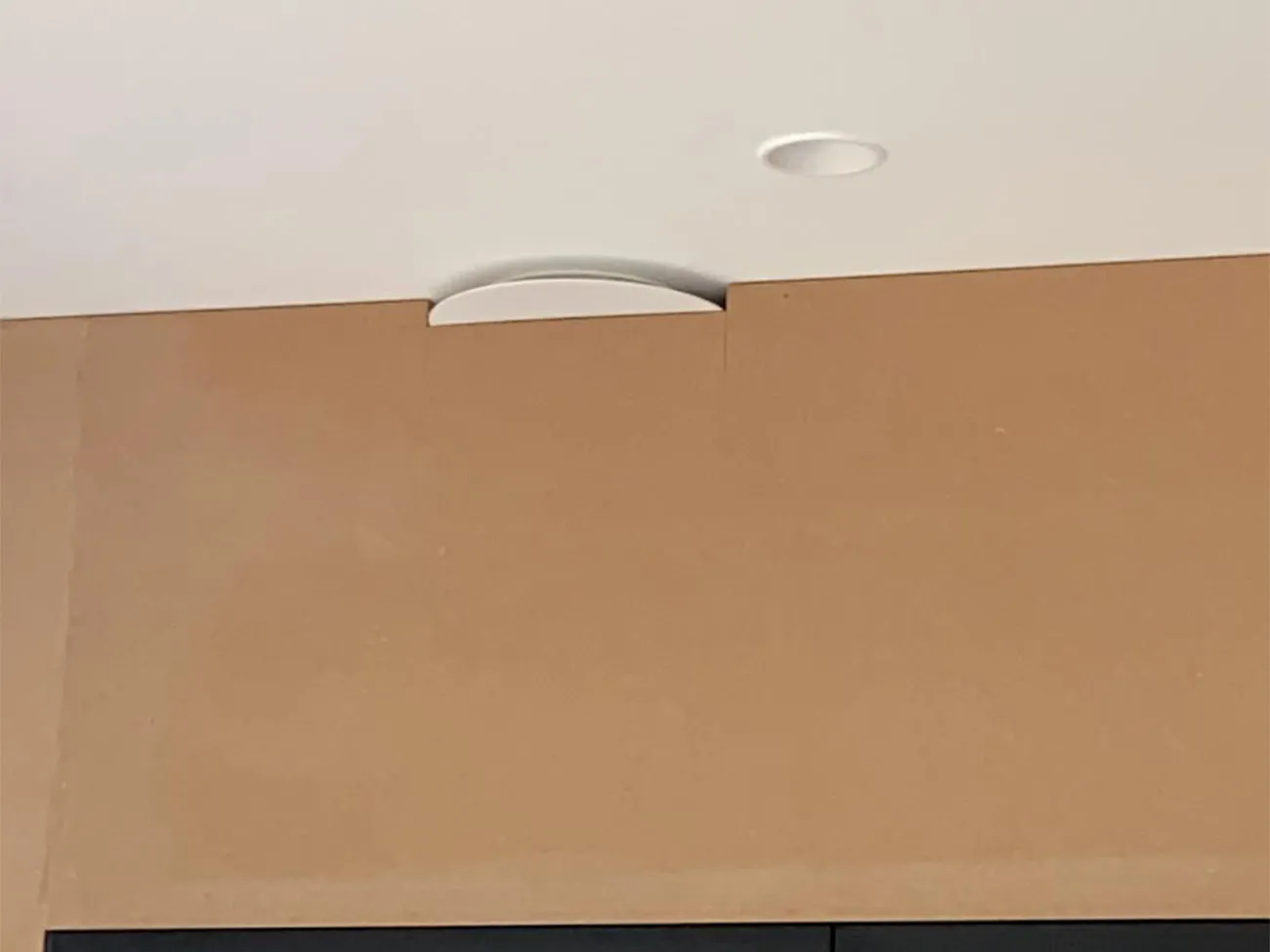
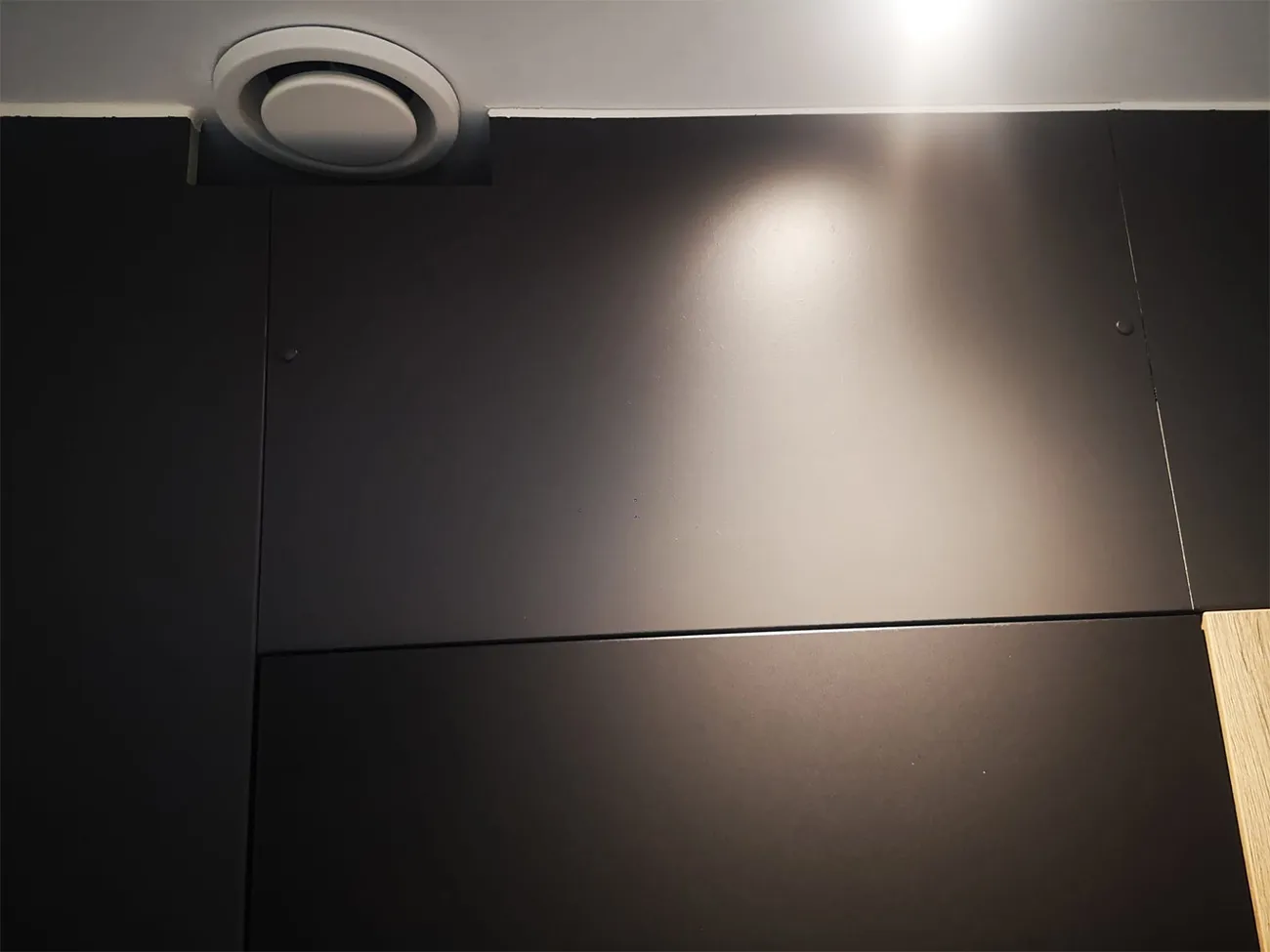
In the final photo, airflow is guaranteed. To measure the flow rate, the panel must be removable. If it cannot be removed, this must be agreed with the ventilation reporter when the air valve is measured, so that the measurement takes place before the cabinet is installed. For maintenance of the ventilation system, it is always better if the panel can be removed or is hinged.
Communication and coordination are key
To demonstrate that the ventilation system is working correctly, its flow rates must be measured. The examples show that, with a few precautions, air valves can be installed in the home in an aesthetically pleasing way. A well-considered ventilation system design, communicated to all the building partners from the outset, together with sufficient consultation at every stage, can prevent unpleasant surprises at commissioning.
Want to know more?
Here are some useful links:
- The BCCA vzw Ventilation Quality Framework website
- The BCCA vzw website
- The VEKA website, with regulations on ventilation
- BCCA vzw’s document on practical challenges in measuring mechanical ventilation
Thanks to
Aydin Senturk, Maarten De Strycker and Renson for the photographs
Question about this story? Ask your question
Keep following this
Get an email when a new story is published. No account needed.
- SubjectGeneral