Water softeners to the rescue
Text Tom Rampelbergh Beeld VMM, Shutterstock
We come into contact with water every day, and it plays a part in all sorts of everyday activities. But the water that comes out of your tap is different from mine. Of course, it is all water, but the concentrations of metal ions, bicarbonates and sulphates vary from region to region. And that affects the likelihood of limescale forming.
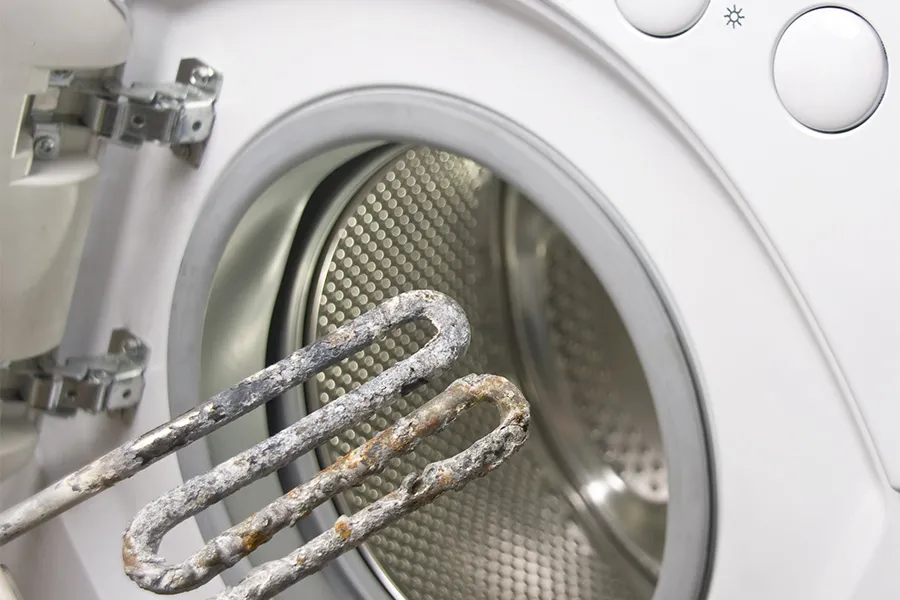
Water hardness is a factor every household needs to take into account. The term refers to the concentration of all the substances in water. Water hardness is directly proportional to the amount of metal ions in the water, particularly calcium and magnesium. The more calcium and magnesium the water contains, the harder it is, increasing the risk of limescale. This forms when hard water is heated and builds up everywhere: in the kettle, dishwasher, washing machine and other household appliances. Knowing the water hardness is also important when keeping fish in an aquarium.
Limescale is the enemy
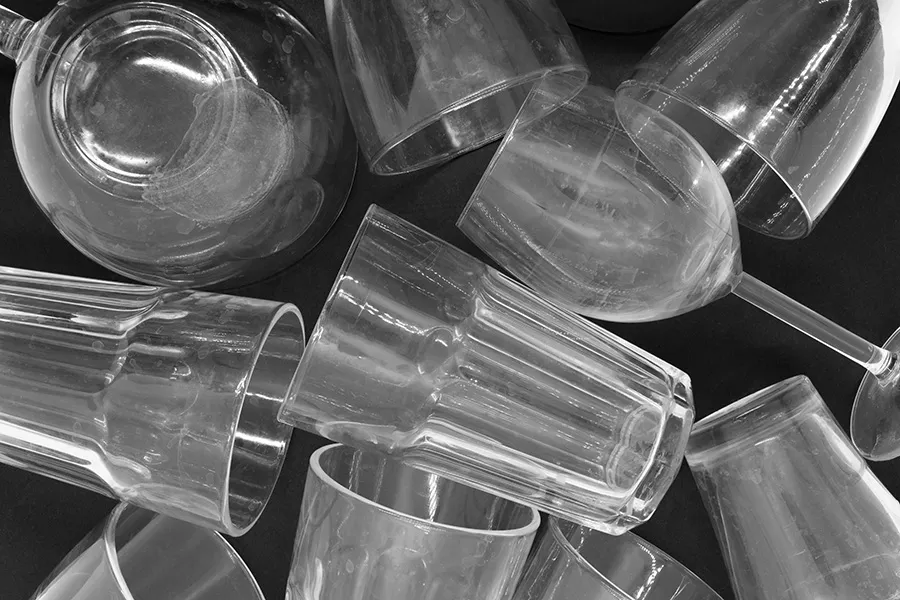
You want to avoid limescale building up in your appliances at all costs. After all, who wants limescale on pipes, taps, shower walls, shower heads, glasses from the dishwasher and so on? You cannot choose the water coming into your home, so unfortunately there is nothing you can do to change it. And nobody is keen to clean everything again and again to get rid of limescale. Fortunately, there are water softeners. These appliances reduce water hardness and therefore prevent limescale from forming. It is worth noting that calcium and magnesium are not harmful to health. On the contrary, we actually need them. But we do want to avoid that annoying limescale build-up.
Necessary or not?
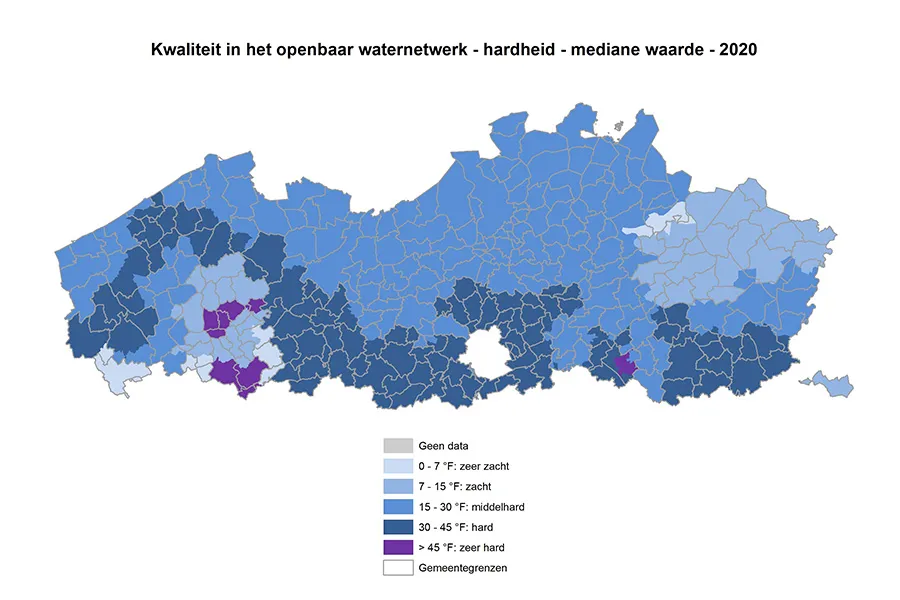
Is a water softener really necessary? In principle, everyone can decide for themselves whether or not to install one. The Flemish Environment Agency closely monitors the quality of the public water network, and its website features a map with clear figures on water hardness. Its different colours make it easy to see the water hardness in each region. But nowhere, on its website or elsewhere, is there any indication of when a softener is ‘necessary’. We do know that hard to very hard water, above 30°F, can cause comfort problems, such as higher energy consumption due to limescale build-up, blocked taps or pipes, or reduced energy efficiency.
Benefits
A water softener exchanges the calcium and magnesium ions that cause limescale build-up for sodium ions. With the limescale gone, a host of benefits follow. Here they are: pipes are less likely to become clogged, your heating system runs more efficiently, you need less detergent and soap, your appliances last longer, and it is better for your skin and hair.
Question about this story? Ask your question
Keep following this
Get an email when a new story is published. No account needed.
- SubjectGeneral