A unique piece of kitchen
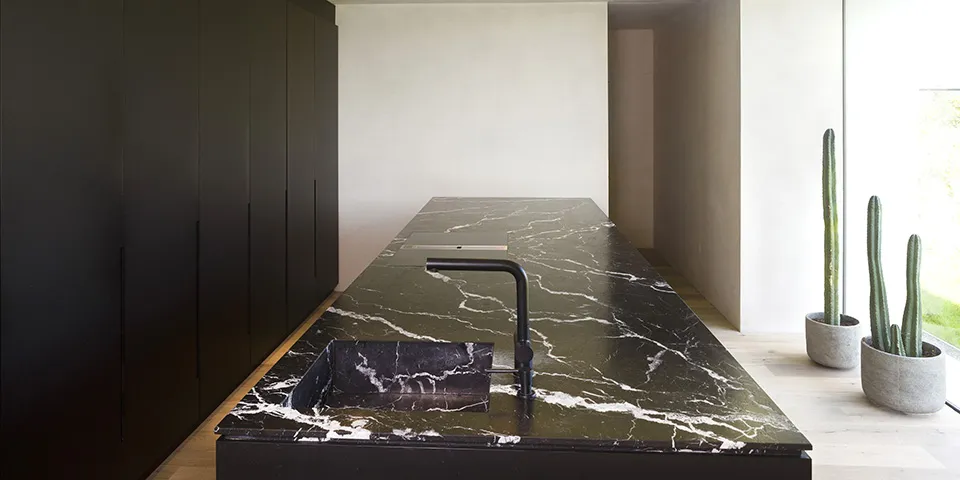
Exceptionally durable, practical to use, warm and exclusive in appearance, and always a one-off. After a brief dip in popularity, marble worktops are making a strong comeback.
Based in Puurs, Louis Culot started out as a natural stone business more than 110 years ago. August Culot, great-grandfather of the current owner, Tim Culot, steered the company towards creating gravestones and trading in building materials. Natural stone, including marble, is ideally suited to use as a building material, but is also much sought after for sculpture. In the 1980s, kitchen worktops were added to the picture. The first natural stone kitchen worktops appeared, and proved an immediate hit.
Every worktop is unique
For years, natural stone was the material of choice for kitchen worktops. It was hard to find a kitchen without a worktop in granite, marble, quartzite or Belgian bluestone. “Natural stone has many advantages,” says Tim Culot. “First and foremost, it is exceptionally durable and practical to use. That will be music to the ears of anyone who spends a lot of time working in a kitchen. It also has a warm, exclusive look that makes the worktop a real focal point. Every piece of marble is unique in colour. This is unlike materials such as Dekton or ceramic, which are popular worktop choices today, where the pattern can be identical from one piece to the next. When you buy a marble worktop, you are buying a unique piece of kitchen. The range of available colours is virtually endless. And thanks to the warm atmosphere created by marble, we regularly see the same marble colour used elsewhere in the home too. Think of a coffee table, a fireplace, or even a bathroom. We are now seeing marble used for splashbacks too, often combined with a worktop in composite or Dekton. Marble’s versatility makes all this possible.”
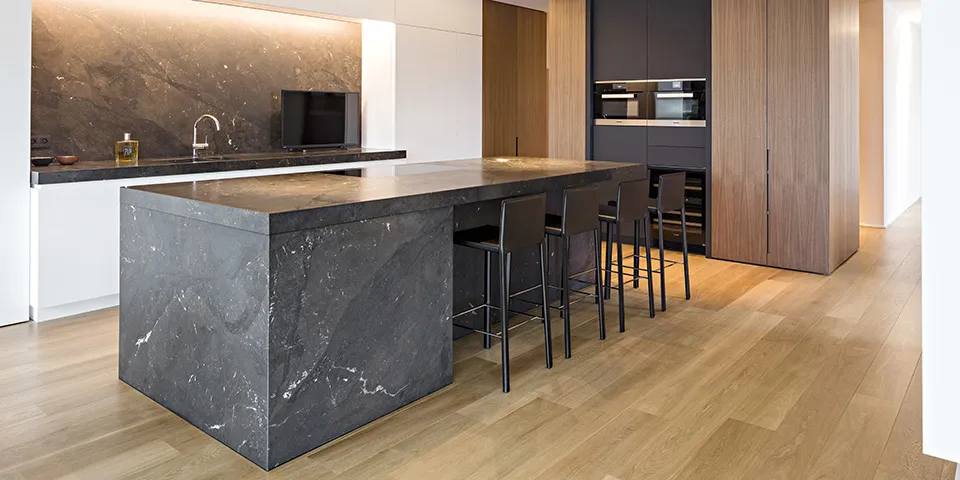
The range of marble colours available is virtually endless.
Properties
Choosing a marble worktop is about more than just looks. How the material responds to the various things that can happen in a kitchen also matters. This includes spills of acidic substances, placing a hot pot or pan on the worktop, dropping something on it or knocking the edge. “In our showroom, we explain in detail how the worktop will respond to these situations,” Culot emphasises. “Most visitors already know this when they choose marble, but we still make a point of explaining it to avoid any misunderstandings. Marble can withstand heat for a short time. Putting a hot pan on the worktop briefly will not cause irreparable damage. Leaving it there for a long time, of course, is a different matter. Spilling an acidic product on the surface will affect its colour. Dark shades become lighter, while lighter marble will look duller when viewed against the light. And if a piece chips off, it is not the end of the world. Marble can be repaired quite easily, often using the original piece.”
As well as marble, quartzite is another natural stone that is gaining popularity. “In terms of hardness, quartzite sits between marble and granite,” says Culot. “It is also more stain-resistant than marble, and resistant to heat and UV rays. Quartzite is one of the materials we offer our customers for kitchen worktops.”
Into the professional kitchen
It may not be much of a surprise that marble is becoming more popular among private customers. But it is more unusual for professional chefs to choose the material knowingly. Yet chef Esben Holmboe Bang of the three-Michelin-starred Maaemo restaurant in Oslo wants to fit his kitchen with Nero Marquina in a brushed finish. “Naturally, like any customer, he wants the best quality material,” says Culot. “That is why we attach great importance to our quality control and regularly visit the quarries ourselves to inspect the marble blocks before buying and processing them.”
Question about this story? Ask your question
Companies in this story

Keep following this
Get an email when a new story is published. No account needed.
- ThemeMaterials and finishes in balance
- SubjectKitchen appliances
- CompanyLouis Culot