Suspended above the hob or ‘hidden’ in the cooking surface?
Text Tom Rampelbergh Beeld BORA, DEBA Keukens, Elica, Franke, Falmec, Novy
Kitchen designers today create much more than just a place to cook. The kitchen is a living space where comfort, design and technology come together in harmony. The extractor hood plays an important role in this, because however beautiful the kitchen may be, without effective extraction, persistent cooking smells linger, grease settles on surfaces and the space is anything but inviting. So the key question is not whether you need an extractor hood, but which one to choose.
If you are the sort of consumer who can never make up their mind, choosing a new kitchen can be quite a challenge. Every appliance raises so many questions that it is enough to make your head spin. But these questions matter. Nobody wants to buy a pig in a poke and end up with an appliance that fails to meet their expectations, whatever those may be. So, do you want an extractor hood suspended above the hob, or would you rather extract the cooking fumes as soon as they arise and opt for a hob with integrated extraction? Those are ‘just’ two options, each branching off into a host of possible configurations, designs, brands, colours and other factors that can influence your decision.
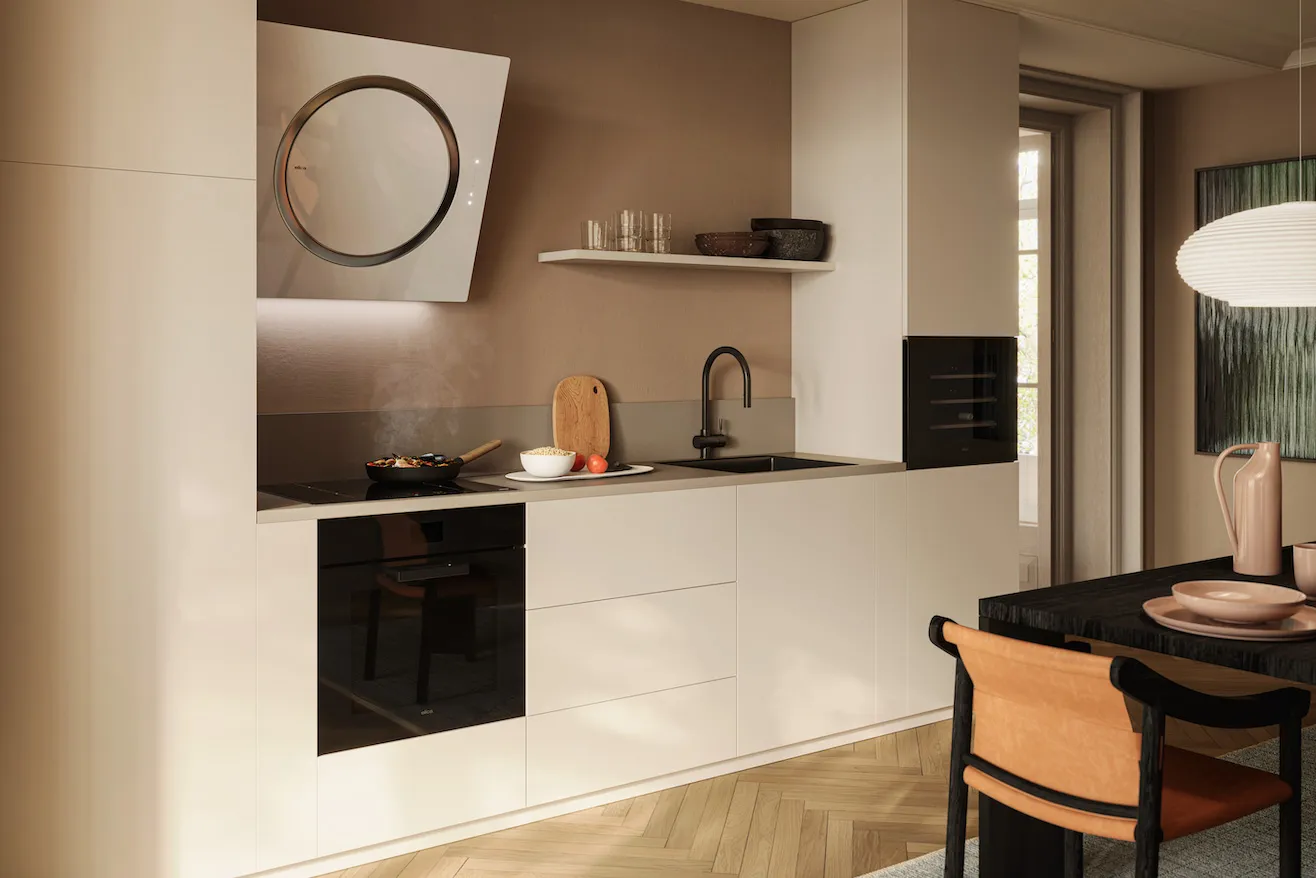
The classic: visible, familiar and powerful
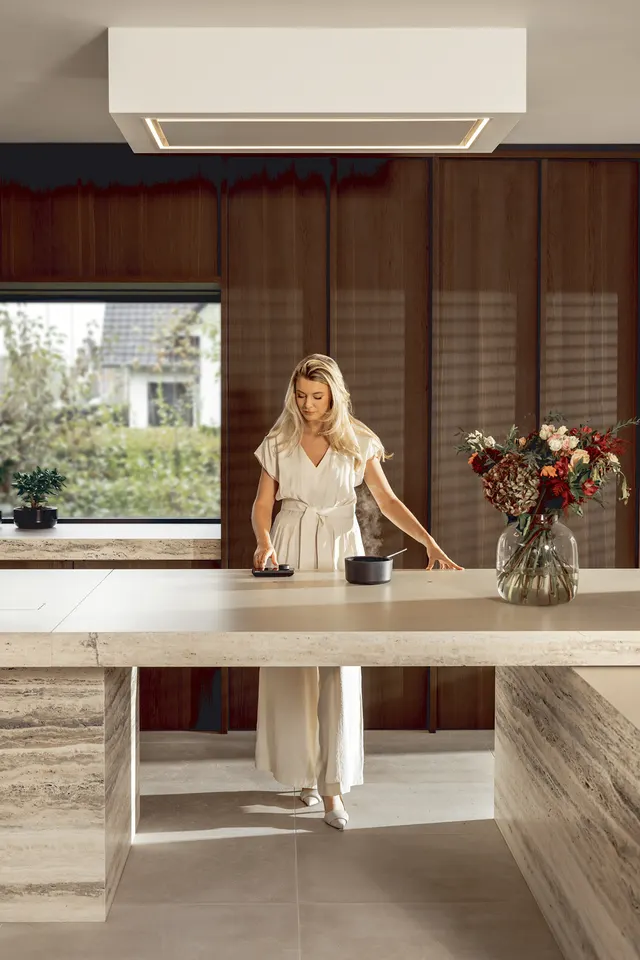
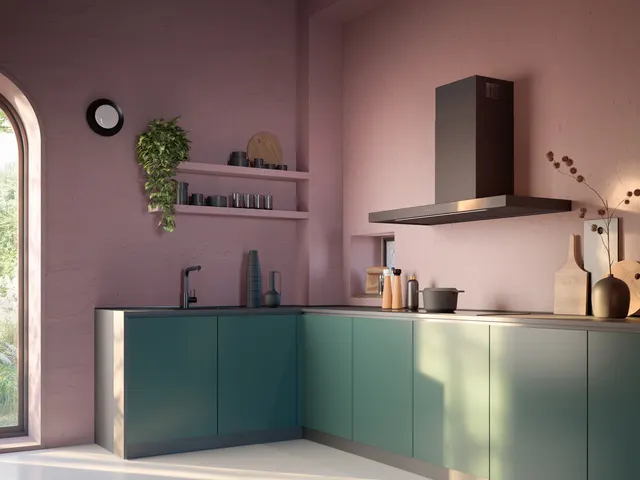
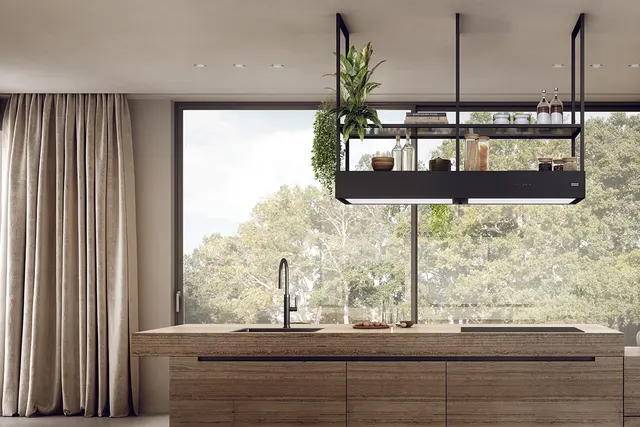
Extractor hoods above the hob have been the norm for decades. Wall-mounted, suspended above an island or fixed to the ceiling. There is a vast range to choose from, enough to give consumers decision fatigue, and innovation in this area shows no sign of slowing. Extractor hoods above the hob have one major advantage over their ‘competitors’ integrated into the hob itself: warm air and cooking fumes rise naturally. An extraction system above the hob therefore needs no assistance to draw in the air. For manufacturers, these models are a platform for innovation that can, and indeed should, be visible. The extractor hood becomes a design statement, especially in kitchens that form an integral part of the living space. A statement piece, an eye-catcher, a talking point. On the technology front, quieter motors are essential, as we want to be able to talk to one another in our beloved open-plan kitchens. Sensors that detect steam and odours are also important, as is connecting the extractor hood to the hob so that the two appliances work in perfect sync.
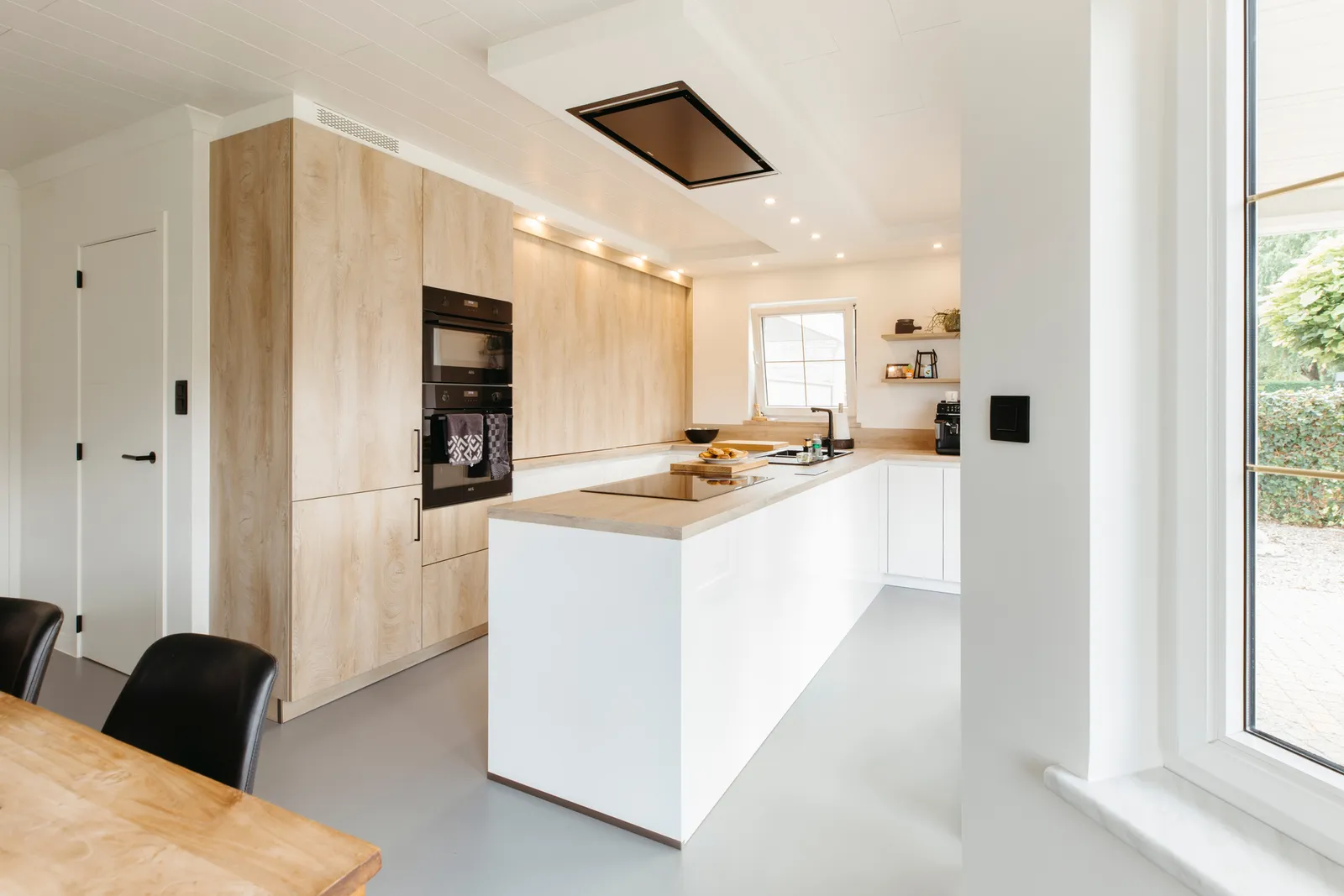
The ‘newcomer’: almost invisibly integrated
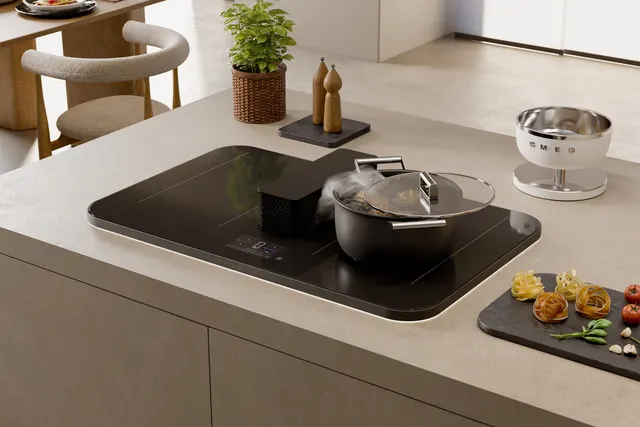
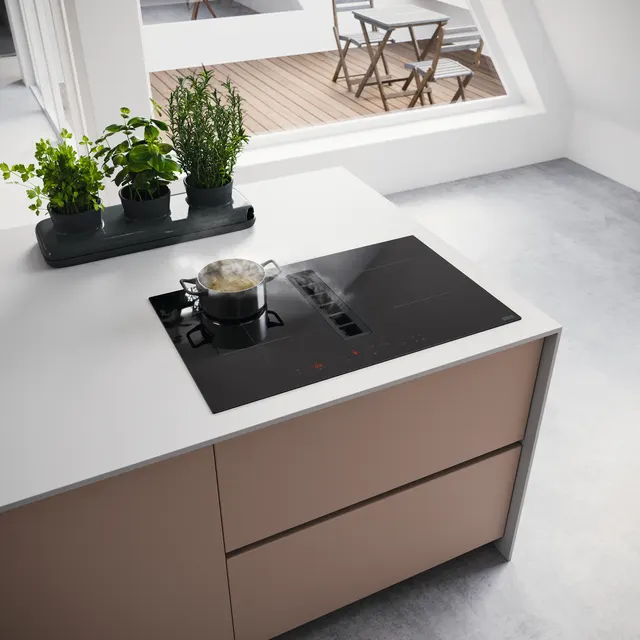
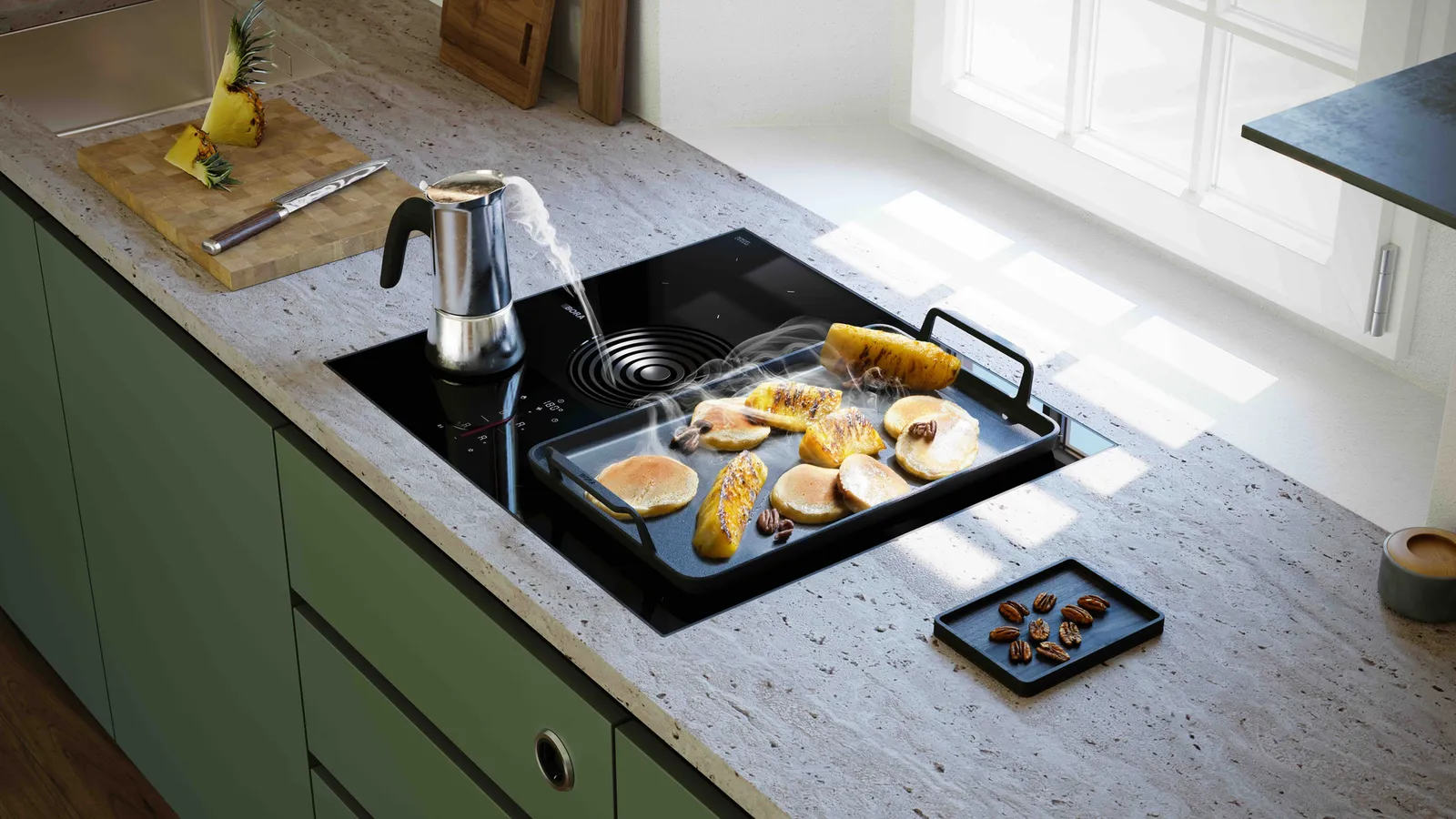
The rise of hobs with integrated extraction did not come out of nowhere. It coincides with the trend for open-plan kitchens, which has since become a popular fixture, where calm and simplicity take priority. A ceiling-mounted extractor hood may be seen as intrusive in this setting, although some people specifically want a striking focal point. Those who do not can turn to manufacturers that have developed integrated systems. The cooking fumes are removed right where they arise, before they have a chance to rise. The result is an unobstructed view from the kitchen to the rest of the living space, and vice versa. Nothing hanging above the worktop. Consumers often make this choice deliberately because they want a clear, uninterrupted visual space. Extraction works against the natural flow of air, so the motors need to be powerful. They must also be quiet enough not to drown out conversation. Fortunately, R&D departments have risen to the challenge, bringing models to market that do their job without causing a disturbance.
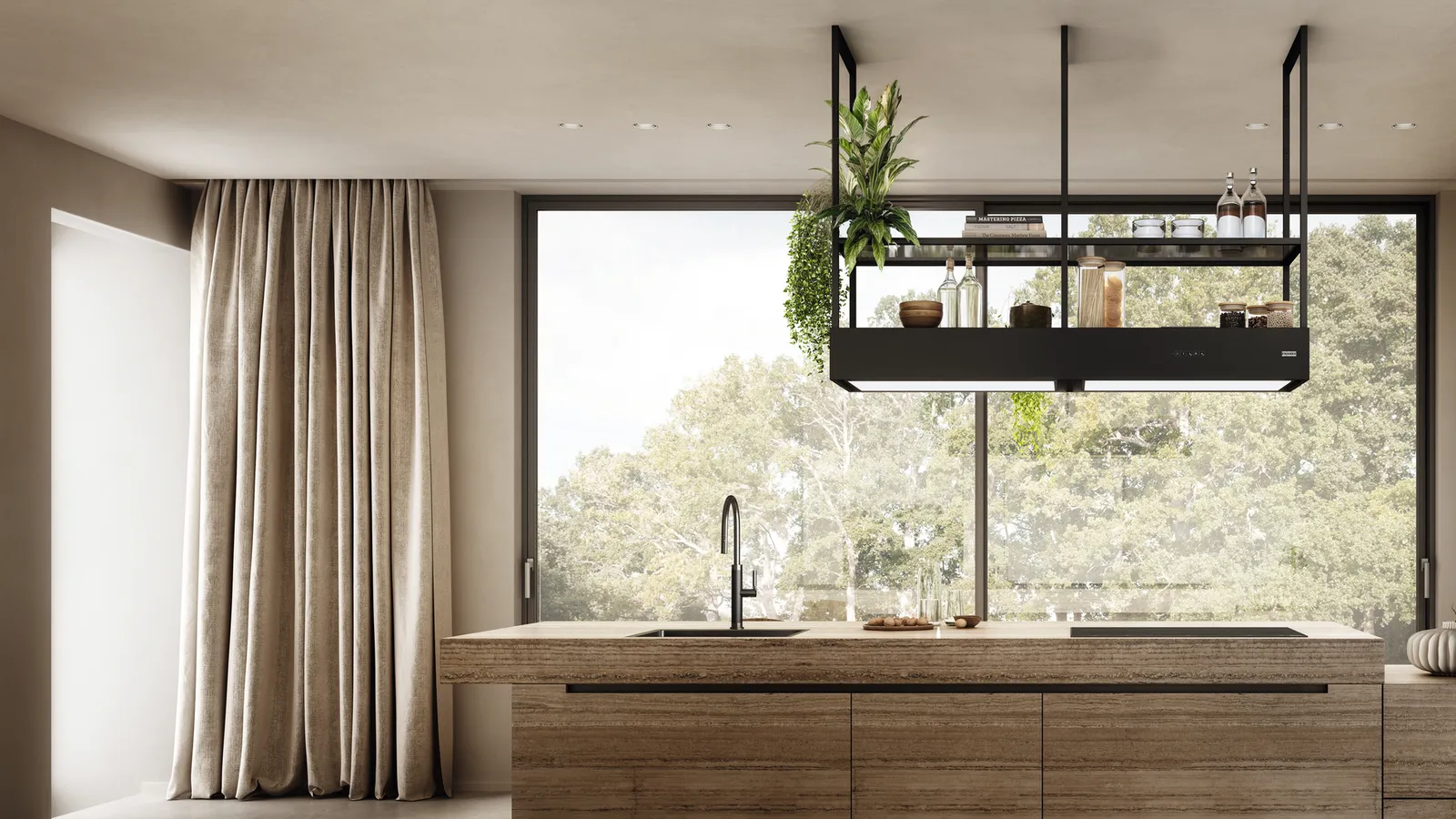
Two concepts, different ways of thinking
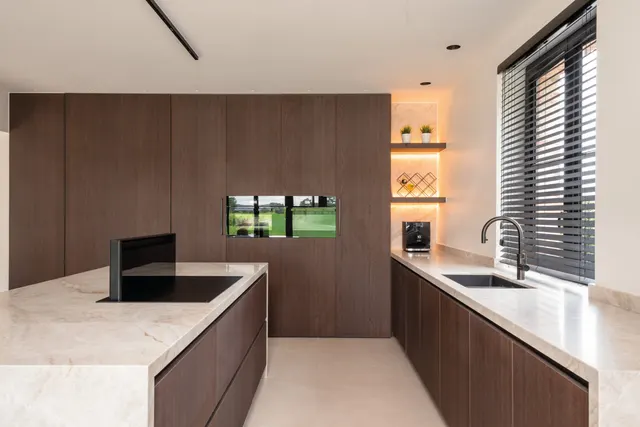
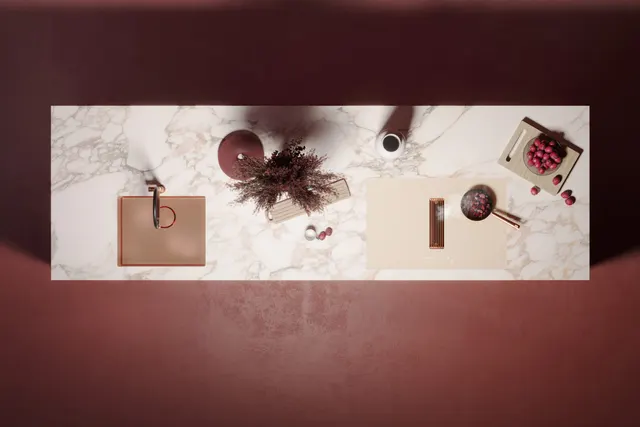
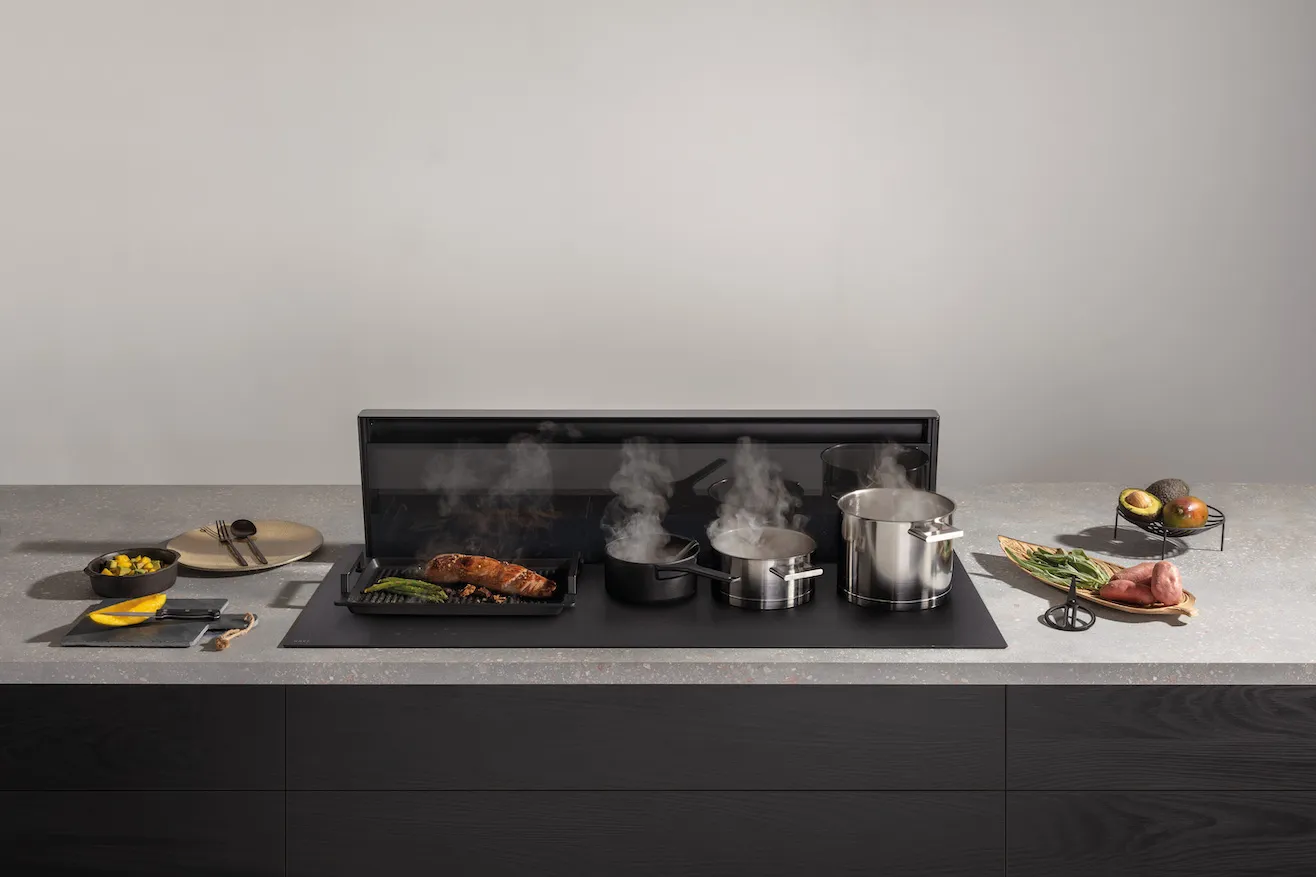
Everyone has to choose between the two systems. They also need to weigh up the pros and cons for themselves before making an informed decision. Do you want to make a statement with visible design, or with invisible technology? What best suits the space as a whole, your cooking habits and your budget? In the previous paragraphs, we deliberately presented the choice in ‘black and white’: either a system above the hob or one integrated into it. Ever innovative, manufacturers in our sector have developed some excellent ‘in-between options’, such as extraction systems that retract into the worktop when not in use and rise up again when you start cooking. Or how about modular systems that sit on the worktop and combine an extraction module with storage modules for all kinds of cooking utensils and other accessories?
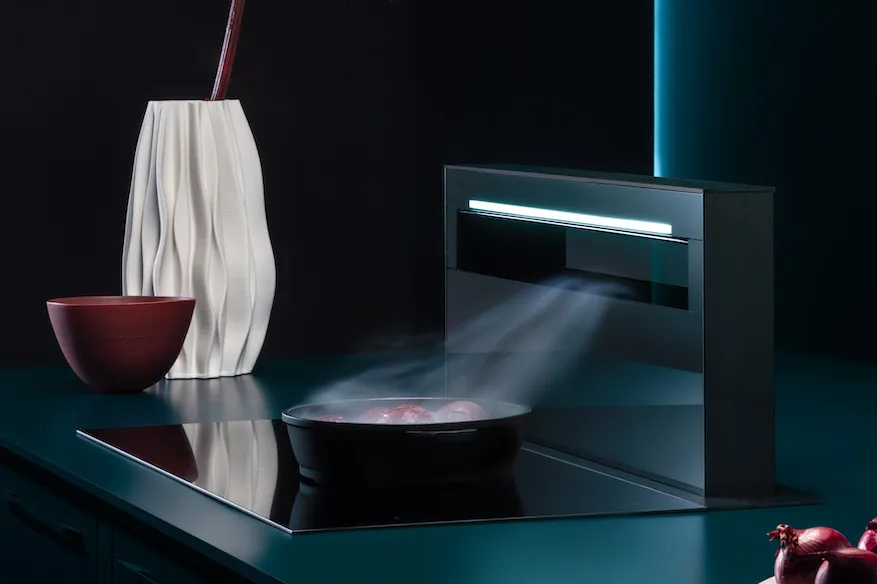
Innovation continues apace
Above the hob or integrated into it? There is no clear winner. Both concepts are mature and well thought-out, and technically capable of doing what they need to do. The difference comes down to the user’s own priorities. This wealth of choice is a boon for the kitchen sector, from manufacturers to kitchen designers. It ensures that innovation will continue and that the extractor hood remains a fully fledged part of every kitchen concept.
Question about this story? Ask your question
Keep following this
Get an email when a new story is published. No account needed.
- ThemeKitchen design for everyday life
- SubjectCooker hoods & extraction