Wine is a noble material
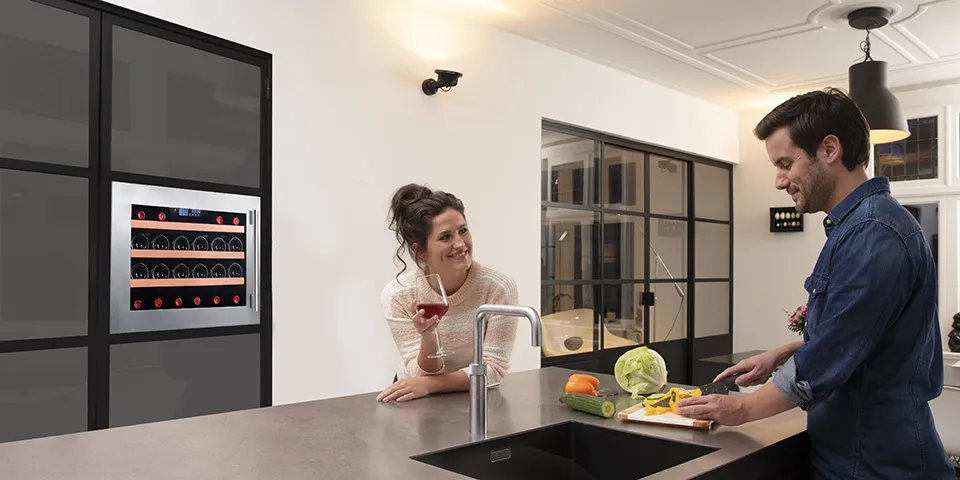
Relaxing on the terrace with a book, or gathered around the table with friends for a games night. These are just two of the countless occasions when we enjoy a glass of wine. Storing the bottle has therefore become an important consideration. As a result, wine cabinets have evolved from a gadget into a mainstream kitchen appliance.
Wine cabinets are for the hospitality trade, such as bars and restaurants. Until a few years ago, this was a common view, but today we rarely hear it. It is true that when wine cabinets first entered the domestic market, most consumers, apart from wine connoisseurs and collectors, showed little
interest. “Why buy a wine cabinet when we can store our bottles in the cellar?” and “We could put the space taken up by a cabinet to better use.” These were frequent comments. Improvements to the appliances, and the fact that the kitchen is no longer a hidden-away space but the heart of the home, gradually changed perceptions. “And it has nothing to do with age,” say wine cabinet manufacturers and importers in unison. “Young people and pensioners alike, from novices and enthusiasts to collectors, recognise the benefits of a wine cabinet. There is an appliance for every type of customer.”
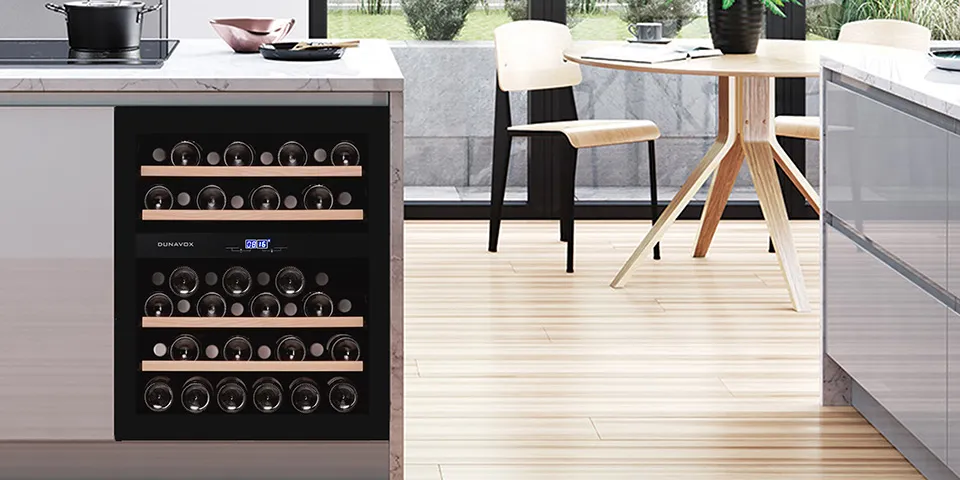
Where wine cabinets were once freestanding appliances, built-in models are now becoming more popular.
How to store wine
Wine lovers, naturally, want to get the most out of their wine. How it is stored and served makes a major contribution to the enjoyment it brings every day. Good wine is precious. Store bottles correctly and their flavour will remain intact. Get the storage conditions wrong and the wine will most likely be ruined. The right environment is essential. Temperature is perhaps the most important factor, especially keeping it constant. Humidity, light, air and vibration must also be monitored carefully. A wine cabinet takes care of all this for you.
One important point to remember is that the ideal serving temperature varies from one wine to another. Rosé is best served at 6-7°C, white wine at 10-12°C and red at 17-18°C. People used to say that red wine was best served at room temperature. In fact, that is a little too warm and does nothing for the wine’s flavour. If you only drink one type, you can set the wine cabinet so that the temperature throughout is ideal for your favourite wine. If you do not want to, or cannot, choose just one type, there is no need to worry: several manufacturers offer models with separately adjustable temperature zones. That way, you will always have a bottle of each type at the ideal temperature. Unexpected guests? No problem, the wine is ready to serve.
Freestanding or built in?
Alongside keeping the various factors that affect wine quality under control, manufacturers are paying close attention to the different installation options for wine cabinets. When they first appeared, wine cabinets were available only as freestanding models. Today, the focus is shifting towards built-in models. A wine cabinet neatly integrated into the kitchen, like an oven, adds a touch of class. New developments are coming thick and fast, further proof that the wine cabinet has become a fully fledged kitchen appliance.
Question about this story? Ask your question
Keep following this
Get an email when a new story is published. No account needed.
- ThemeTailored refrigeration and storage
- SubjectKitchen appliances