Enjoy a perfect sink for years to come
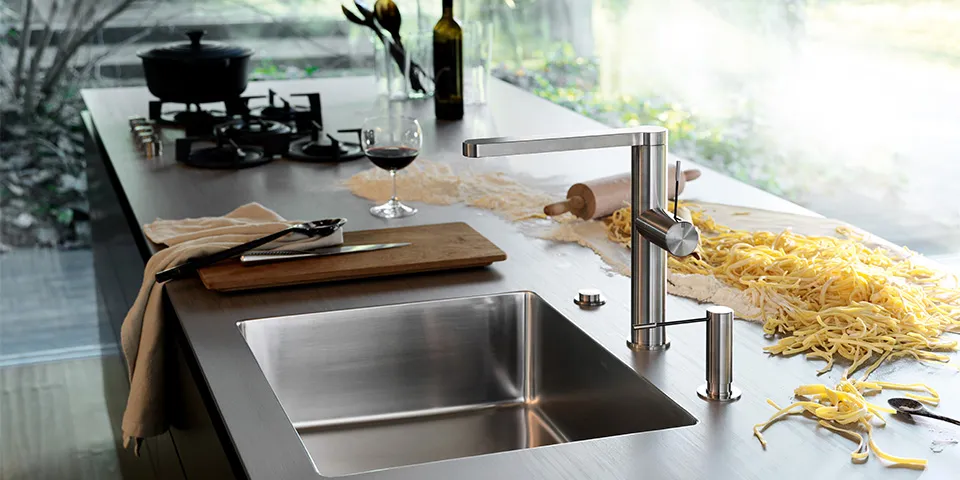
Like the worktop, the sink is a dominant feature in the kitchen. A sink is also essential to the kitchen’s overall workflow and functionality. Its appearance matters too. Size, features, material… all are important factors. Clearly, choosing a sink is not a decision to be taken lightly.
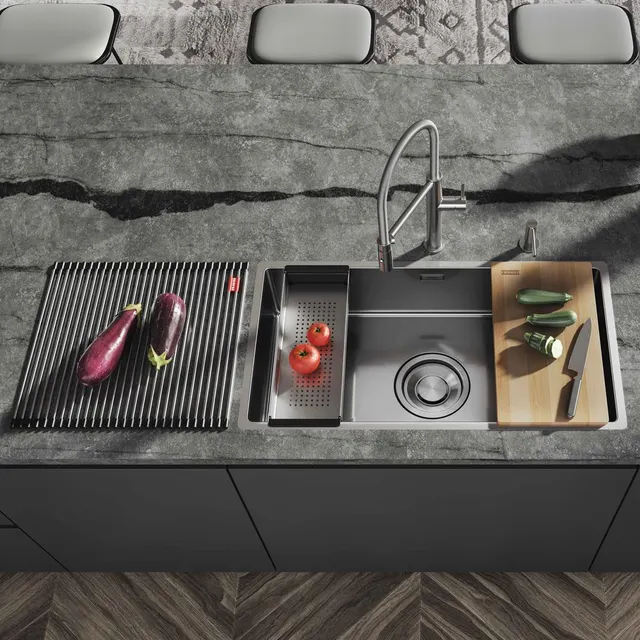
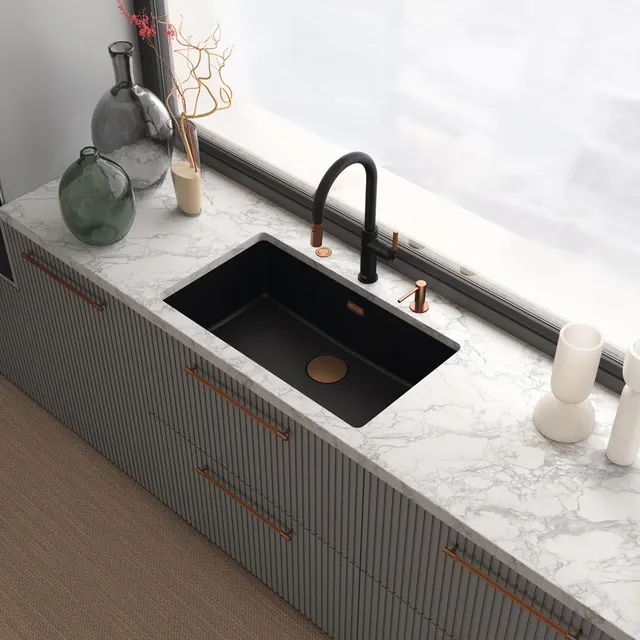
A black version of every product
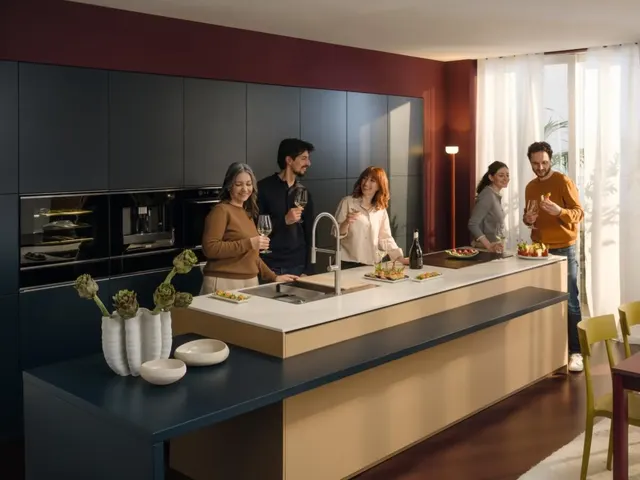
The customer is king. It is up to them to combine the right materials with the right functions to create the perfect sink unit to suit their needs and preferences. We spend more and more time in the kitchen, where the sink is the most frequently used ‘appliance’. Just think of all the tasks you carry out at or in the sink.
Installation methods
Worktops and sinks are two important decisions when it comes to a new kitchen. And the two are inextricably linked. This is not just because the sink is fitted into the worktop, but also because the choice of worktop helps determine the choice of sink. After all, not every sink can be installed in every worktop. There are three ways to install a sink: flush-fit, inset and undermount.
A flush-fit sink is installed so that the edge of the sink and the worktop form a single, level surface. The worktop and sink edge flow seamlessly into one another, making both easy to clean. The result is hygienic and sleek. This installation method is often used with granite and composite worktops.
The term undermount makes it clear what this method involves. The sink is installed below the level of the worktop to increase its usable surface area. As with a flush-fit sink, undermount models are easy to maintain, both the worktop and sink unit being easy to clean. This installation method is often used with granite, wooden and solid-surface worktops. With inset sinks, by contrast, the edge of the sink sits on the worktop.
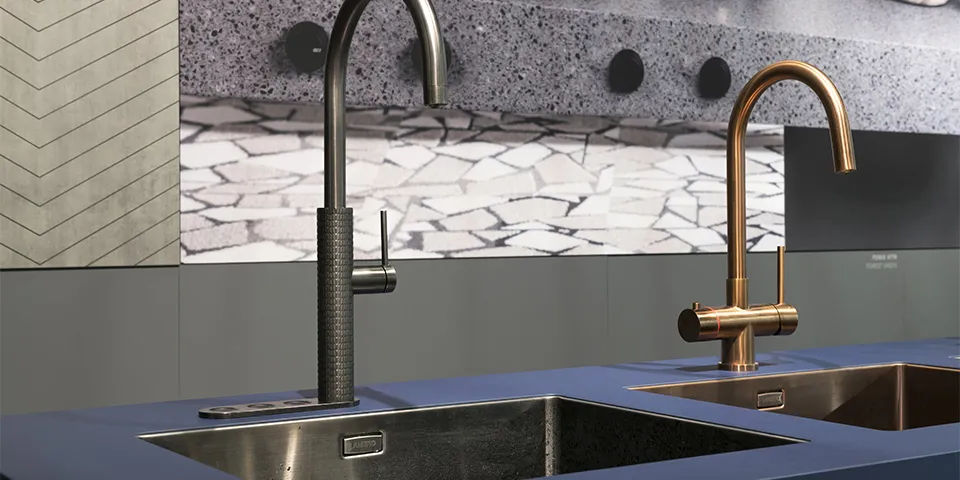
Those who wish can match the sink finish to the taps. (Photo: Dekker)
Materials
Sinks are available in a wide range of materials, each with its own specific characteristics, advantages and disadvantages. Choosing the right material means weighing up which features and requirements best match your needs and preferences. Compatibility with the chosen worktop also plays a part. How resistant a material is to heat, scratches, household products and other forms of wear will inevitably influence the choice, as will the sink’s appearance. Stainless steel, one of the most popular sink materials, is robust and durable, but it is not scratch-proof. Ceramic sinks are relatively scratch-resistant and can withstand household products and boiling water thanks to their glaze. Their availability in a wide range of colours is another advantage. However, they are susceptible to damage, as are sinks made from enamelled steel. The impact of hard, heavy objects can chip the glaze. Plastic’s main advantages are its relatively low price and ease of maintenance. However, it is susceptible to limescale deposits, which can discolour the sink. Regular cleaning is essential.
Styles and features
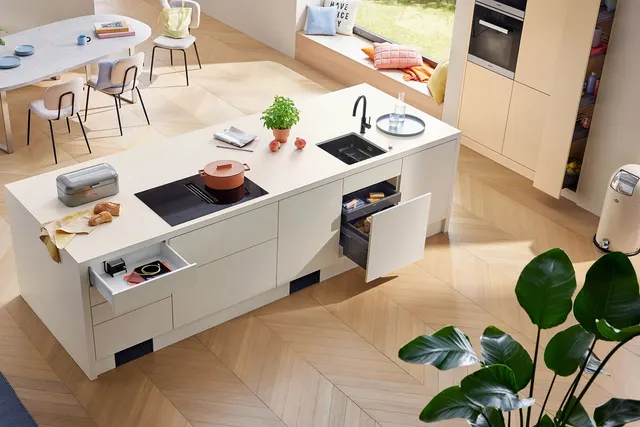
Once you have chosen the material and installation method, you are almost there. Design plays an important role in the decision-making process, and the different styles available also need to be considered. One important tip for consumers: seek advice from a professional. A single, double or one-and-a-half bowl? A sink with or without a drainer? Today, a larger bowl is more popular than a smaller one, despite the prevailing trend towards living in smaller homes. The driving factor seems to be having room to work. We also often opt for practical features that make everyday tasks easier: a push-button or rotary control for operating the waste, so you do not have to put your hands back into dirty water; an integrated soap dispenser; accessories that can be placed beside or inside the sink to carry out specific tasks; and much more. The sink is increasingly becoming a ‘work centre’. Choosing a smaller sink frees up more worktop space. Add handy accessories and the sink becomes an extension of the worktop.
We spend a lot of time in the kitchen. Around two-thirds of the time spent working in a kitchen is at or around the sink. That is too much time for the choice of sink to be secondary to other decisions.
Question about this story? Ask your question
Keep following this
Get an email when a new story is published. No account needed.
- ThemeMaterials and finishes in balance
- SubjectSinks & taps