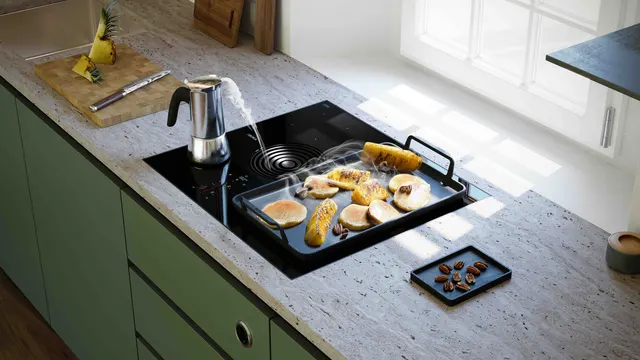
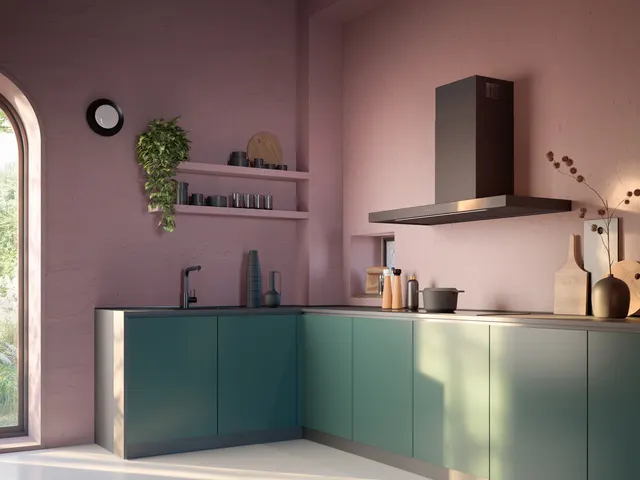
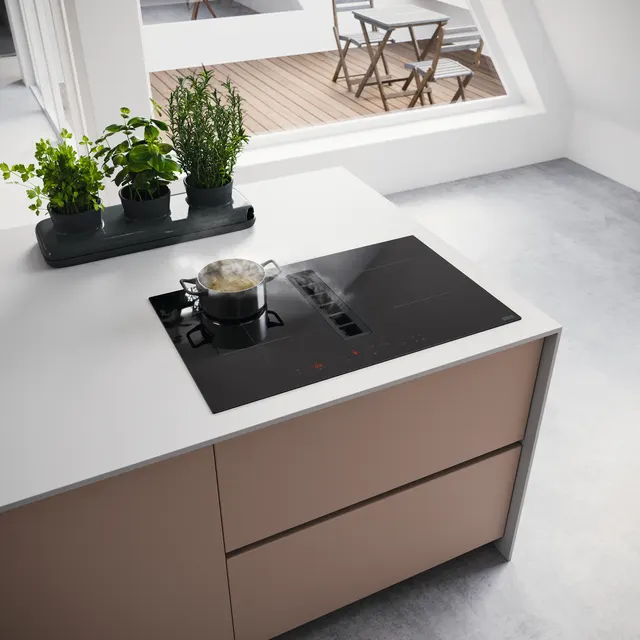
Traditional ceiling extractor or downdraft extraction? Cooking habits and building conditions help determine the choice
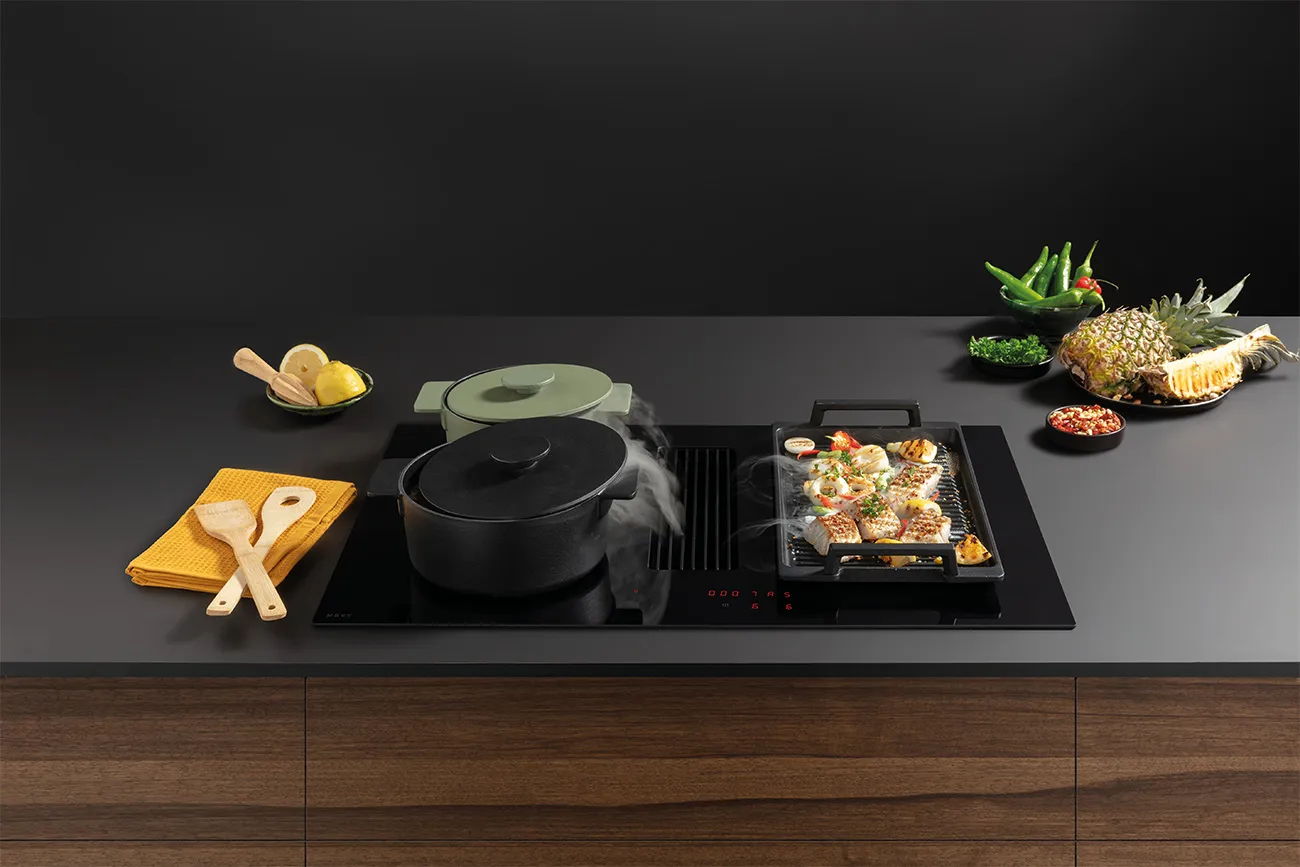
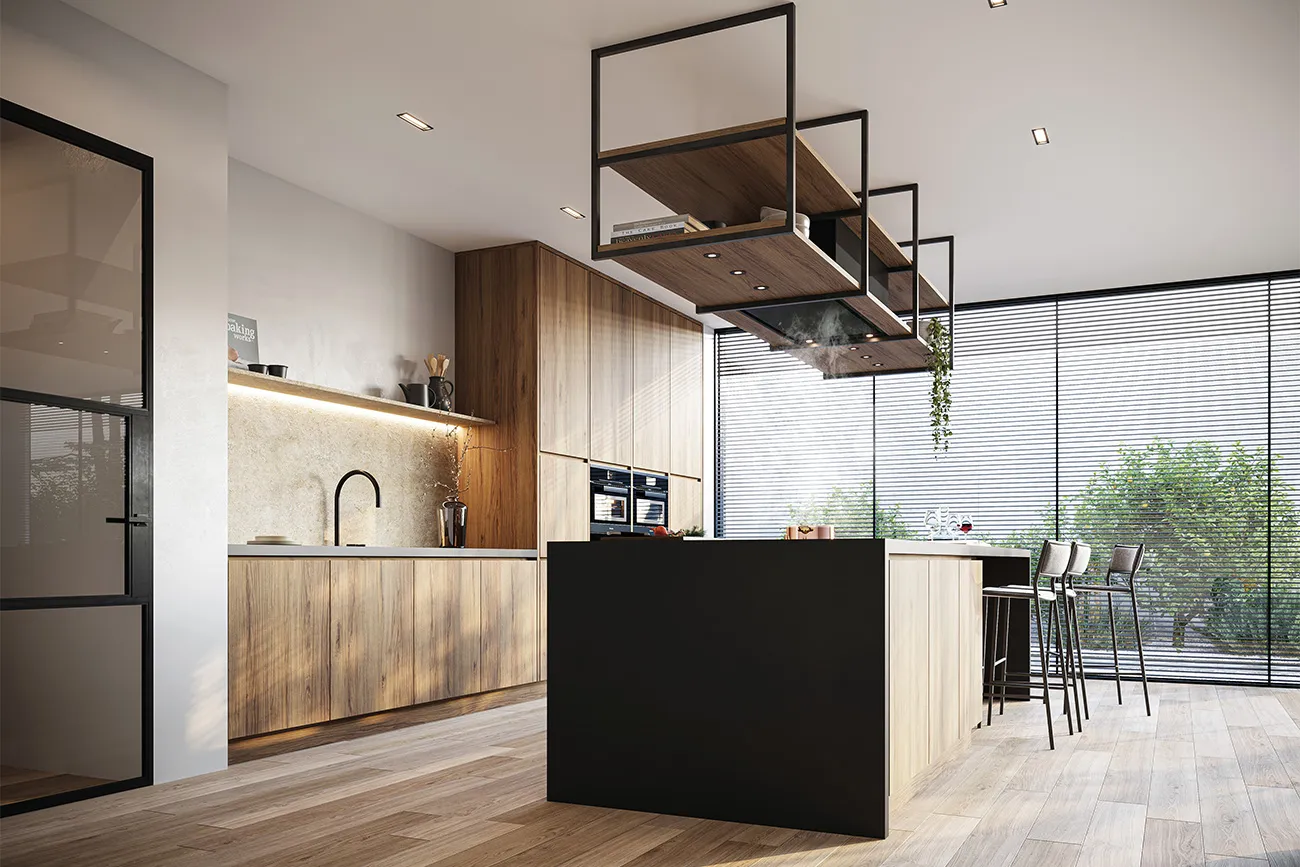
Kitchen retailers, bespoke furniture makers and interior fit-out specialists work with their customers on every project to find the most suitable extractor hood. The customer’s cooking habits and the kitchen layout are crucial factors. In recent years, we have seen a huge trend towards downdraft extraction, but the traditional ceiling-mounted extractor hood remains a popular choice for many applications. Novy offers a wide range of powerful yet whisper-quiet extractor hoods, with or without a high-quality induction hob: for installation on or in the ceiling, or integrated into the worktop.
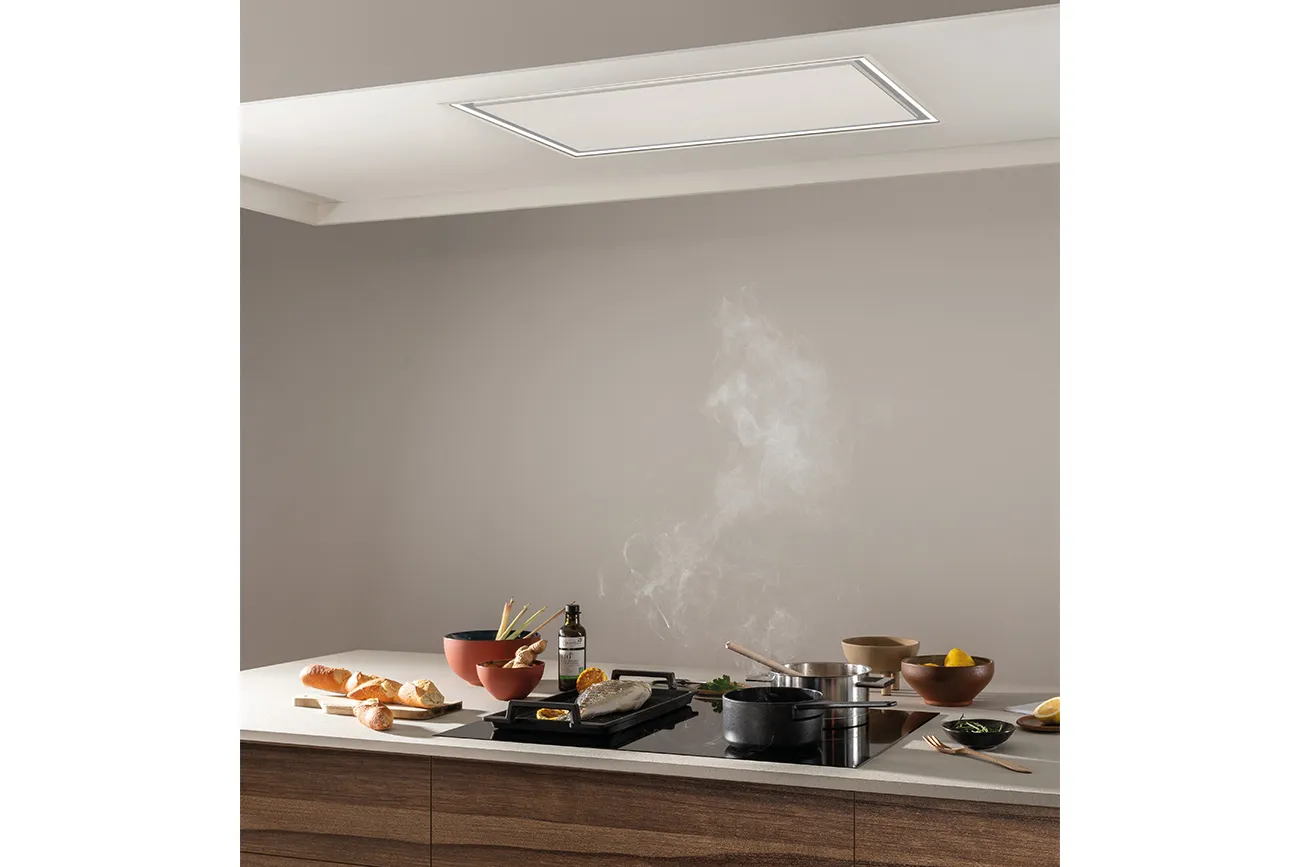
Our kitchen is increasingly becoming a living space in its own right, where we not only cook but also spend time and invite friends over. The extractor hood plays a central role, as the unpleasant odours and steam released during cooking need to be removed. Extraction has evolved from an ugly, noisy ‘ugly duckling’ into a genuine design feature that contributes to the kitchen’s aesthetic finish. “There are many different types: under-cabinet, ceiling-mounted, wall-mounted, built-in, telescopic and island hoods, as well as downdraft extraction. This makes it difficult for consumers to choose the most suitable hood for their needs. As a manufacturer, it is our job to help them, together with the kitchen retailer,” says Olivier Lambert, director of marketing at Novy. “There is a clear trend towards downdraft extraction, but it is by no means the right solution for everyone. A traditional extractor hood, which I like to call ‘the most common model’, can still be the most efficient option.”
Ask the right questions
At the start of a project, whether a new build or renovation, it is important to assess the available space carefully, as this can either open up or limit the options. Ceiling height also plays a role, and a choice must be made between direct extraction and recirculation. The household’s needs in the short and long term should also be taken into account, but above all, it is important to establish how much cooking matters to the family. “How often does the customer cook, and what do they cook? Is the kitchen a separate space, or do they prefer to cook in an open, unrestricted setting, even if that means visitors can enjoy the experience at the kitchen island? How many pans are used, and how tall are they? How important are factors such as maintenance, odour and noise? These are just a few of the questions that can help determine the ideal extractor hood,” explains the director of marketing. “For families who prefer to heat up a ready-made meal in the microwave and only cook properly now and then, a simple extractor hood is enough. For cooks who can lose themselves in the kitchen for hours, it can be worth going that little bit further: easy operation with sensors and an app, integrated task lighting and/or mood lighting, …. Some end customers like to make their extractor hood a design feature on the ceiling, while others prefer a more discreet look and want the extraction to disappear when they are not cooking, for example into the worktop or hob.
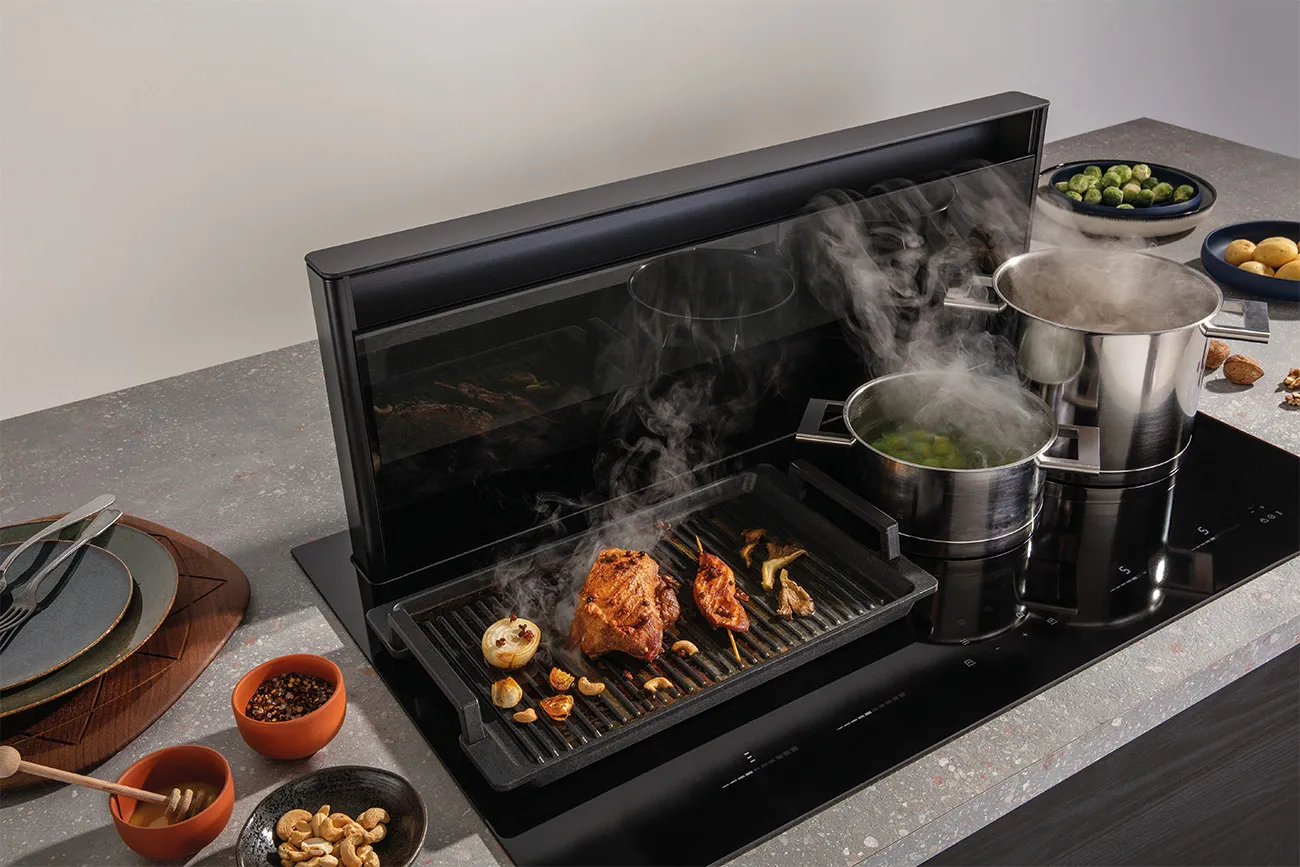
The noise made by an extractor hood is often a deciding factor, too. Although all types and models are whisper-quiet nowadays, there are still noticeable differences. Downdraft extraction requires more power to draw away the steam than a traditional extractor hood. What is more, a ceiling-mounted hood is positioned higher up, so the noise is less noticeable.”
In practice
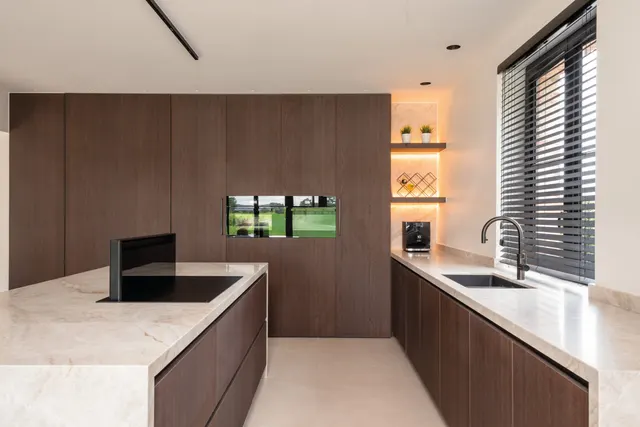
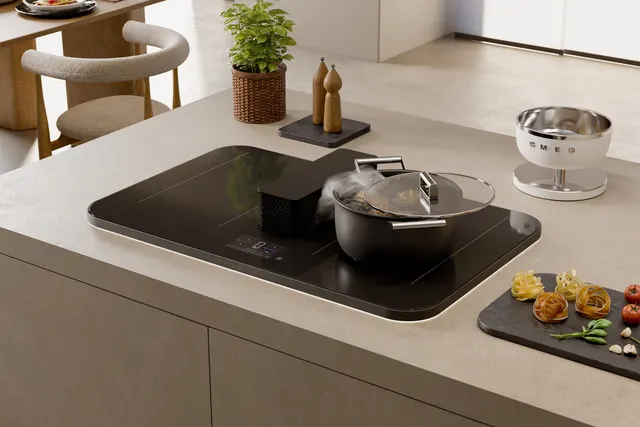
Every project is different, as users have different tastes and cooking habits. This is also clear from a conversation with an end user and a kitchen retailer. “The kitchen was given a prominent place in our new home. As we like a sleek, modern look and feel, we chose the Novy Panorama hob with subtly integrated extraction. The sleek black extraction tower in semi-transparent glass sits behind the induction hob. Its height is adjustable, so steam is extracted effectively at source, whether you are using shallow pans or tall pots,” says Mrs Casteur. “When you are not cooking, nothing is visible, but when you are, we have a real eye-catcher that our friends have noticed too. We also chose recirculation, although we had our doubts beforehand about noise and the effect of not extracting polluted air directly on indoor air quality. It turned out to be a good choice.”
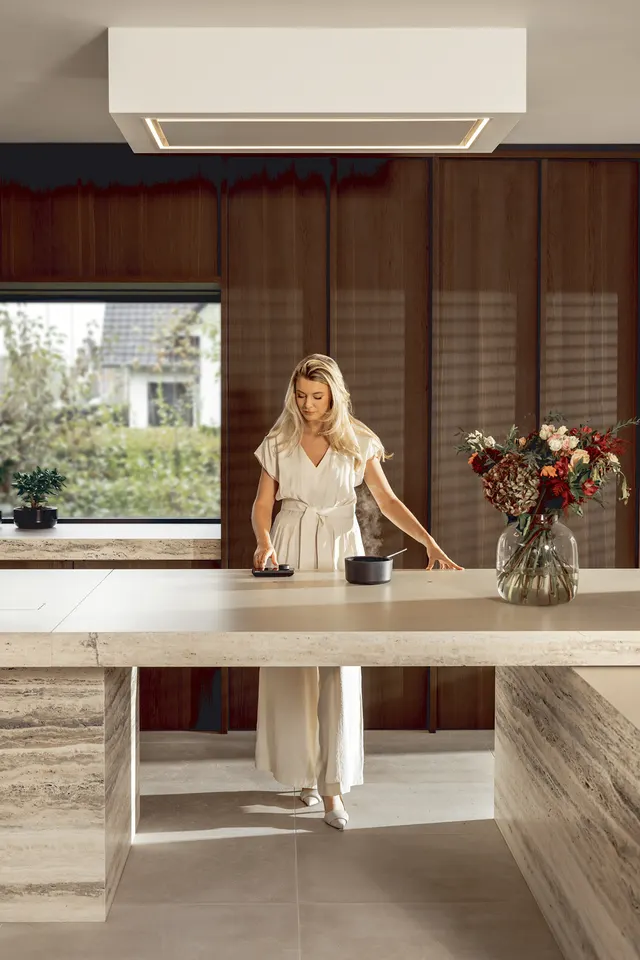
The Cornette family, by contrast, chose the most common model, the Novy Pureline Pro. Novy Sense technology uses steam and odours to determine how intensively the hood needs to extract: “As the extraction is built into the ceiling, we can use the full surface of our hob. You do have to give up some of that with downdraft extraction. The hob is also very easy to clean. A quick wipe is all it takes to get it clean in no time. The Pureline Pro is not just an extraction system, it also includes a lighting element that we can control fully using the Novy App.”
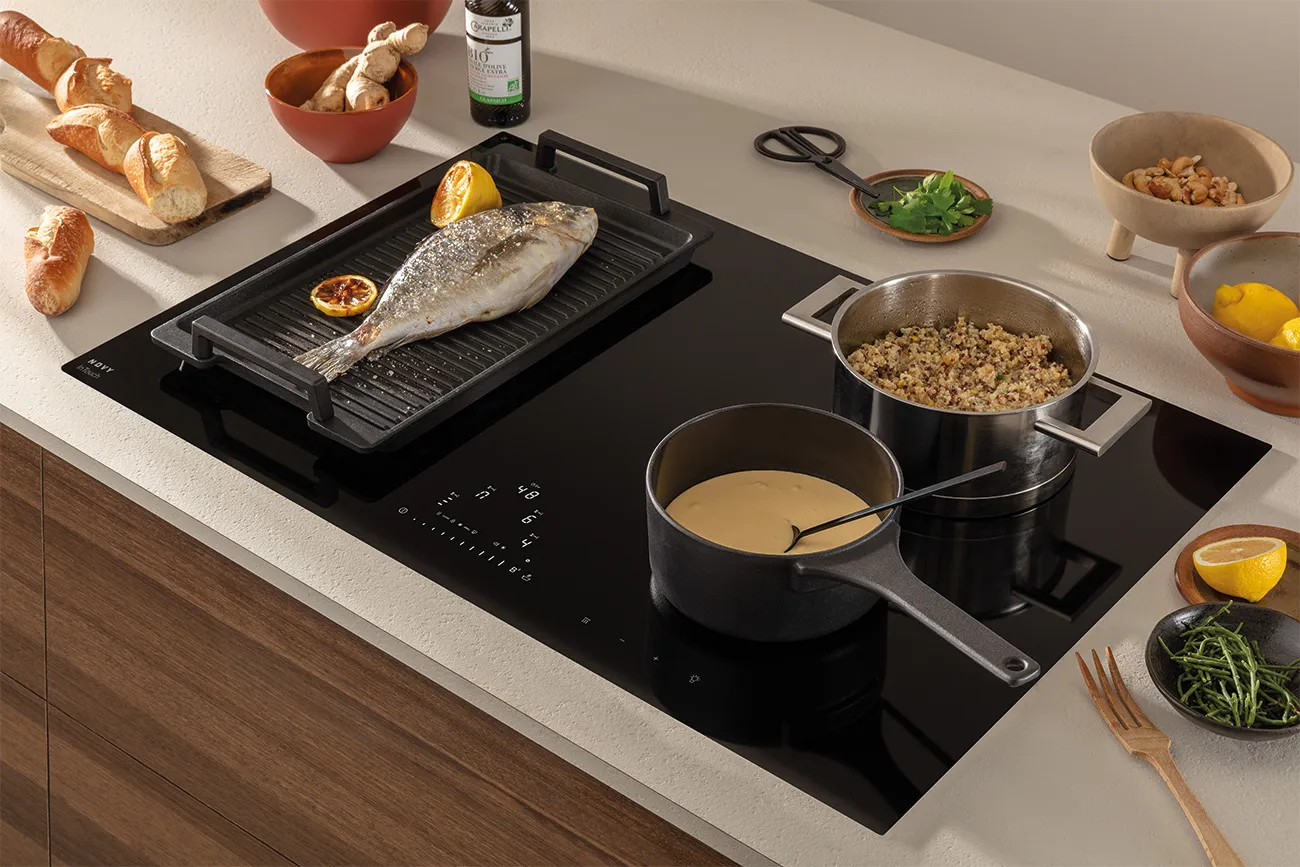
“Ease of use was the most important factor for us, although the whole setup also fits perfectly with our kitchen concept,” says Mrs Osselaer. “We have combined an Inductie Power 1726 induction hob with a Pureline 6831 traditional extractor hood, both from Novy, integrated into the ceiling. InTouch technology makes it very easy to operate the extraction from the hob. The lighting, with its adjustable intensity, is another advantage. We turn it up while cooking, then use a more subdued setting as mood lighting in the evening.”
Peter Goossens, owner of Keukens Goossens in Pelt, concludes: “There are always several factors that help determine the choice of extraction system. Sometimes it simply comes down to the building conditions, because if the ceiling is too high, downdraft extraction is the only good option. In other cases, the user’s cooking habits and taste are decisive. Some people cherish their extractor hood and really choose it for its design, while others prefer to keep things functional and hide the extraction after cooking. Tastes differ, and as kitchen retailers we need to respond to that.”
Een zakelijke vraag aan Novy? Get in touch
Companies in this story
Keep following this
Get an email when a new story is published. No account needed.
- ThemeMaterials and finishes in balance
- SubjectCooker hoods & extraction
- CompanyNovy